• About
  • Bio and Artist Statement of Jane Ingram Allen
  • Living Quilt for Nestucca Valley, installed on August 12, 2021, Summer Youth Art Program Project, Sitka Center for Art & Ecology, Otis, Oregon
  • Resume of Jane Ingram Allen

Jane Ingram Allen Art Projects

~ Recent Art Projects by Jane Ingram Allen in Hand Papermaking and Environmental Art

Jane Ingram Allen Art Projects

Tag Archives: plants for papermaking

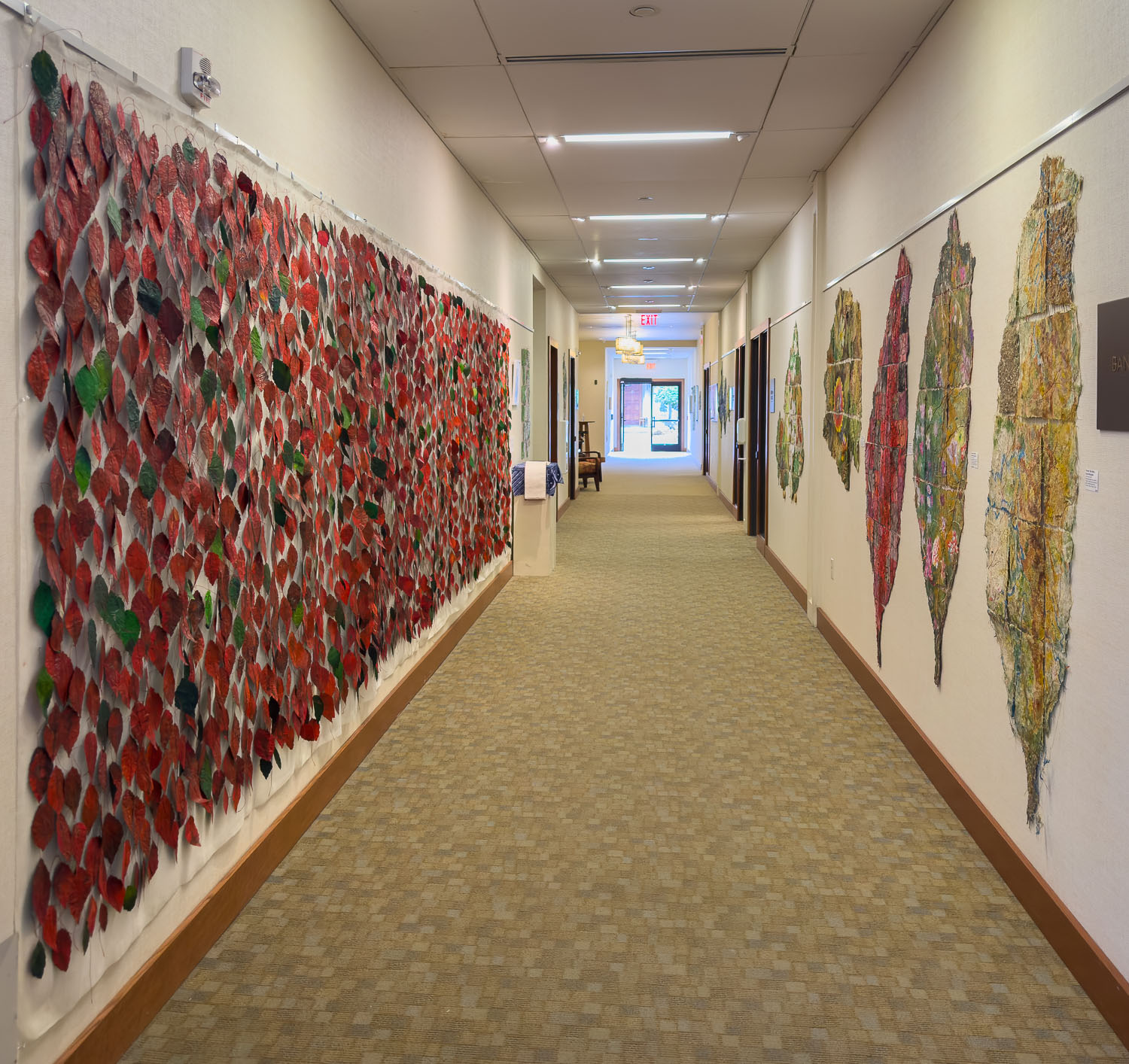
“Jane Ingram Allen – Handmade Paper Art” Exhibition in Santa Rosa, now through May 30, 2025

11 Friday Apr 2025

Posted by janeingramallen in Uncategorized

≈ Leave a comment

Tags

California, environmental art, fiber art, handmade paper art, installation art, Jane Ingram Allen, papermaking, plants for papermaking, Santa Rosa, sculpture, Spring Lake Village

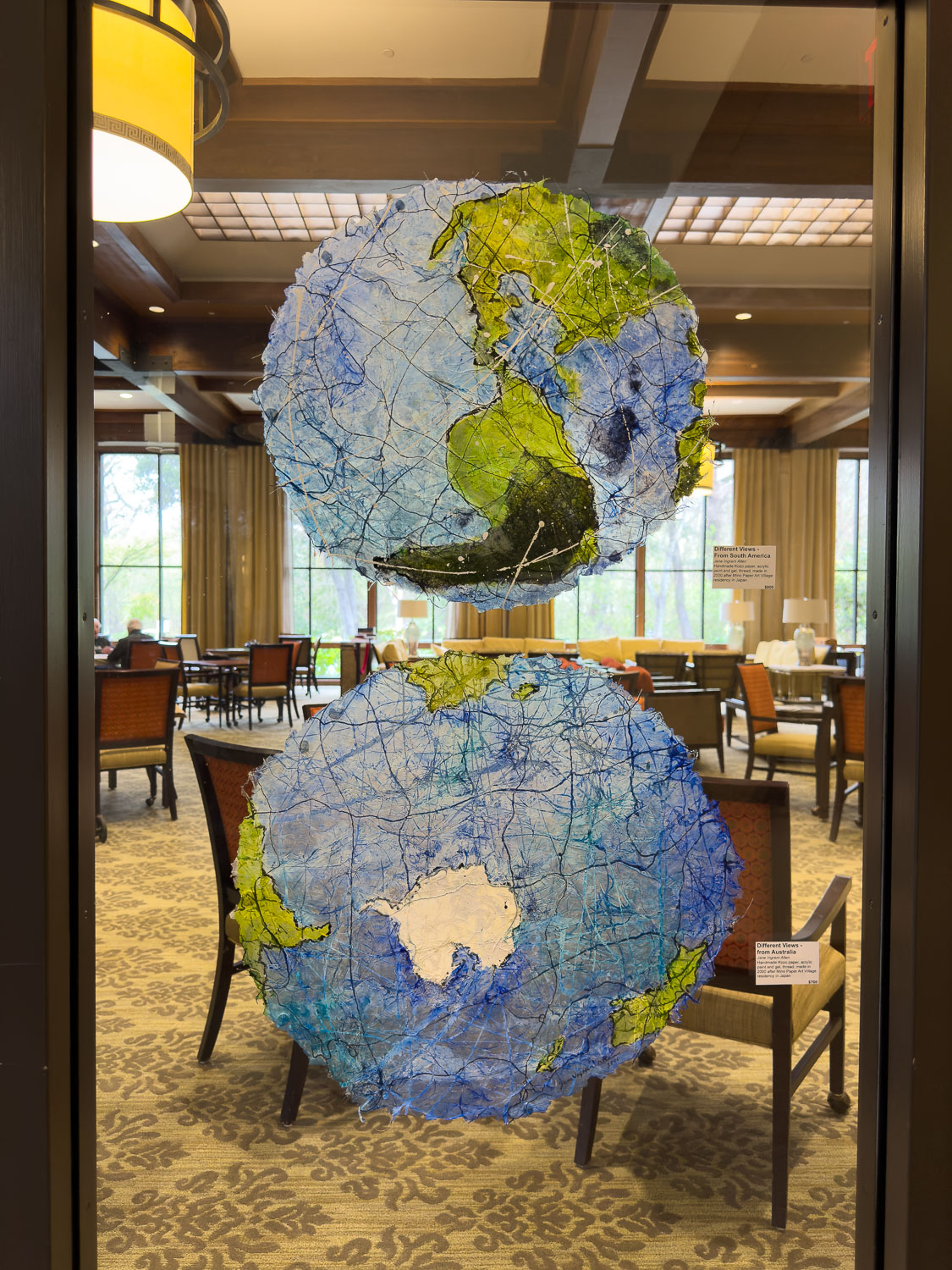
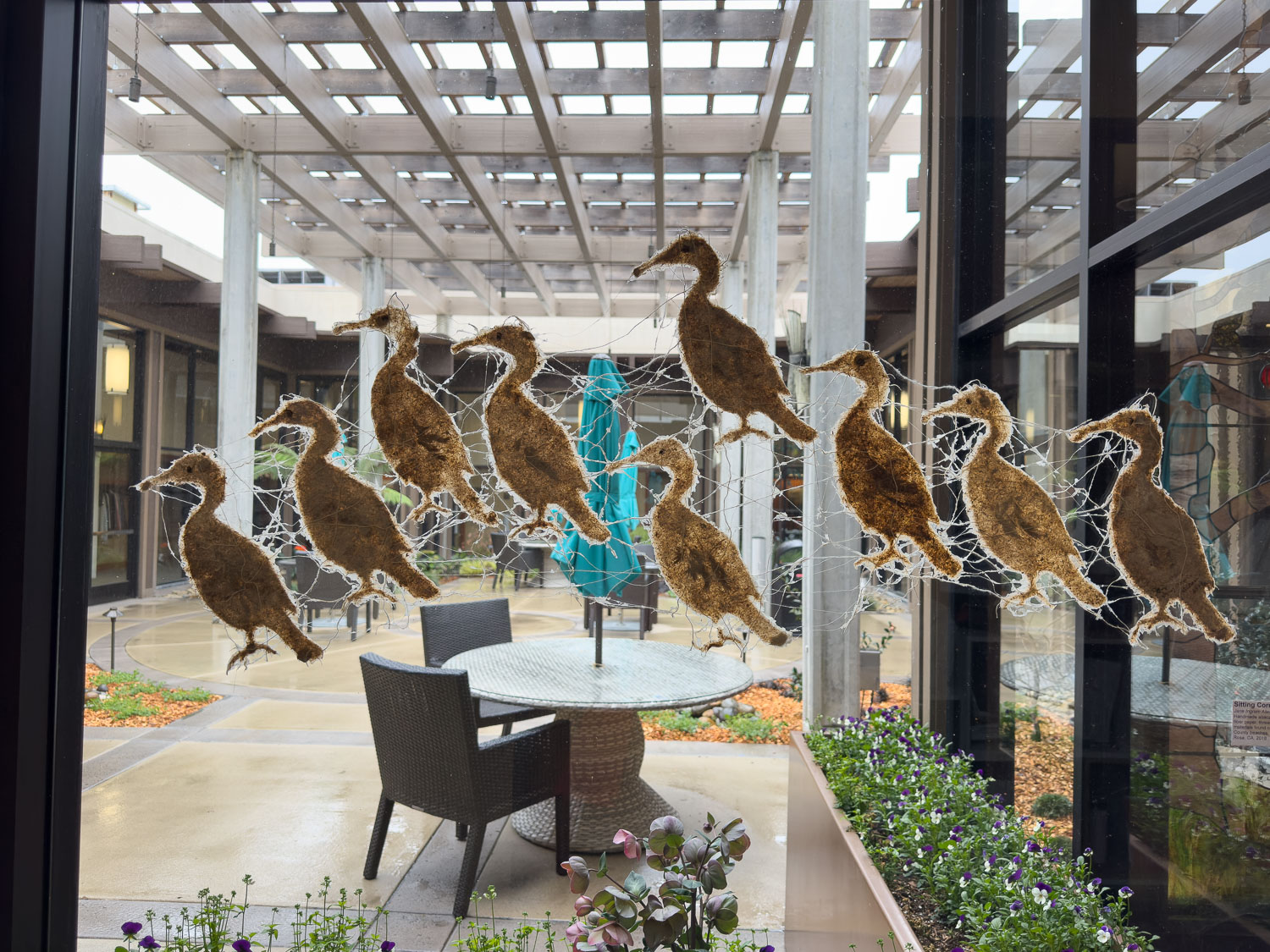
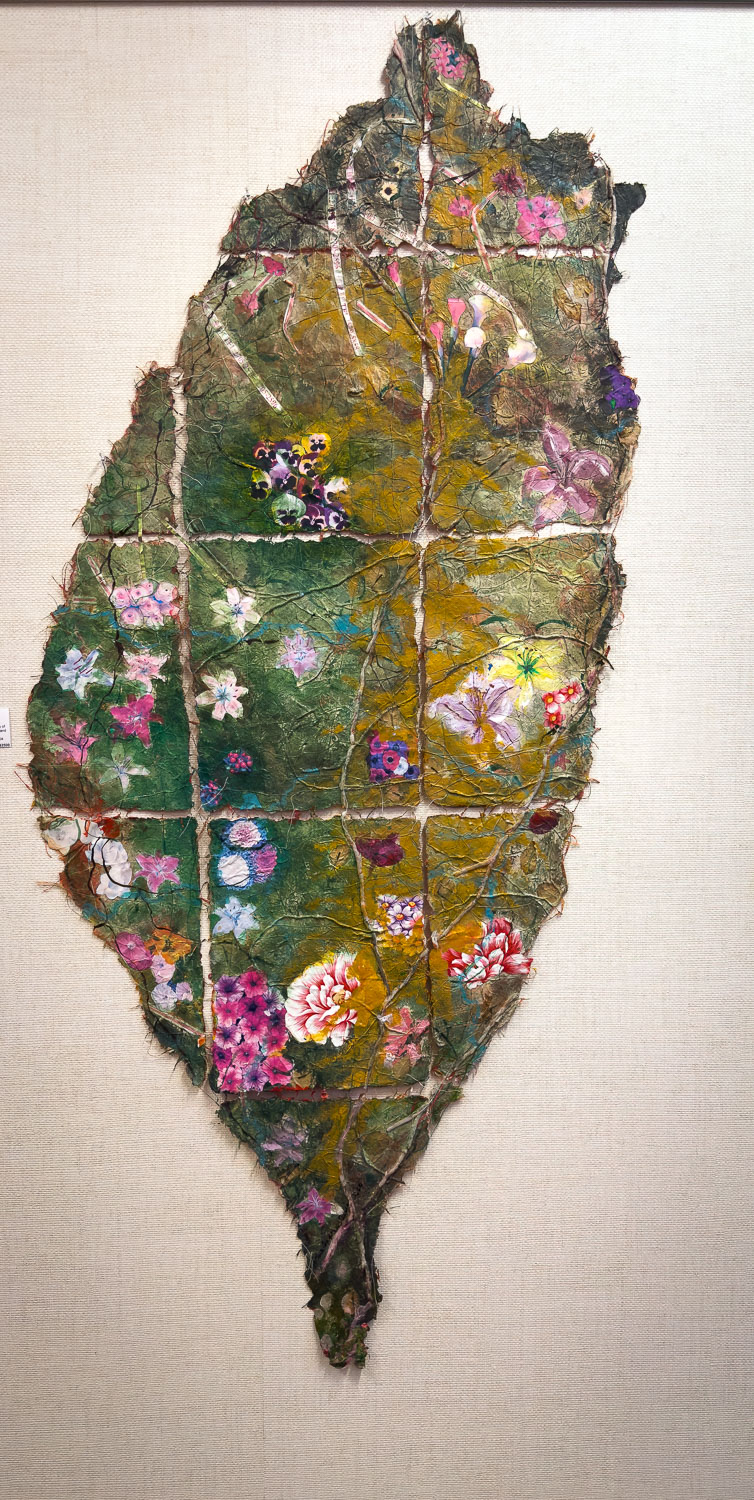
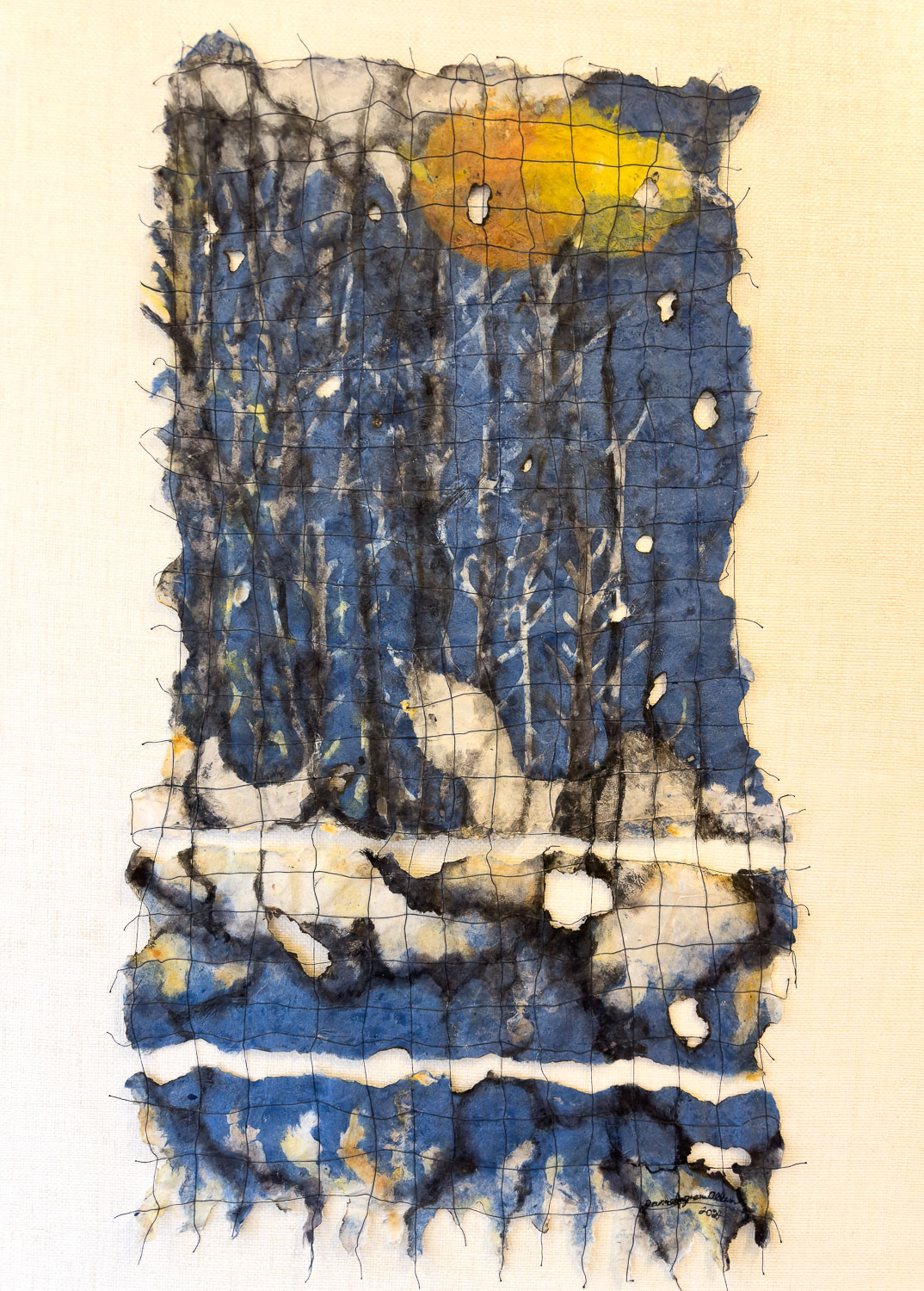
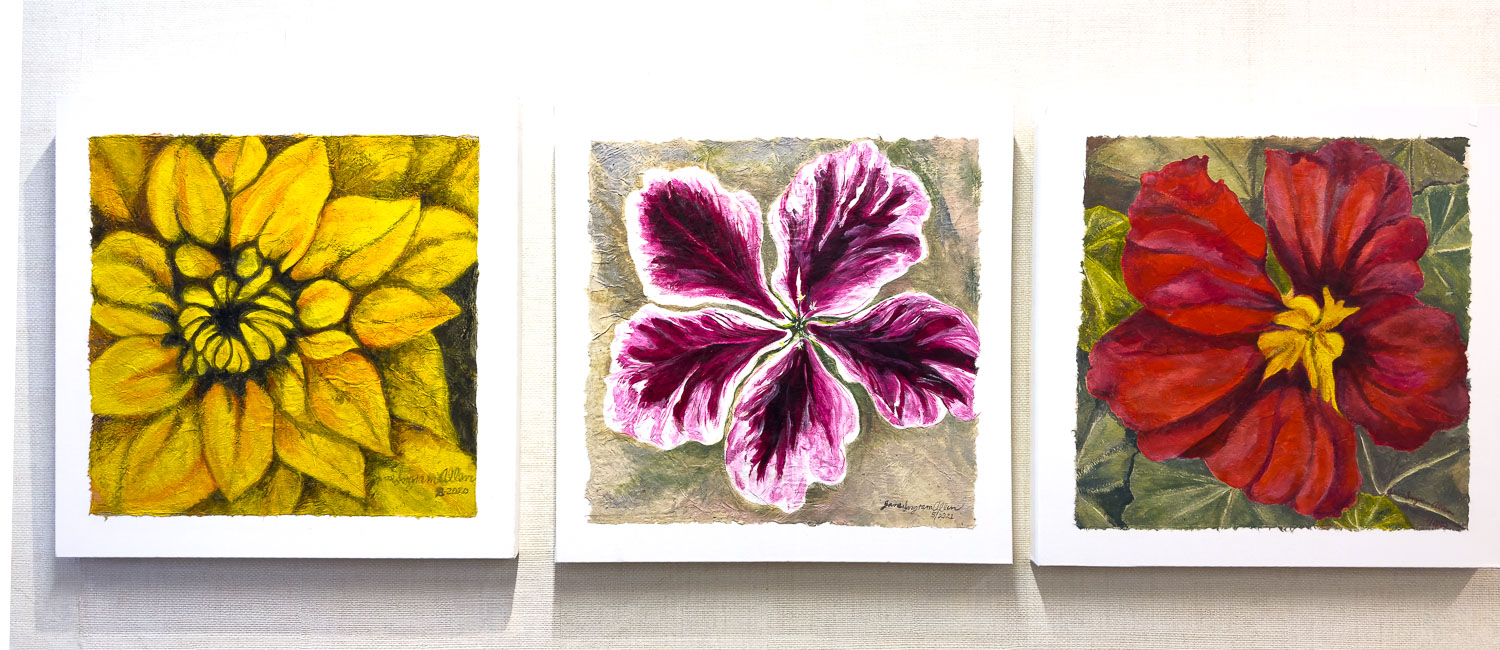
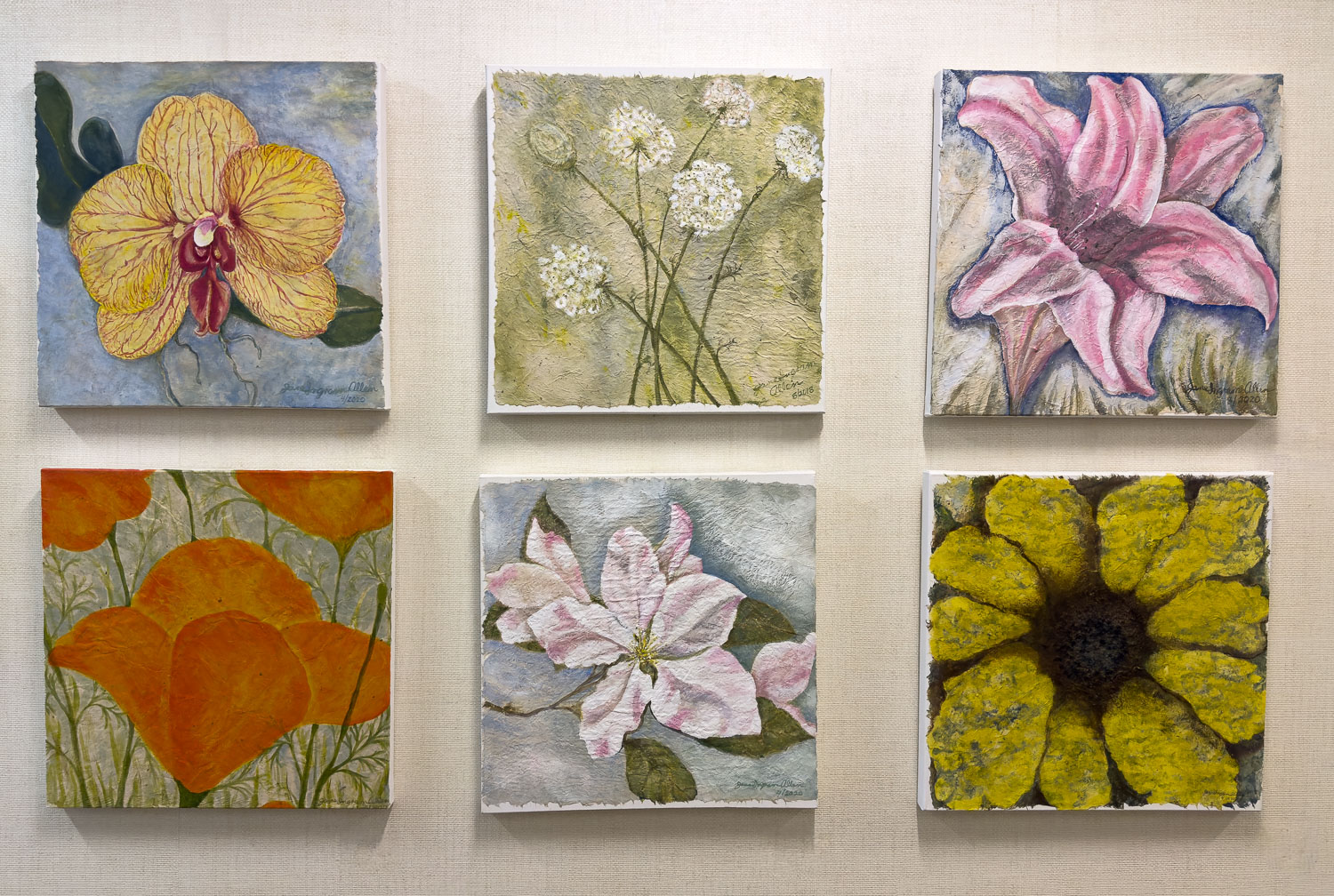
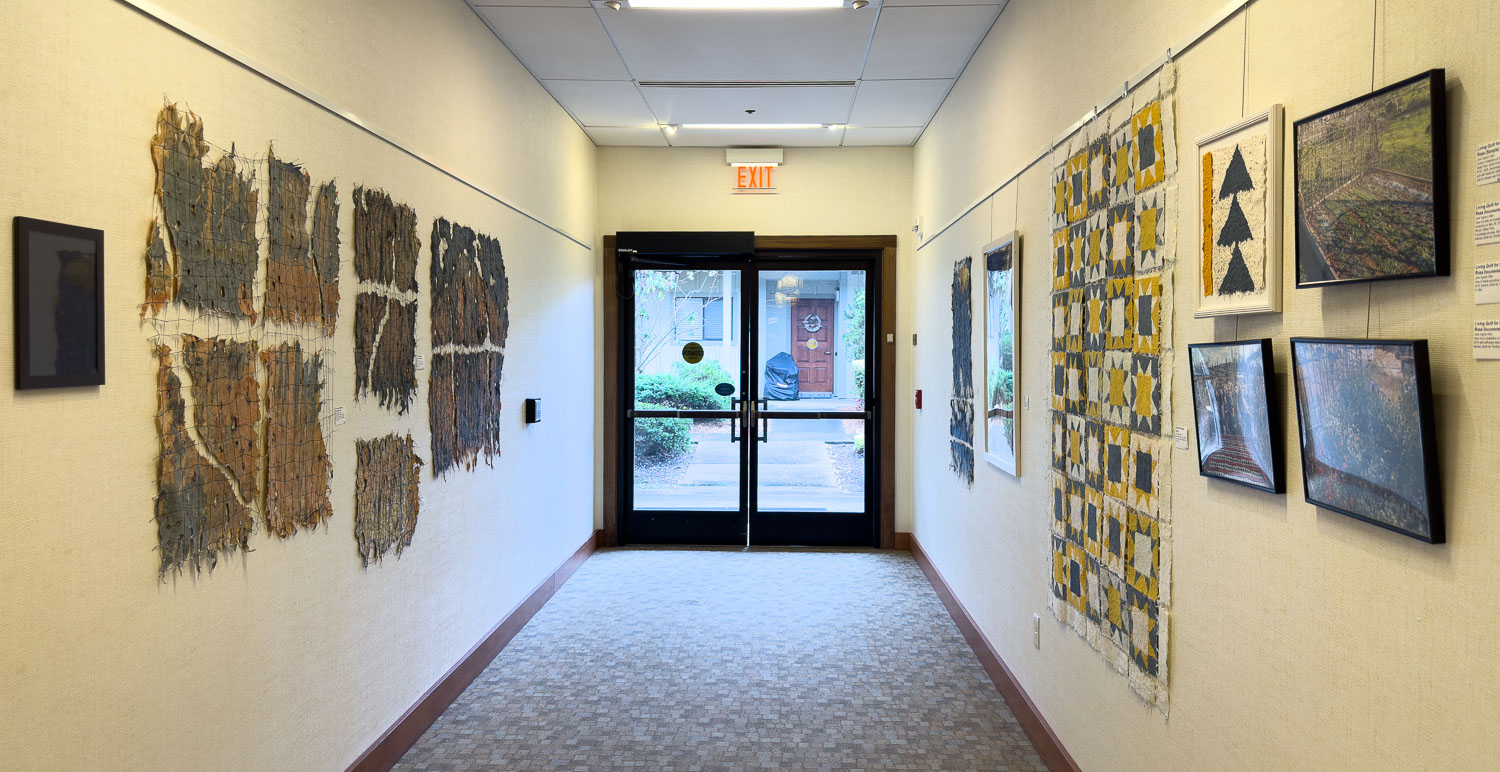
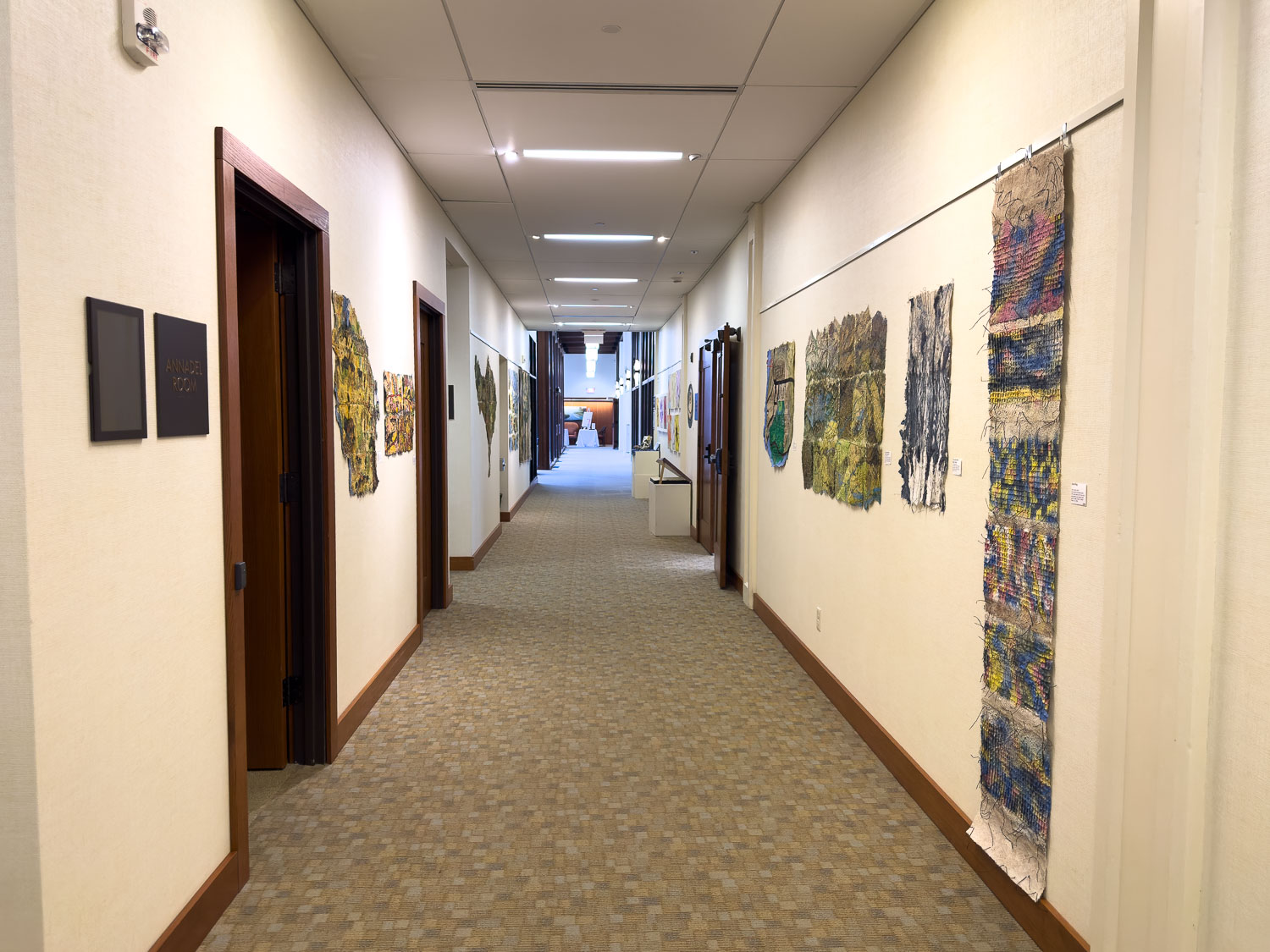
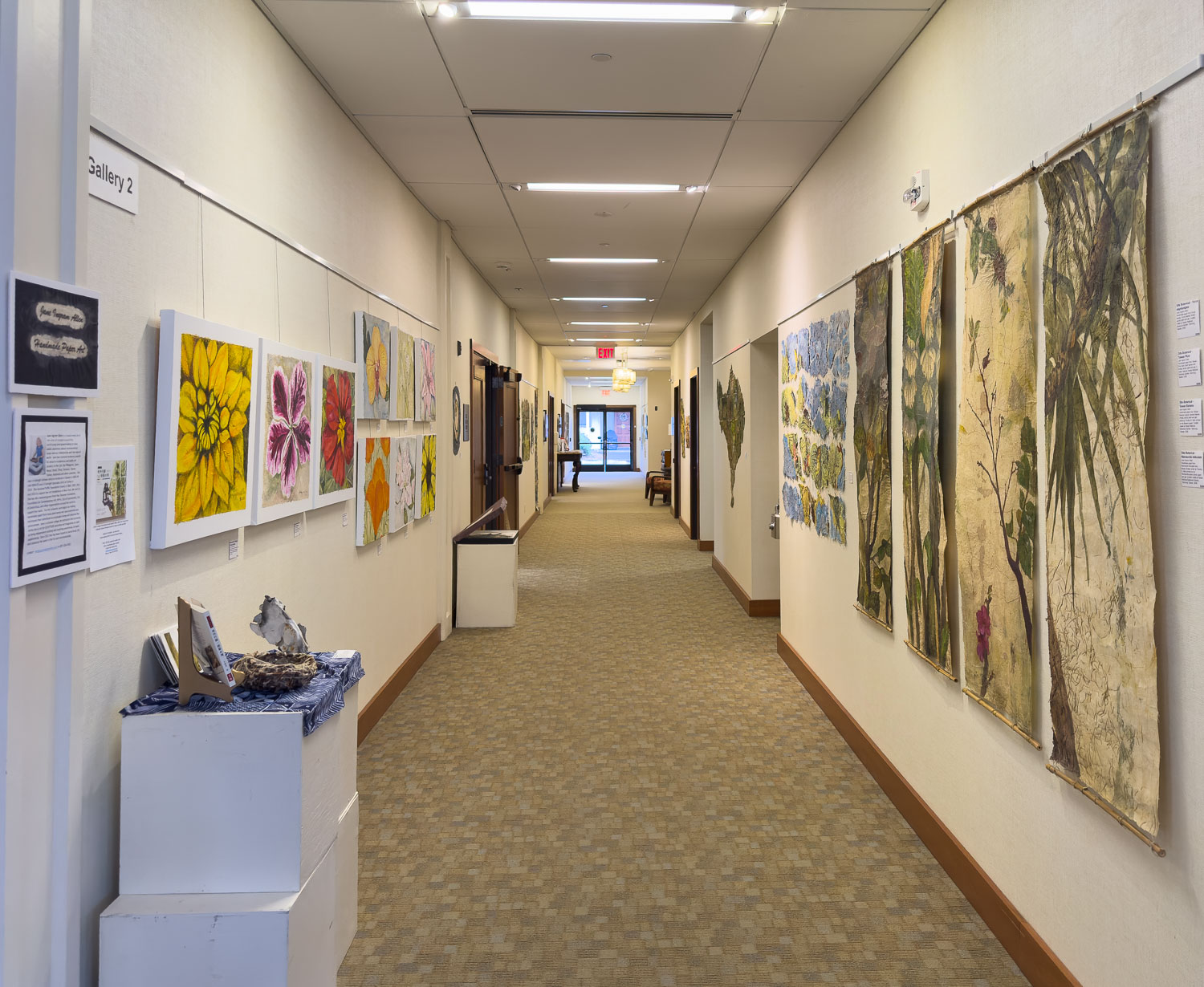
My exhibition of 80+ handmade paper artworks created in Santa Rosa and at artist residencies around the world are on view at Spring Lake Village Art Gallery, 5555 Montgomery Drive, Santa Rosa, CA, till May 30, 2025. The show is open every day for viewing, and visitors should contact Spring Lake Village Art Committee Member, Les Saldanha, saldanhales@hotmail.com or cell phone 707-367-1874.

The opening reception is Saturday, April 12, 3:45 to 5PM with an Artist Talk in the Auditorium and reception in the Art Room immediately following.

Here are some photos of the exhibition at Spring Lake Village taken by my husband Timothy S. Allen.

Like Loading...

Final Weeks of My Artist in Residency in Costa Rica

18 Saturday Feb 2023

Posted by janeingramallen in Uncategorized

≈ 2 Comments

Tags

Boruca tribe of Costa Rica, Costa Rica, handmade paper, Le Diamante Vert, Marie M'Ayala Saurat, plants for papermaking, Uvita

I just returned from spending 6 weeks in Uvita, Costa Rica, for an artist in residency project at Le Diamonde Vert, home of French choreographer/dancer Marie M’Alaya Saurat. My husband Tim and I are happy to be home, but it does seem cold here in Northern California compared to the hot humid weather in Uvita. I am compiling my research on the papermaking and the local plants I used in Costa Rica and finishing up a few works I started there duringthe last week or so. We spent a couple of days in San Jose, Costa Rica, before our flight home, and it was great to have luxurious warm showers, a huge bedroom, nice restaurants and a beautiful pool on the premises.

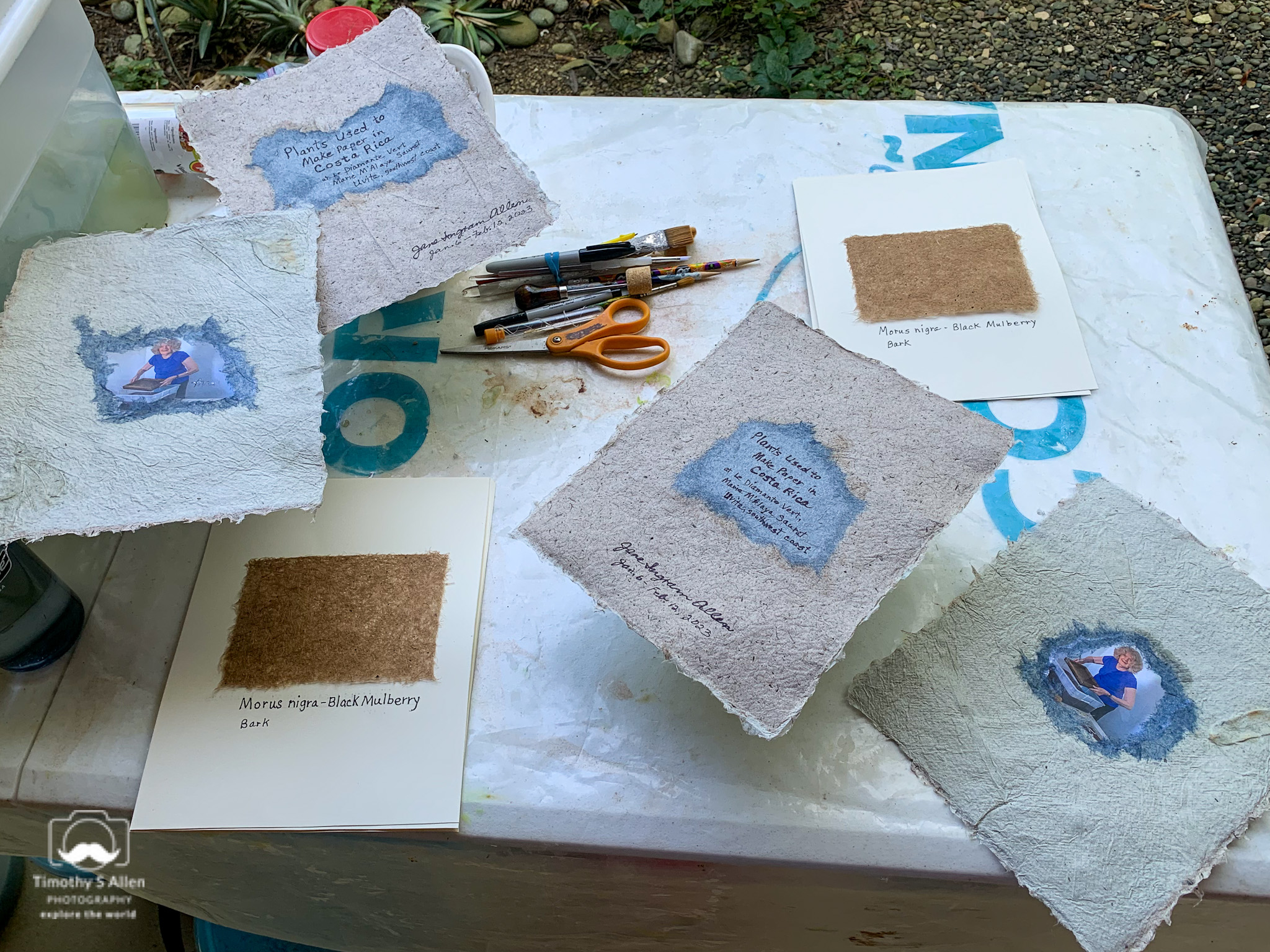
During the residence in Uvita I made paper from 6 plants: Plantain Leaves (Musa x paradisia), Shell Ginger Leaves ( Alpine zerumbet), Corn Husks (Mais), Leaves of a Roadside Grass (Papsalum saccharoides), Red Hibiscus Bark (Hibiscus rosa-sinensis) and Black Mulberry Bark (Morus nigra). I think those are the correct scientific names, but it was really difficult during this residency to find anyone who knew about the local plants. Marie had one book on Plants of Costa Rica that was very helpful.

Making the handmade paper sample books.

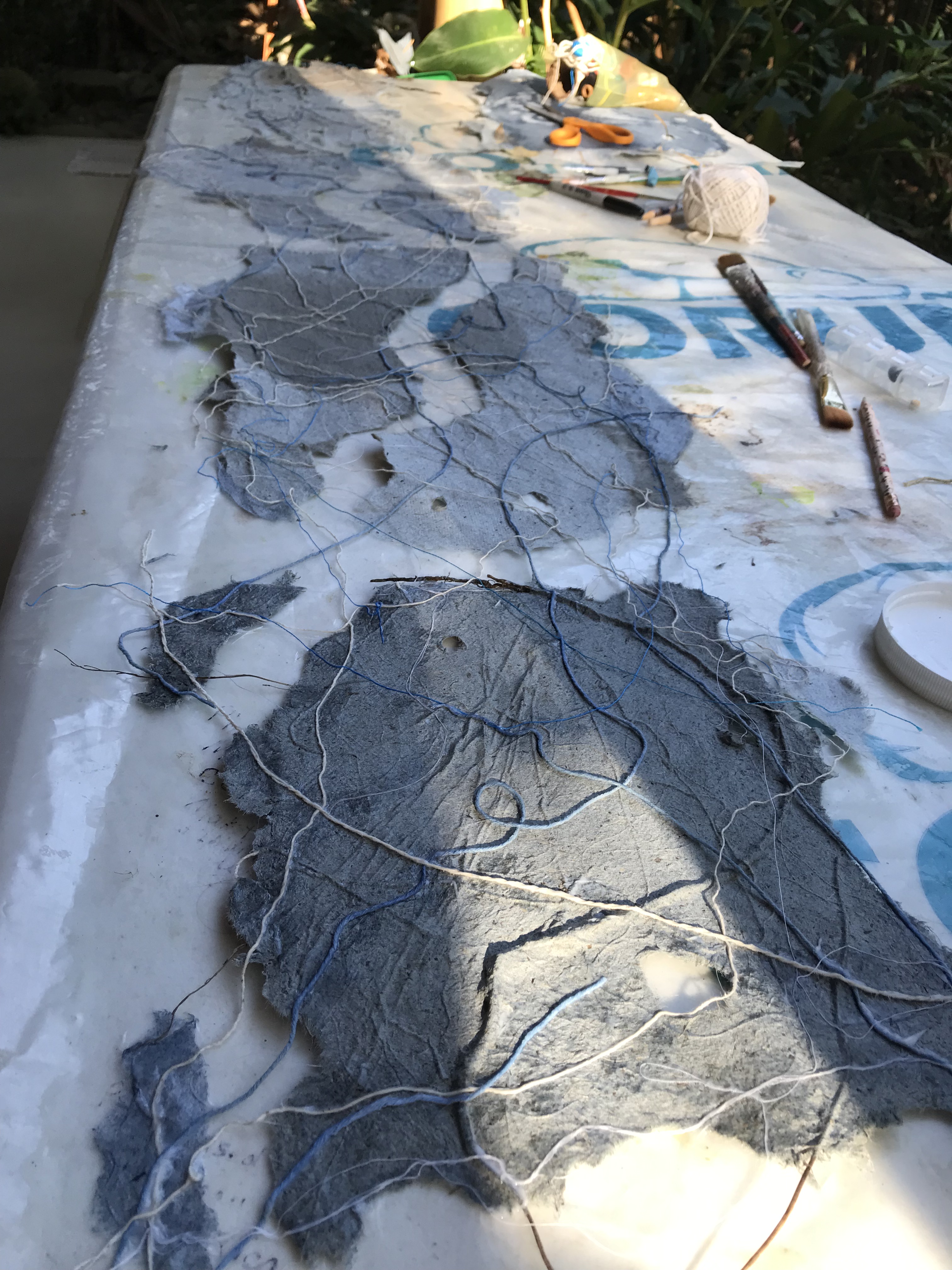
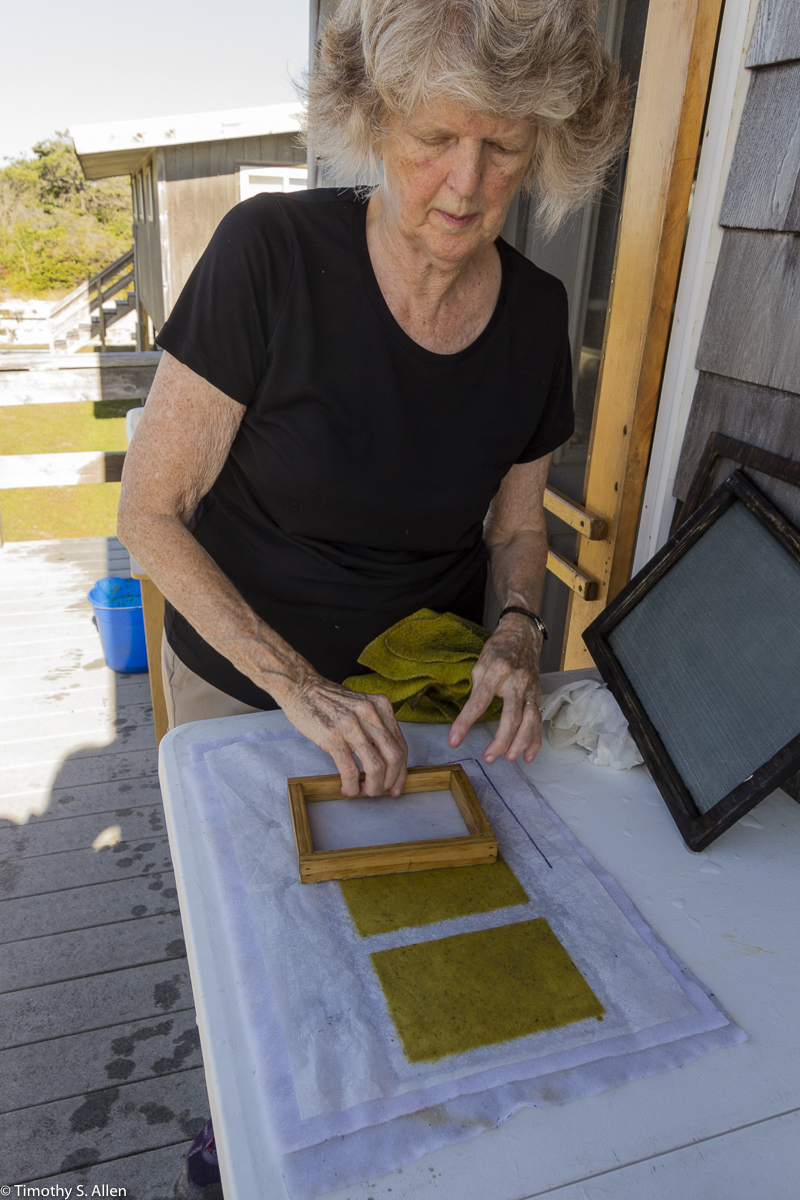
During this residency I also used some kozo, abaca and blue jean pulp that I had brought with me in the suitcase, and I enjoyed combining the local fibers and this added pulp that I could process by hand and with the kitchen blender I also brought with me. I used a modified Japanese papermaking technique with formation aid and multiple dips into the vat, forming thin but still strong handmade paper. I enjoyed using the blue color from the blue jean pulp as well as the natural colors of the various plant fibers. The light in Costa Rica is terrific, and I experimented with making holes in the paper and joining the pieces of handmade paper with natural threads so that they move easily for dance and also are easier to fold and transport after the residency.

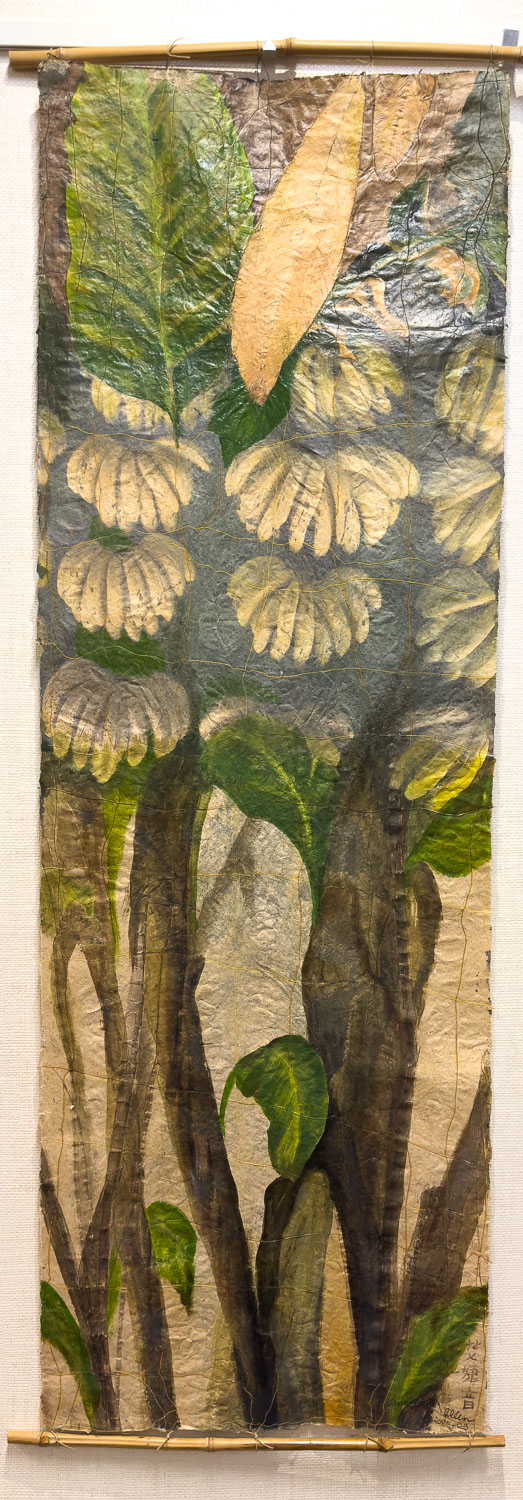
I also put together some artworks with the handmade paper of Costa Rica that I could bring back with me to show in California and other places. Here are some photos showing how I shaped and joined single sheets to make long suspended panels to take advantage of light coming through the handmade paper. I will continue working on this “made in Costa Rica” series of works and also doing some writing and interviews about my residency in Costa Rica.

Detail of putting together handmade paper with threads.

During the last few weeks in Costa Rica, my husband Tim and I also took a few excursions. One trip was to a nature preserve near Uvita that is up in the mountains where we could see different birds and different plants early one morning, and we also took an early morning trip to the national park beach area to see shore birds and animals…they said there were crocodiles and howling monkeys but we did not see any! We also took a one day trip about 2 hours away to Boruca village to see natural dyeing and weaving of the indigenous Boruca tribe of Costa Rica. That was an exciting journey over winding dirt roads, and we had lunch with Marina, a Boruca woman who is the expert and teacher of weaving, spinning and natural dyeing. We saw demonstrations of the natural dyeing to get an incredible variety of really bright colors on the cotton yarn that Marina also showed how to hand spin. The plants used in natural dyeing were all growing around her house so I was able to collect some samples and maybe can find out more about these plants. The weaving that Marina demonstrated is using a back strap loom with thread heddles and produces thick cloth for bags and straps that is sold in the village and at local markets. We encountered the Boruca tribal crafts first at the Uvita Farmer’s Market where they were selling their carved and brightly painted wooden masks, gourd art and the natural dyed hand woven bags and straps.

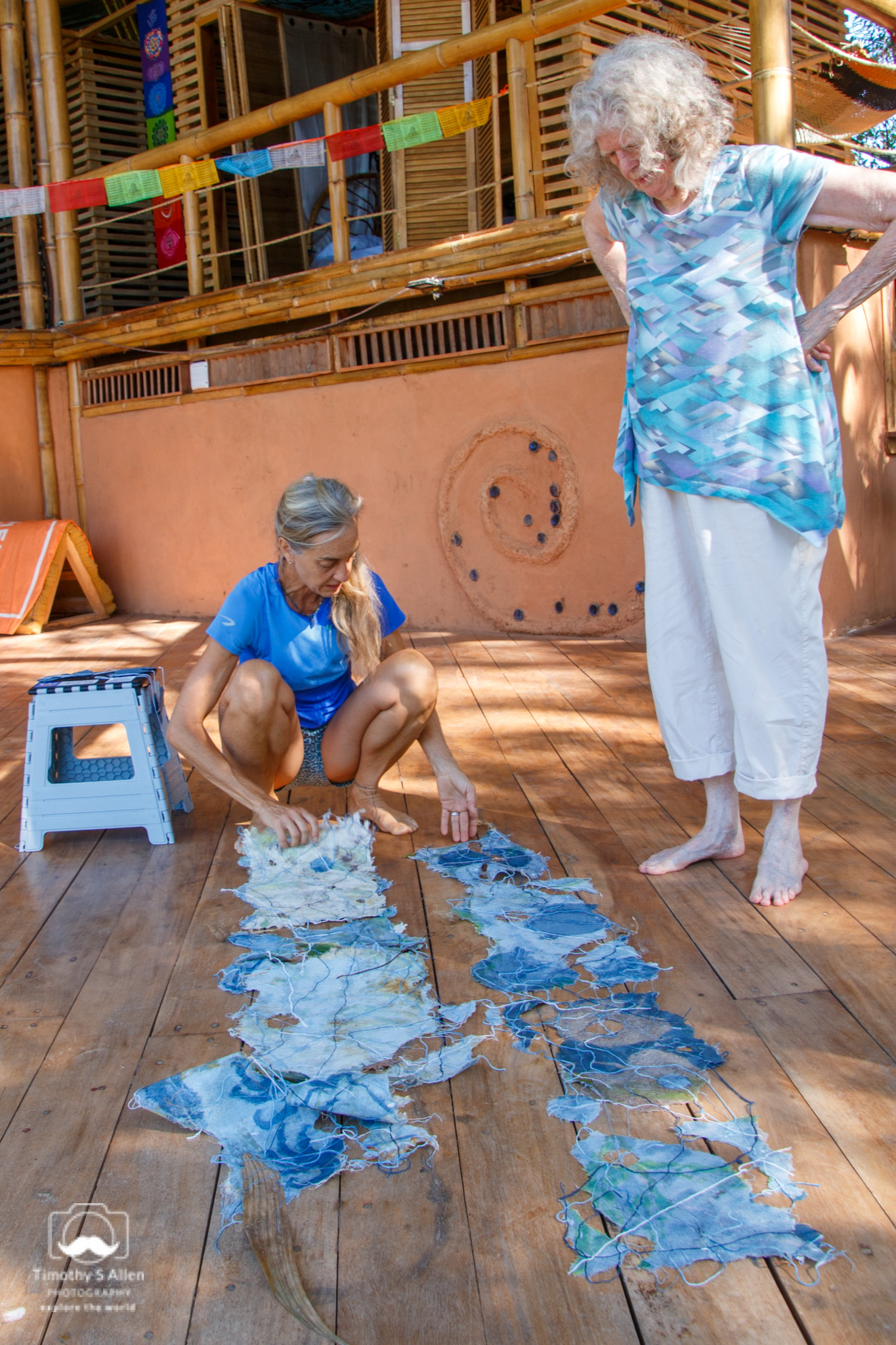
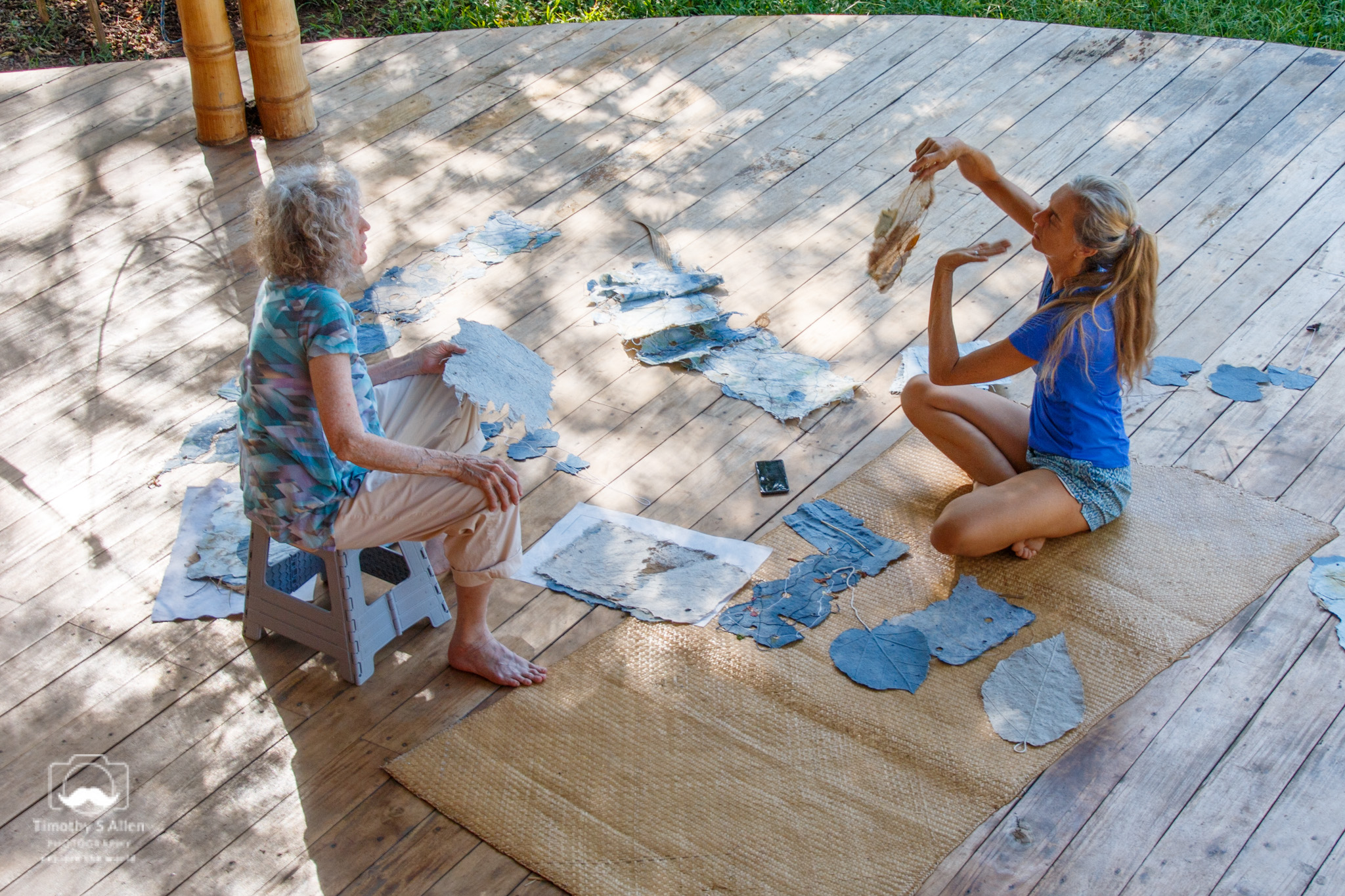
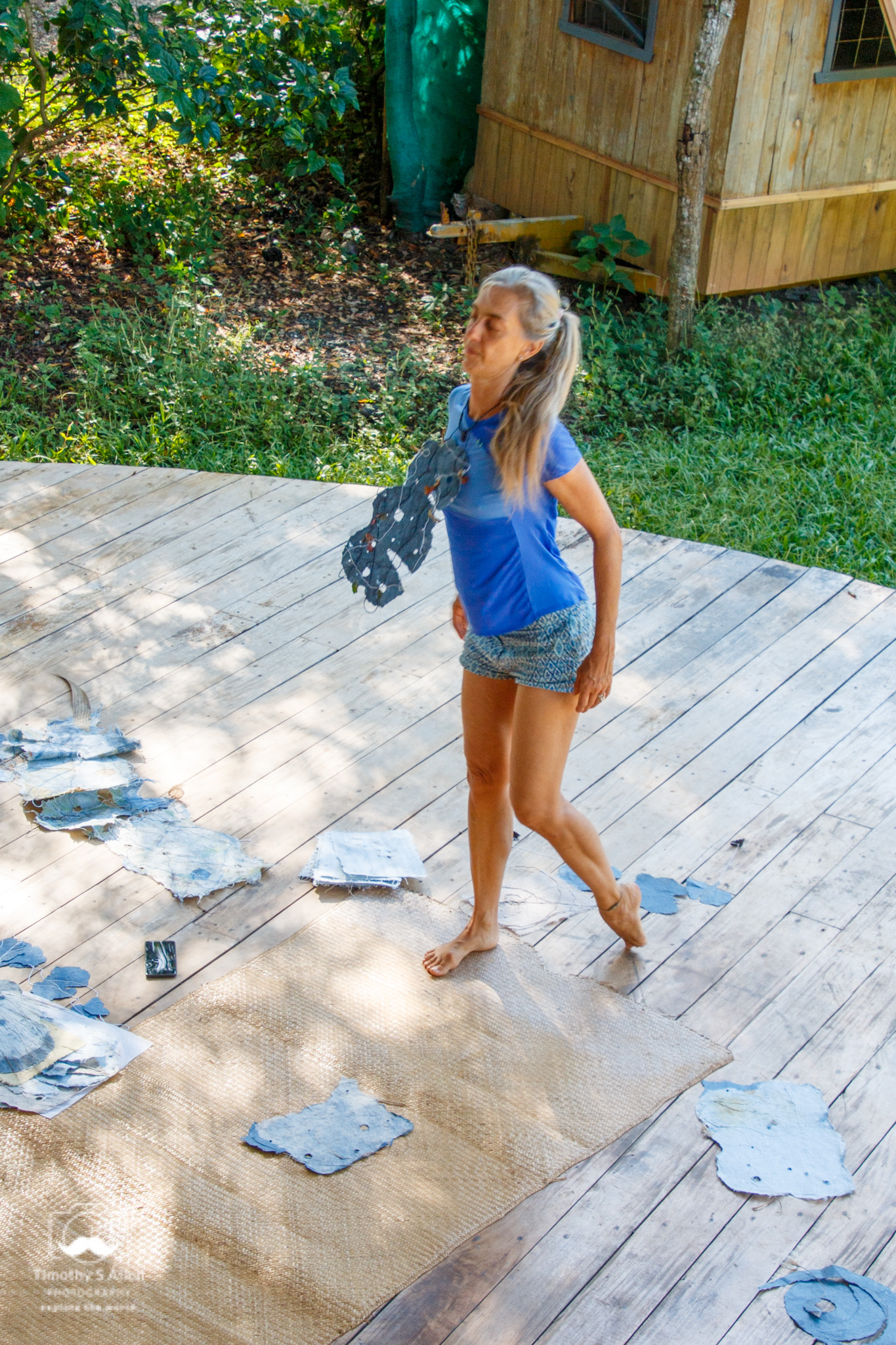
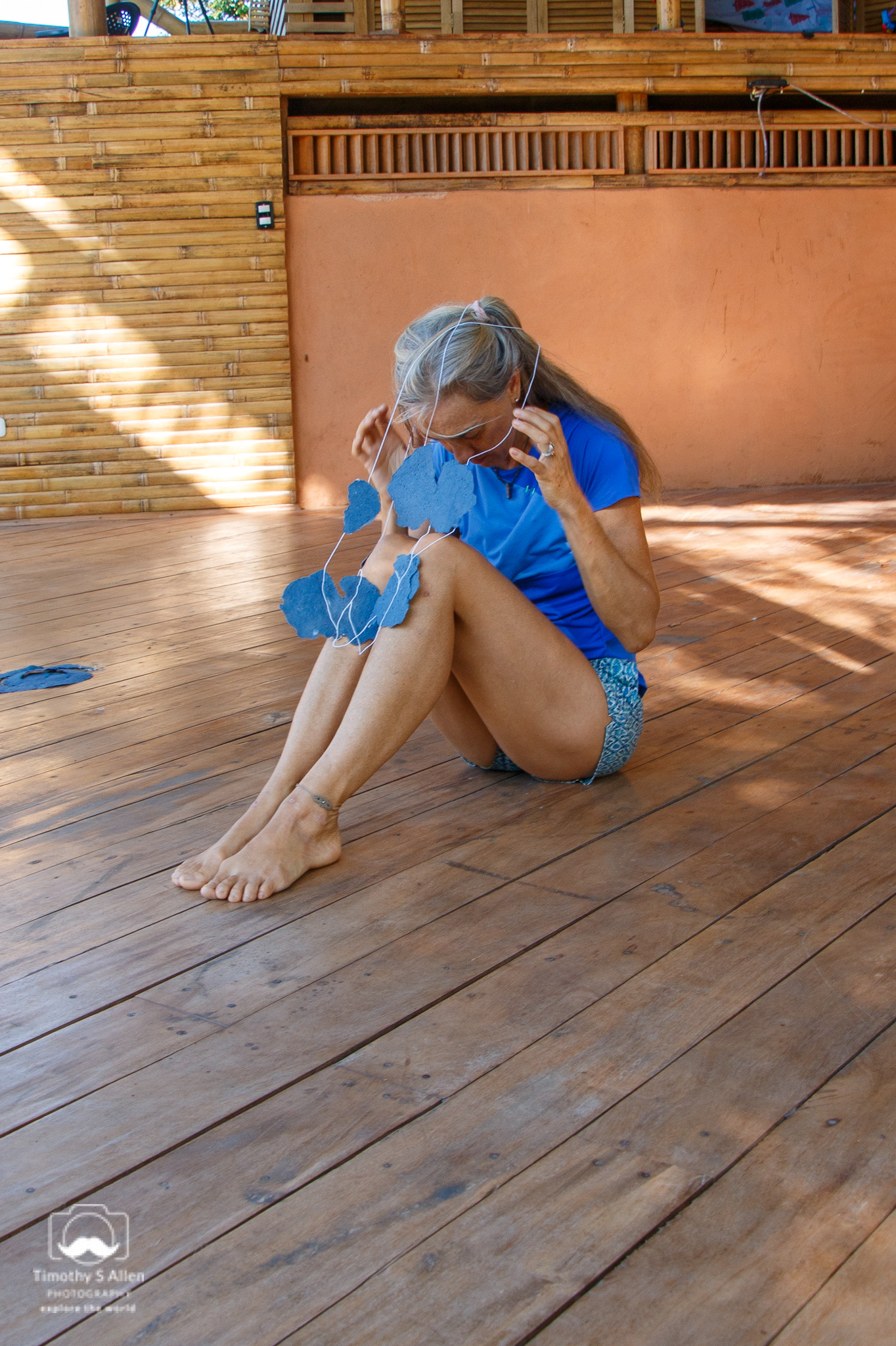
During the last week Marie and I worked together more to create a collaborative dance performance piece that will make use of some of my handmade paper and thread constructions at a performance art festival in May in Havana, Cuba. Marie will take the handmade paper and thread constructions I made folded up in her suitcase for the festival in Cuba. Here are a few photos showing the collaboration and creative process of working with a dancer to create a collaborative work about water and rivers. It was the first time I actually made my art for dance, as other earlier collaborations with choreographers were from them seeing an installation I had already done and then creating dance to go with it. I will post more here about the “way of water” festival in Cuba and hopefully get some good video from Marie of the performance in Havana.

Marie and Jane looking at the handmade paper and thread constructions made for the dance performance.
Marie and Jane looking at the handmade paper constructions and Marie making sounds on the paper.
Marie improvising dance movements with the handmade paper constructions.
Marie dancing with the handmade paper.

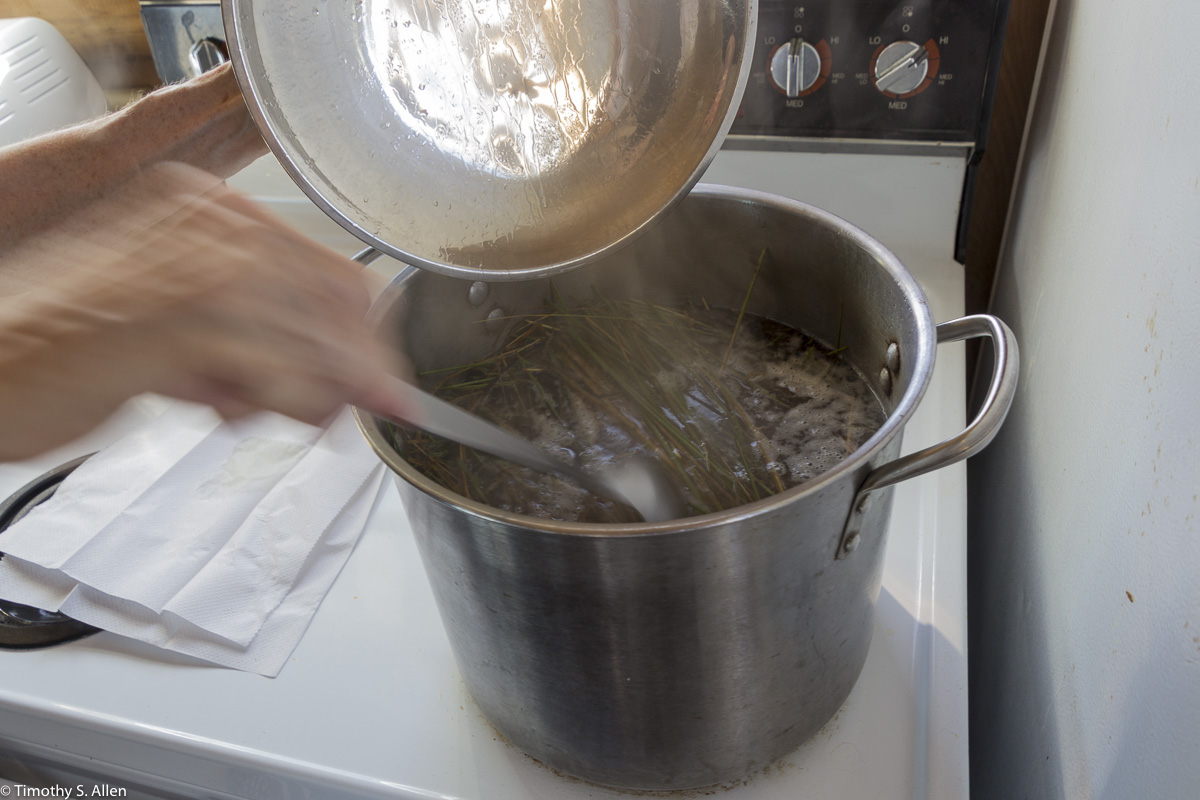
Overall, this residency was a great chance to see Costa Rica, use new plants for papermaking and experience a different culture as well as collaborate with a dancer/choreographer to make new work. It was a difficult residency in that Marie’s place is not set up for anything but dance. There is a large wooden dance porch area, but there is no space for a visual artist. Our bedroom was very small and upstairs with no access to water. I did all my work on one table on the narrow tile porch along the side of the house and the pulp cooking out in the yard. Marie’s house is far from parks or beaches or stores, and we used lots of taxis. I had to buy vats/large plastic tubs, buckets, and any thread I could find in local stores. I also had to find and buy a hot plate to cook fibers as Marie had no way to cook anything outdoors, and I could not use the small kitchen we used for making our food. Marie did have a large stainless steel cooking pot that I was able to use, and I brought everything else needed for papermaking in my suitcase. Marie’s yard had all of the plants I used, but more would have been nice to try if I had access to other areas. I have learned from experience being an artist in residence in many different countries to bring the essentials and find something that can work locally. The most difficult thing was finding an alkaline that would work for cooking the paper pulp. I finally found some lye in a big local supermarket and was able to use that to cut down on the cooking time and make the plant fibers soft and easy to beat by hand and with my kitchen blender. I was happy with the work I was able to do there, and Costa Rica is a beautiful country.

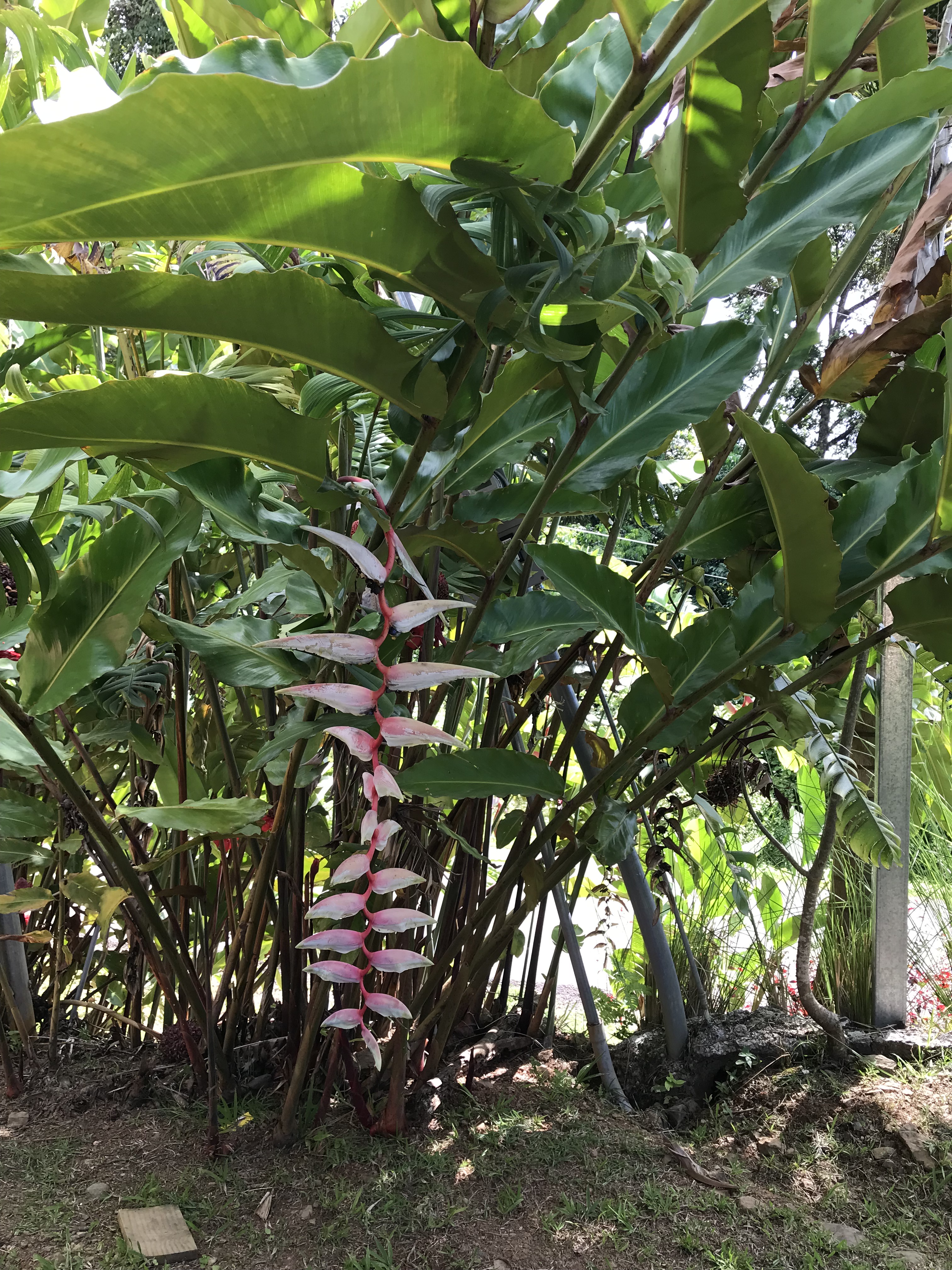
Beautiful tropical flower, I think a “Bird of Paradise” relative, seen on trip into the mountains outside Uvita.
Like Loading...

Fulbright Specialist Grant Art Project Completed in Izmir, Turkey

21 Monday Dec 2015

Posted by janeingramallen in Uncategorized

≈ 2 Comments

Tags

Ege University, EgeArt Days, Fulbright grant, installation art,, Izmir, map as art, Museum of Paper & Book Arts, papermaking, plants for papermaking, Turkey

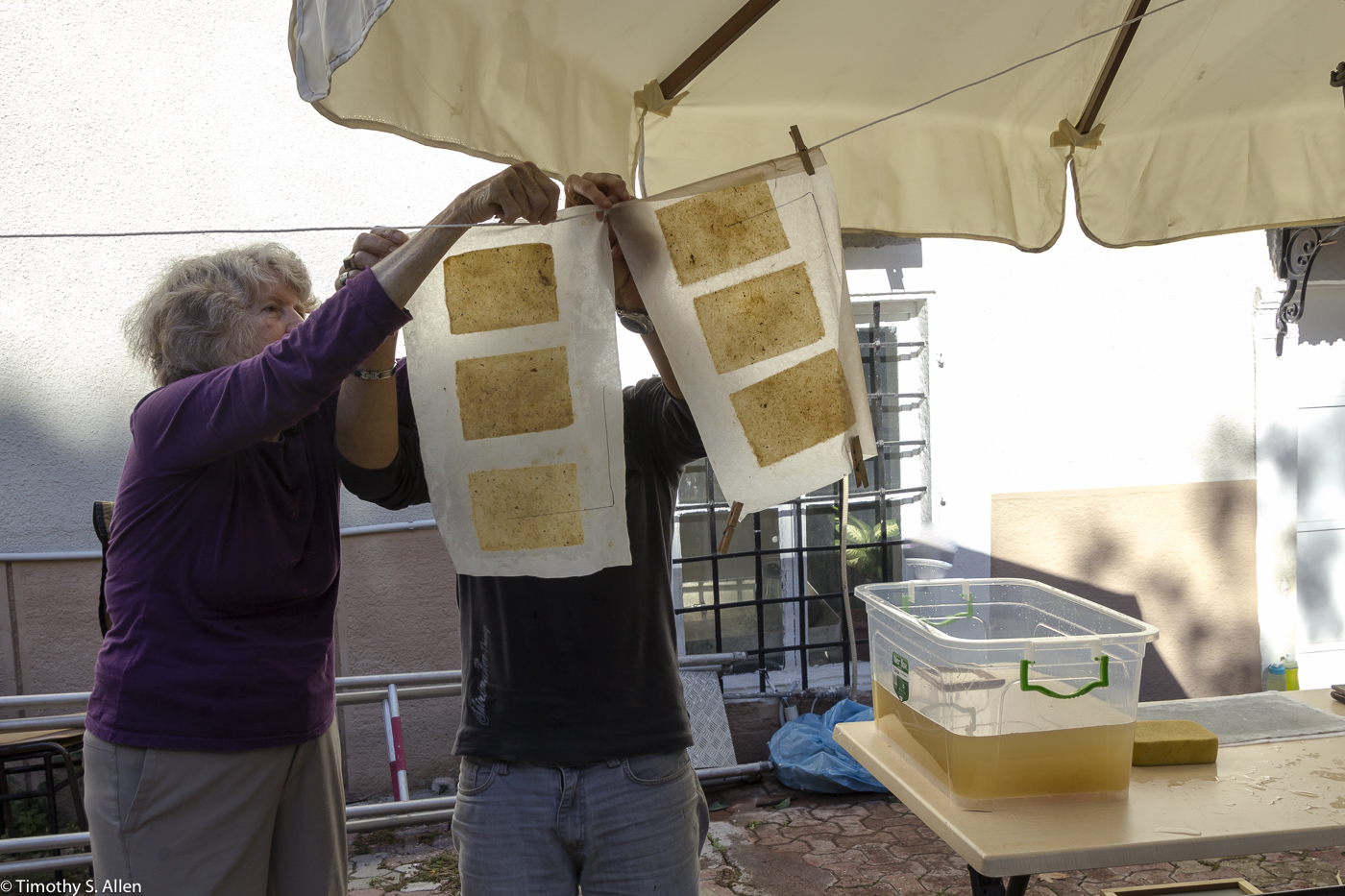
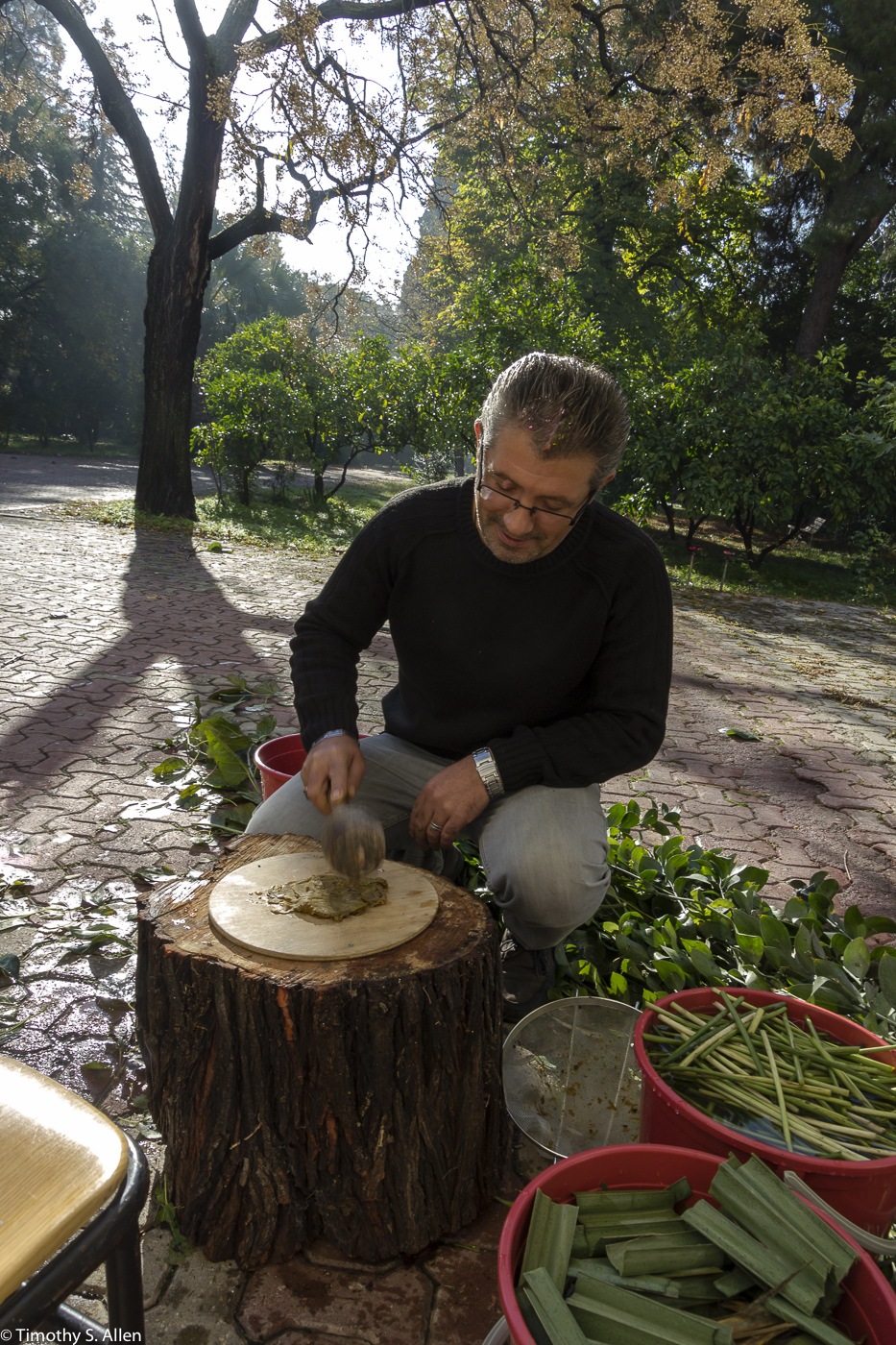
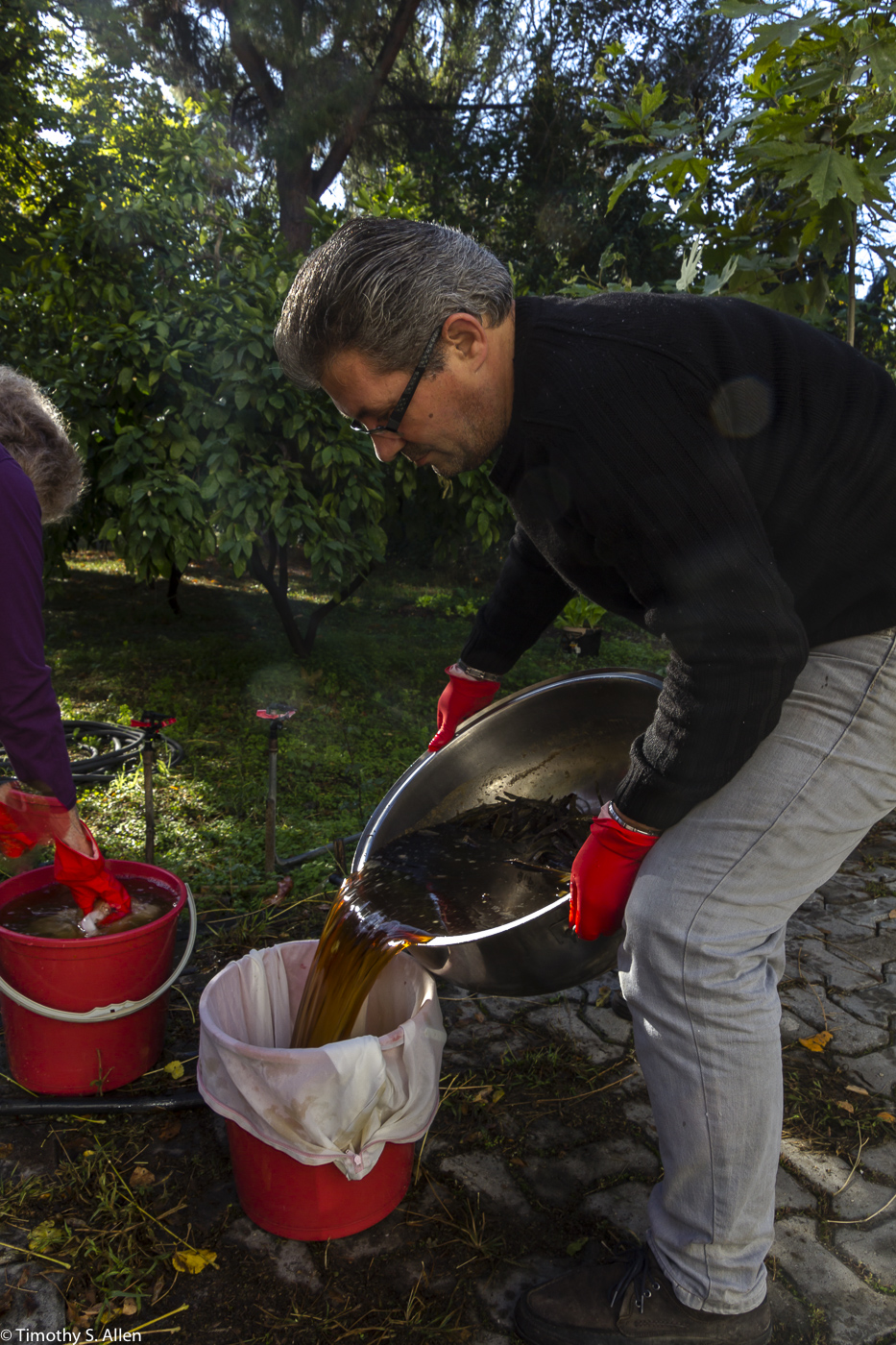
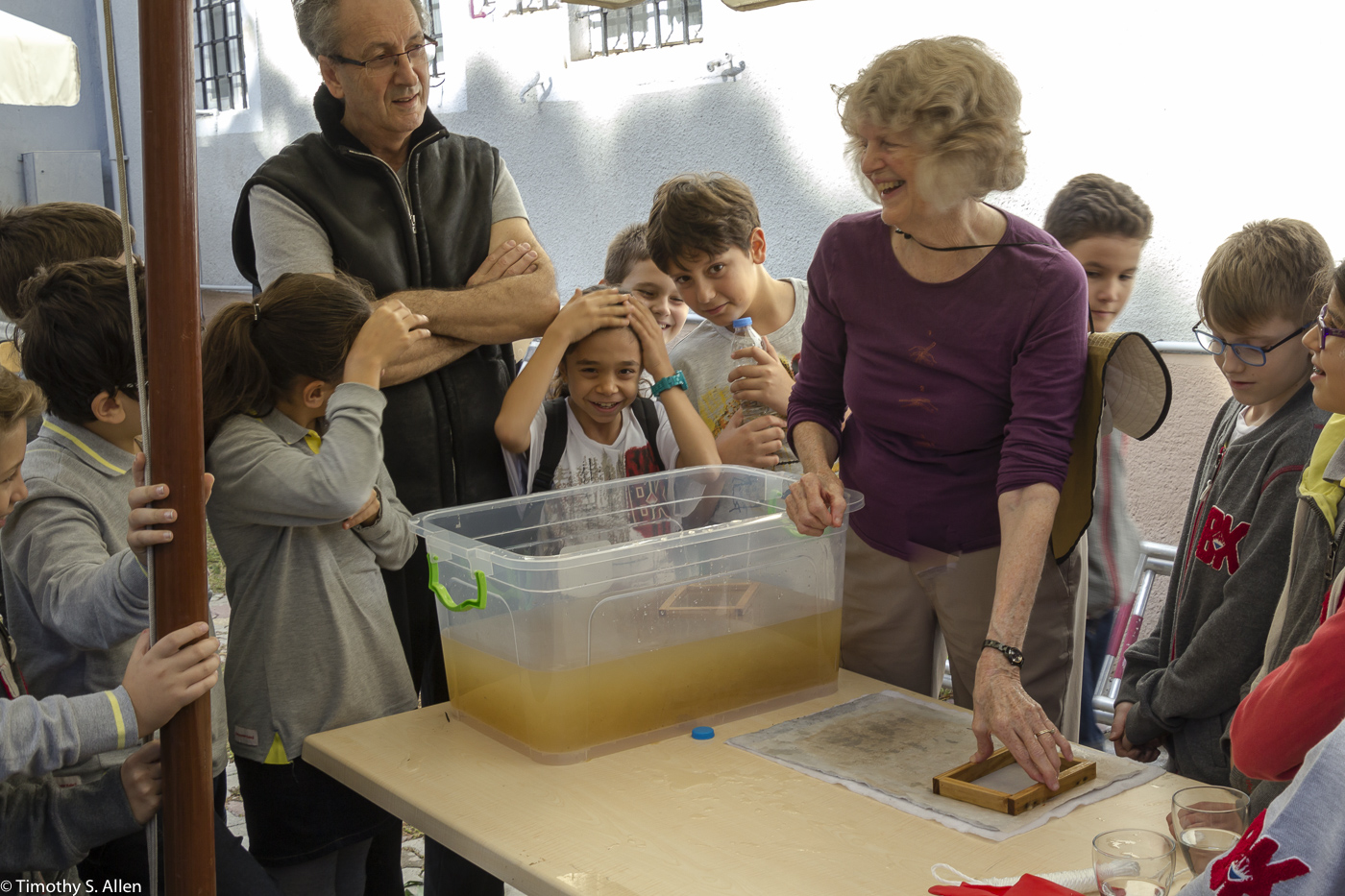
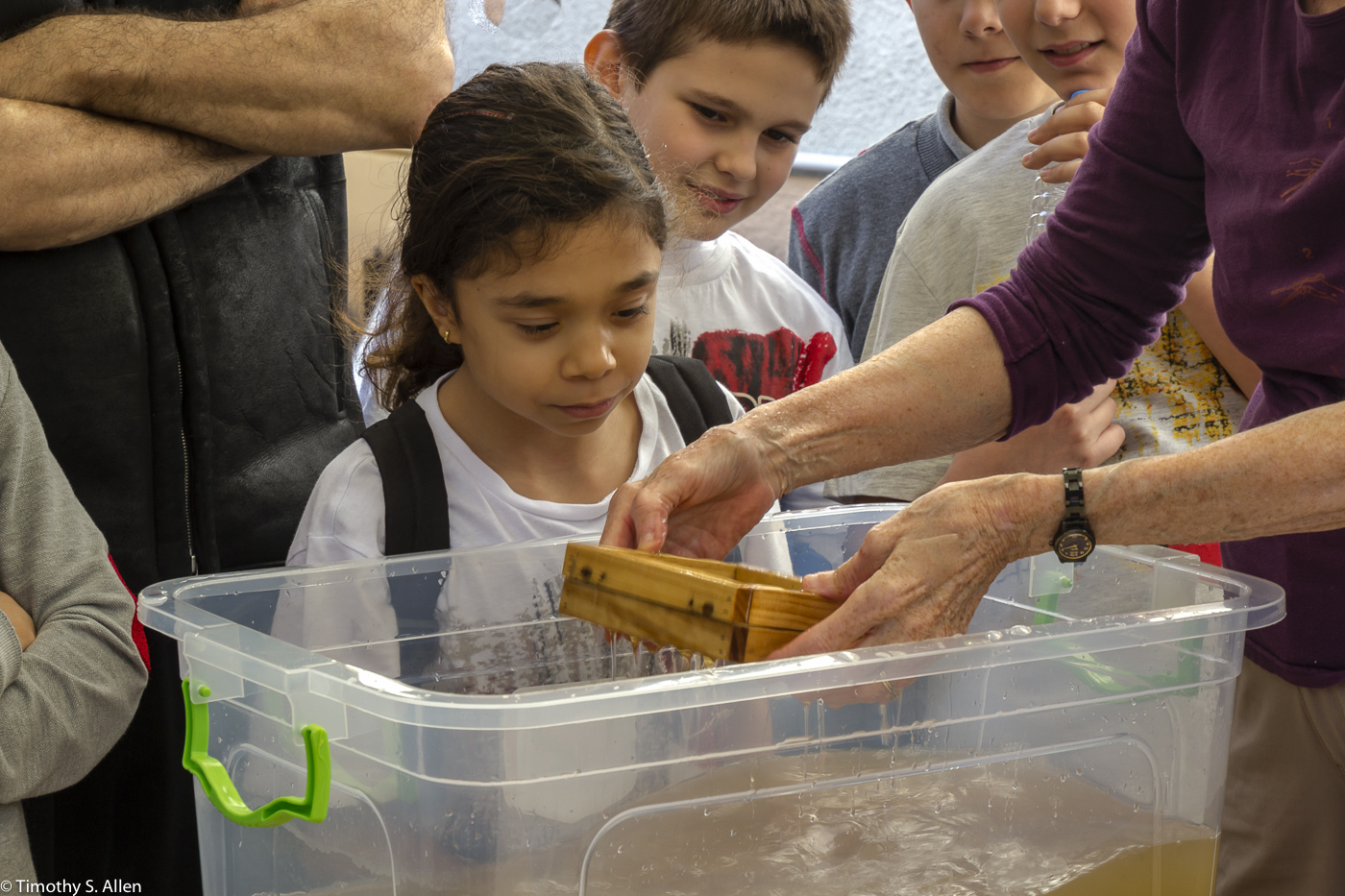
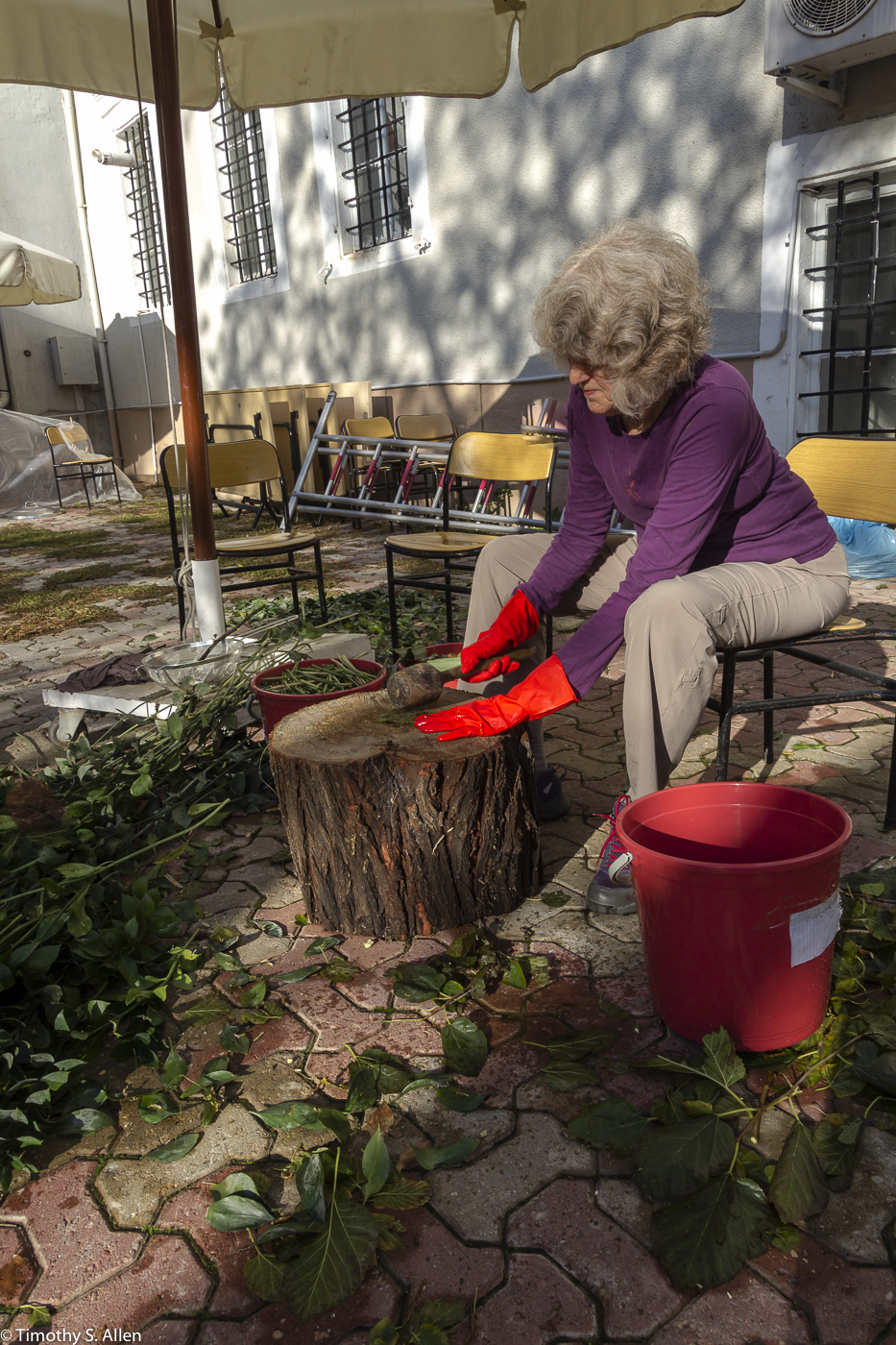
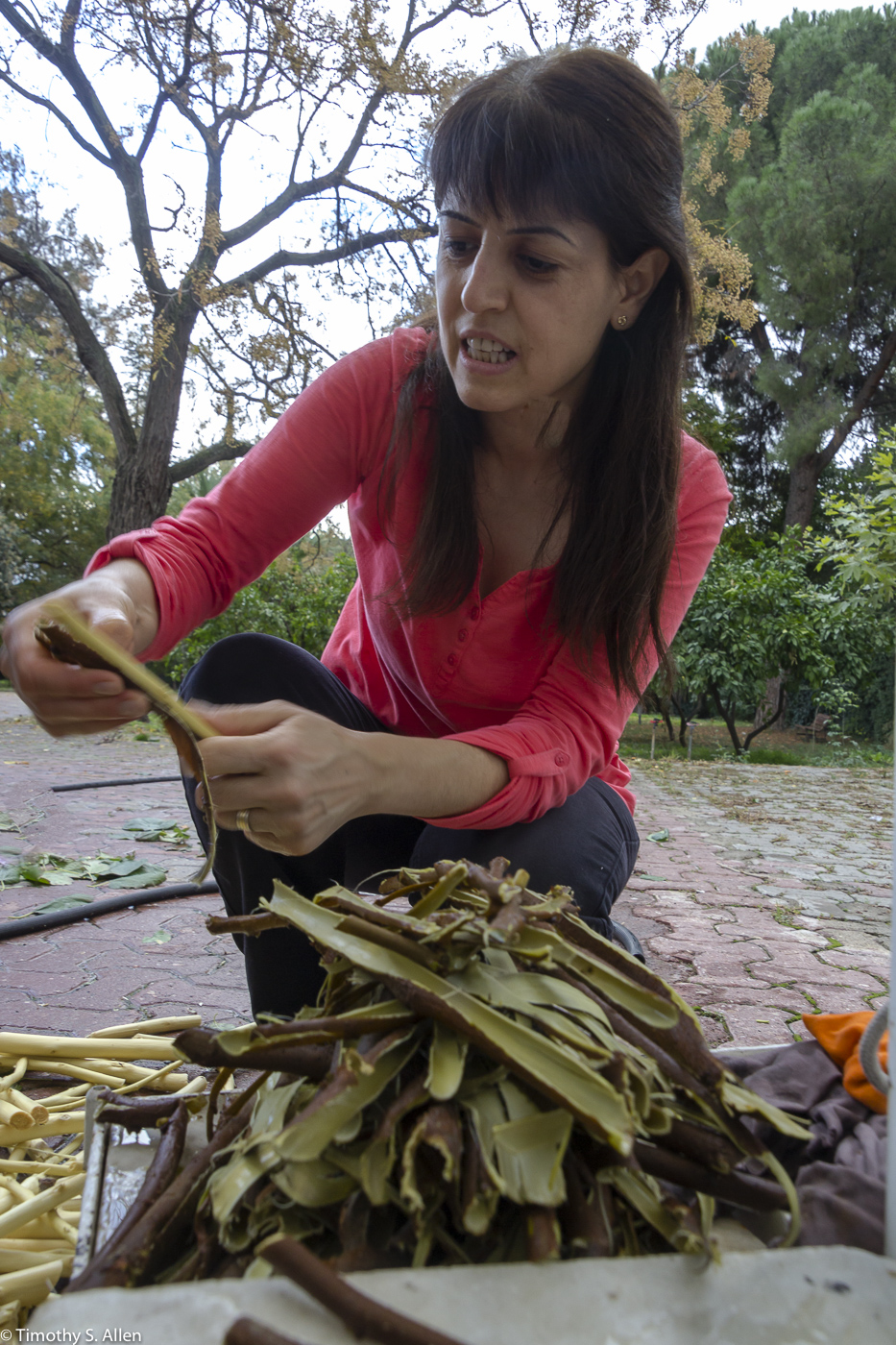
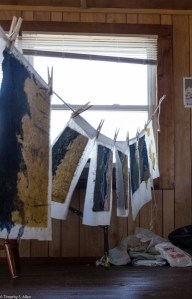
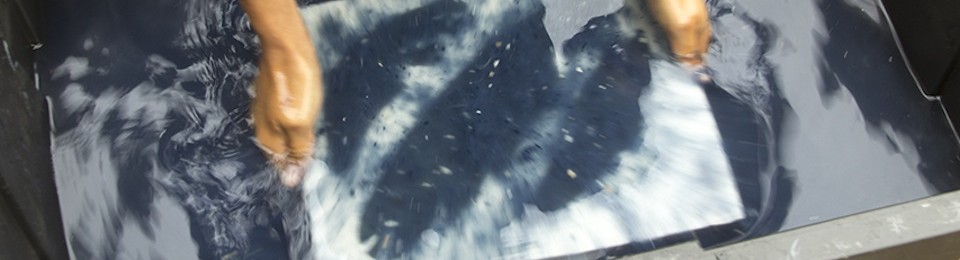
I have just returned to the US after completing my Fulbright Specialist grant project at the Museum of Paper and Book Arts, Ege University, Izmir, Turkey, from Nov. 25 to Dec. 14, 2015. It was a great experience being in Turkey for the first time and having a chance to make my handmade paper artwork with plants from Izmir. I used 9 local plants in Izmir collecting the bark or leaves around Ege University campus. Staff at the Museum of Paper and Book Arts were great to help with preparing the pulp for papermaking, and local people learned the process of making paper from local plant waste materials with my modified Asian method. The 9 plants I used in Izmir were bark from mulberry, olive. ruscus, cypress, cedar and fig trees; leaves from fan palm and phoenix palm and husks from corn. Here are some photos of the papermaking process in Izmir at the Museum of Paper and Book Arts.

HANGING PAPER SAMPLES TO DRY_MG_8323 OMAR BEATING PULP_MG_8208OMAR STRAINING & WASHING COOKED PULP_MG_8224_MG_8291 JANE DEMO FOR KIDS CLOSE_MG_8289  JANE BEATING PULP_MG_8203 OMAR BEATING PULP_MG_8208 STAFF PEELING STEAMED BARK_MG_8186

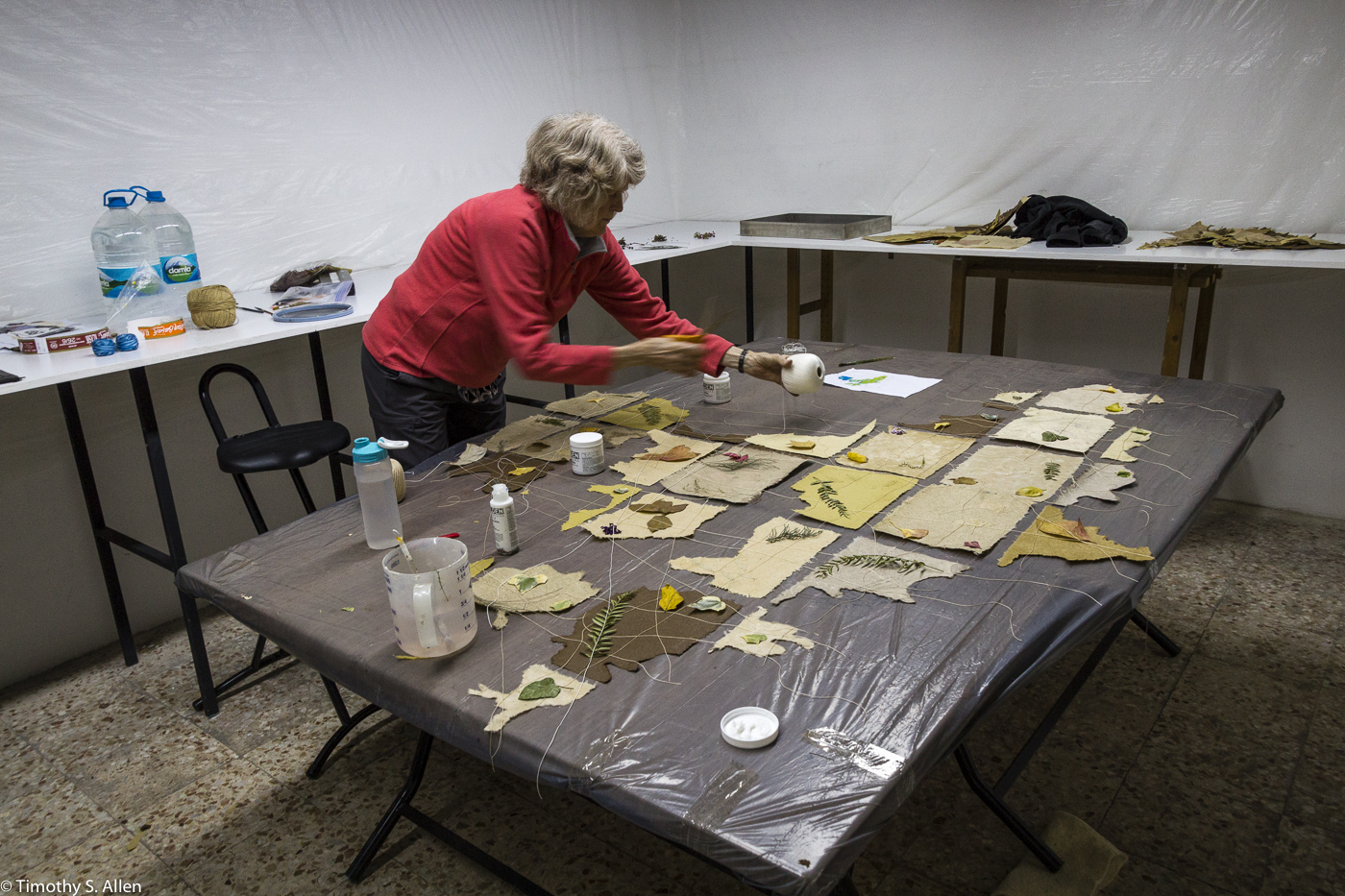
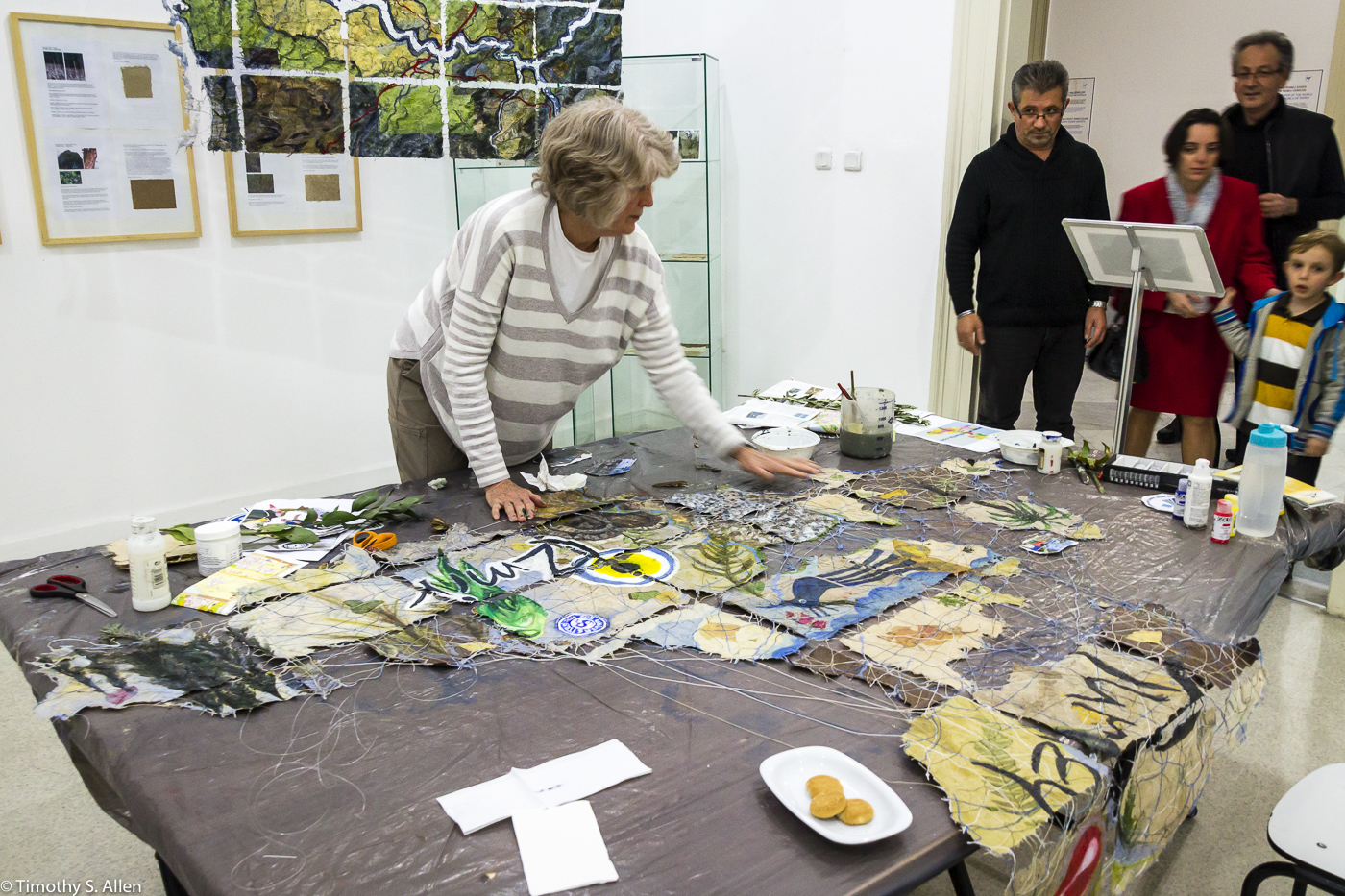
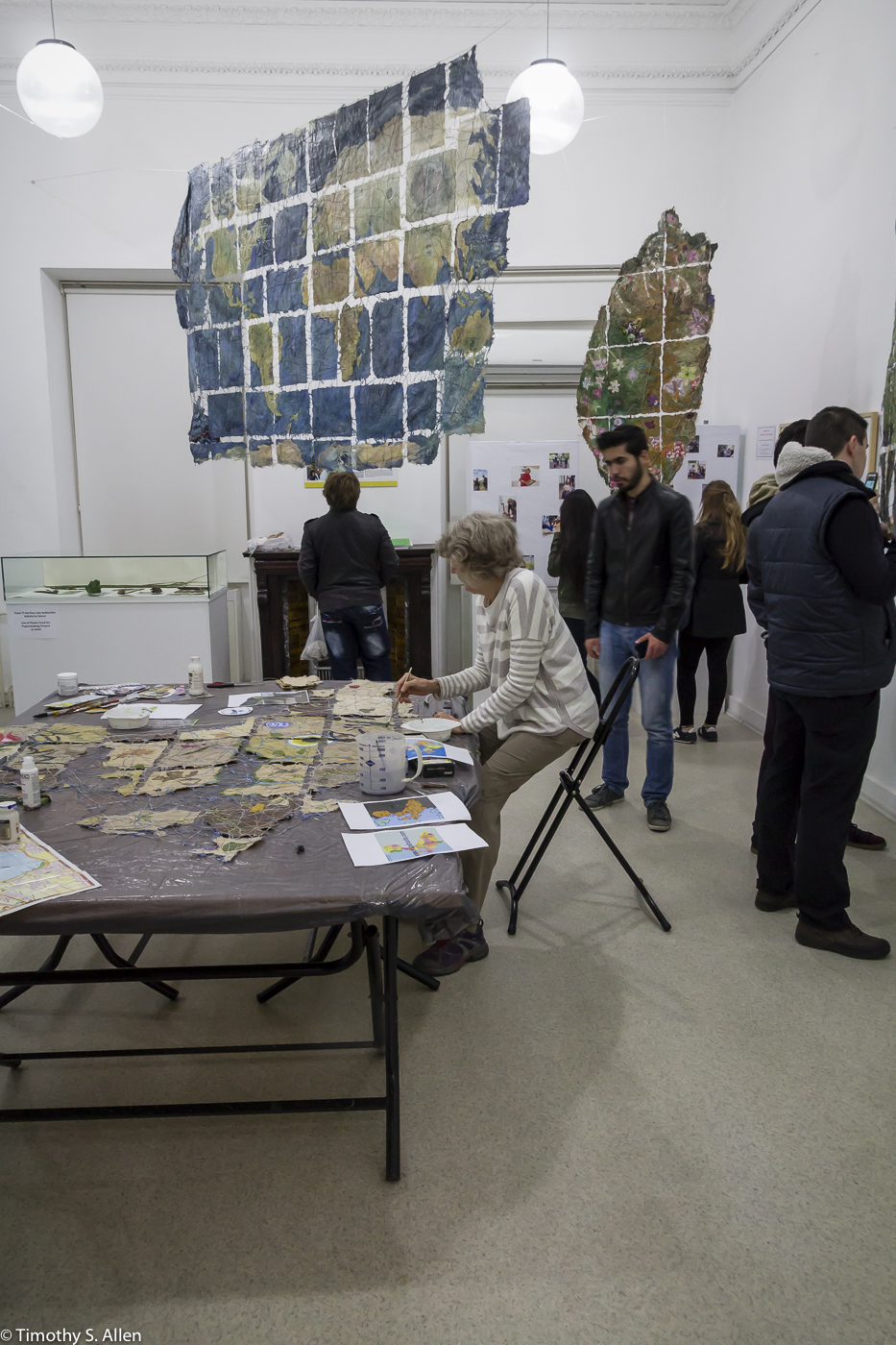
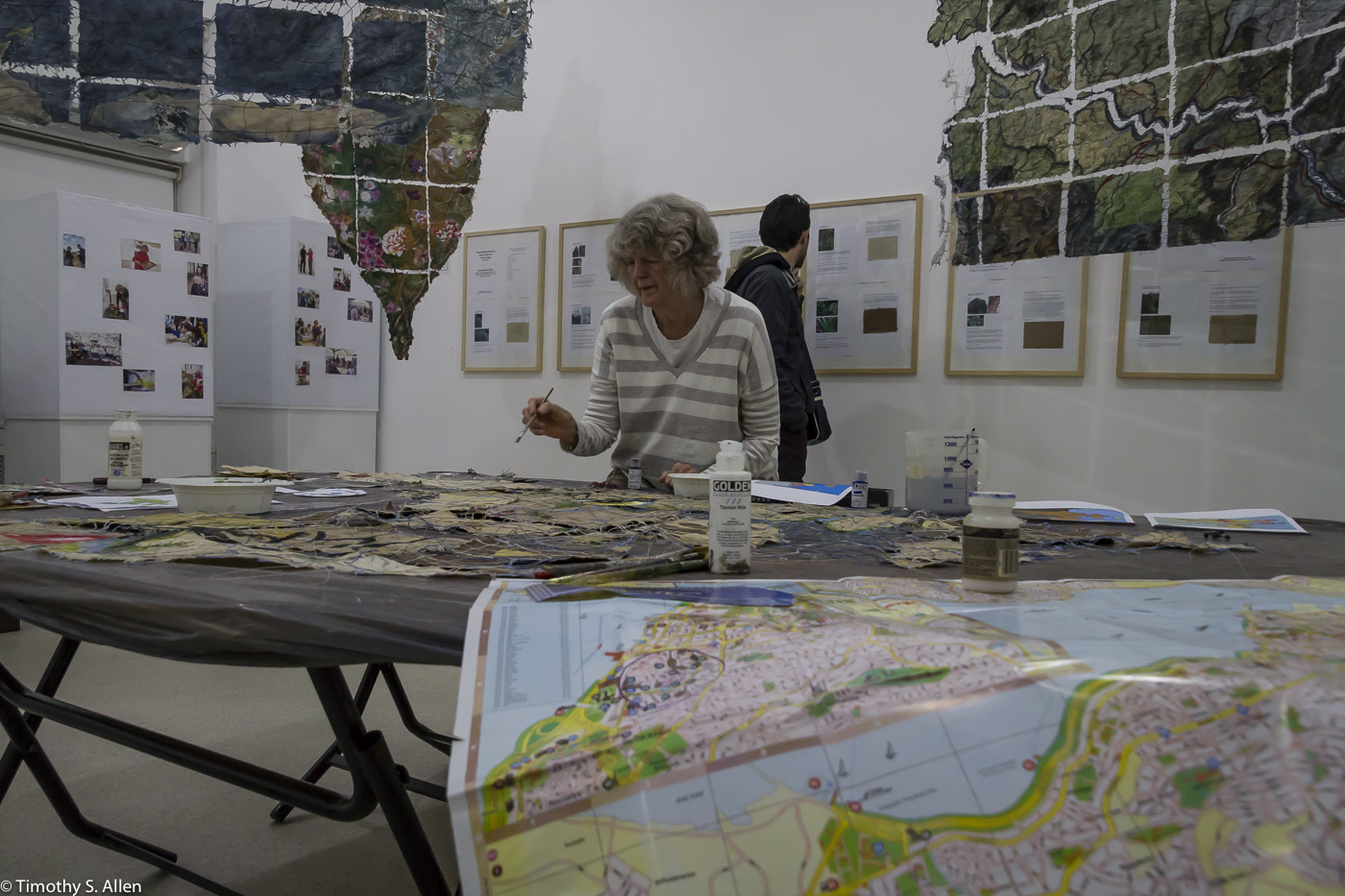
We set up an outdoor studio for the cooking, beating and sheet forming. I also had an indoor studio in the basement of the museum for assembling my artwork, and part of the process of creating the Izmir Site Map was done in the upstairs gallery as an Open Studio so visitors could see my work in progress. I taught papermaking workshops, gave demonstrations and provided lectures at the university for students, faculty and local artists and visiting school groups.

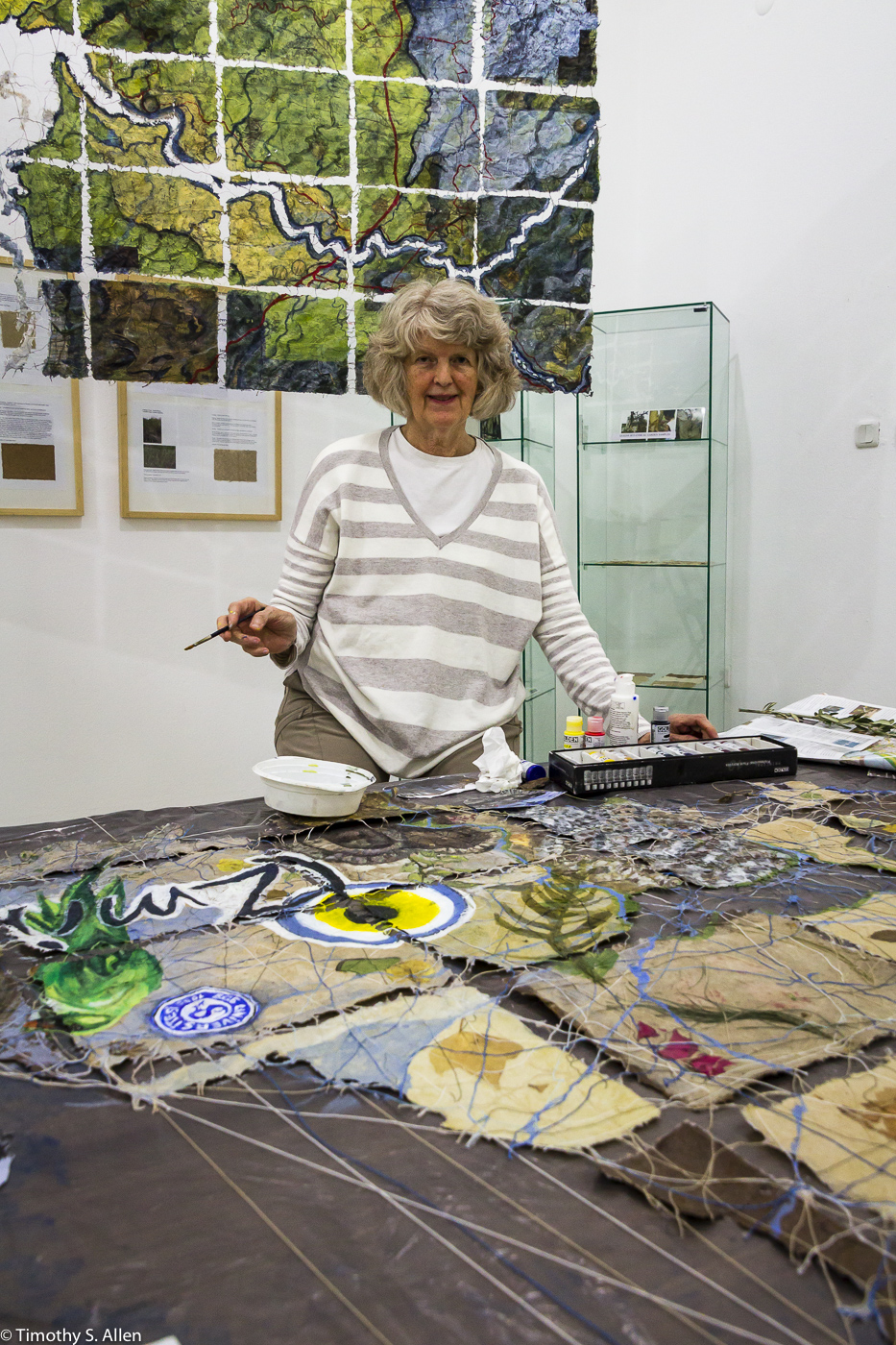
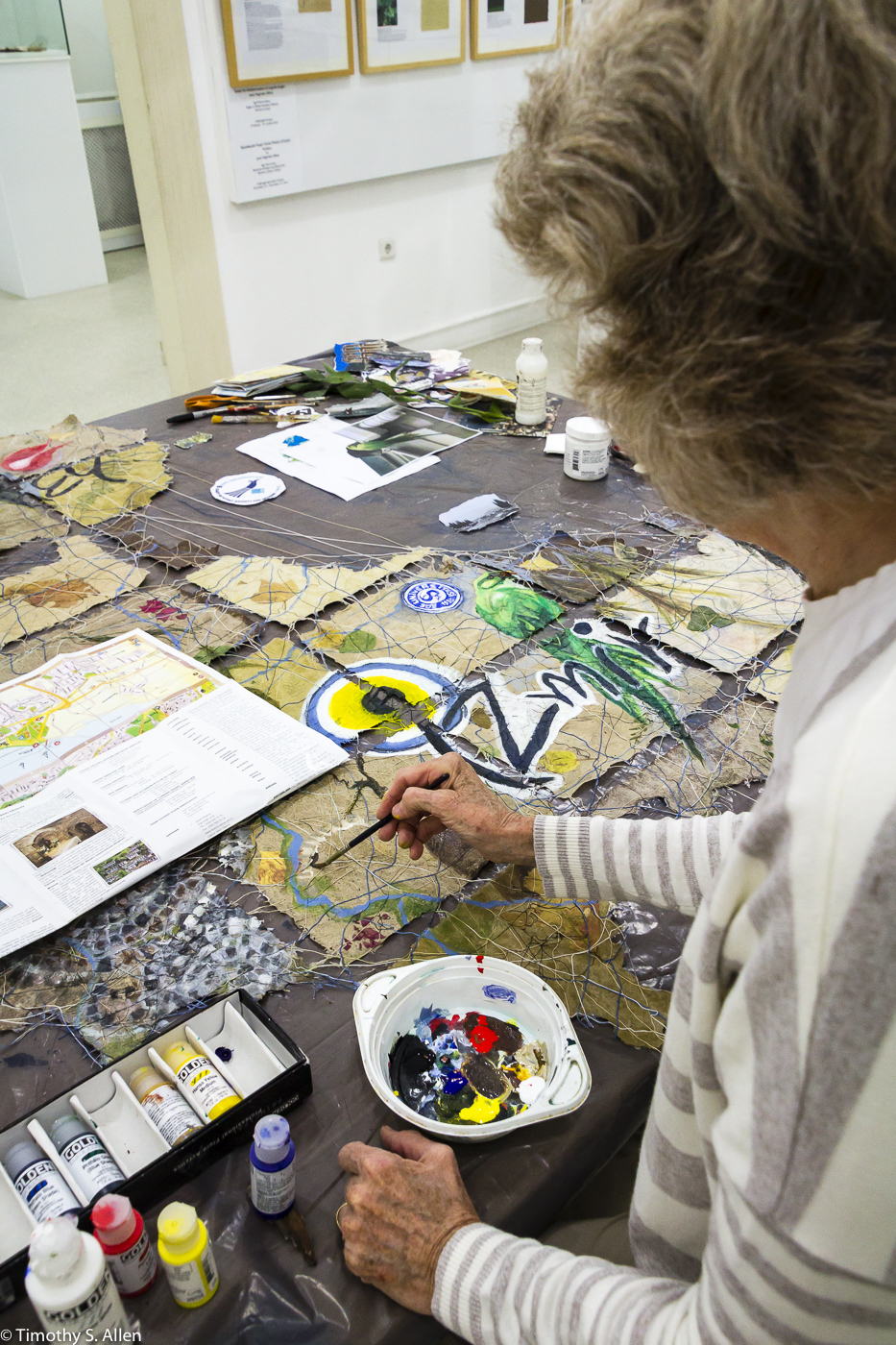
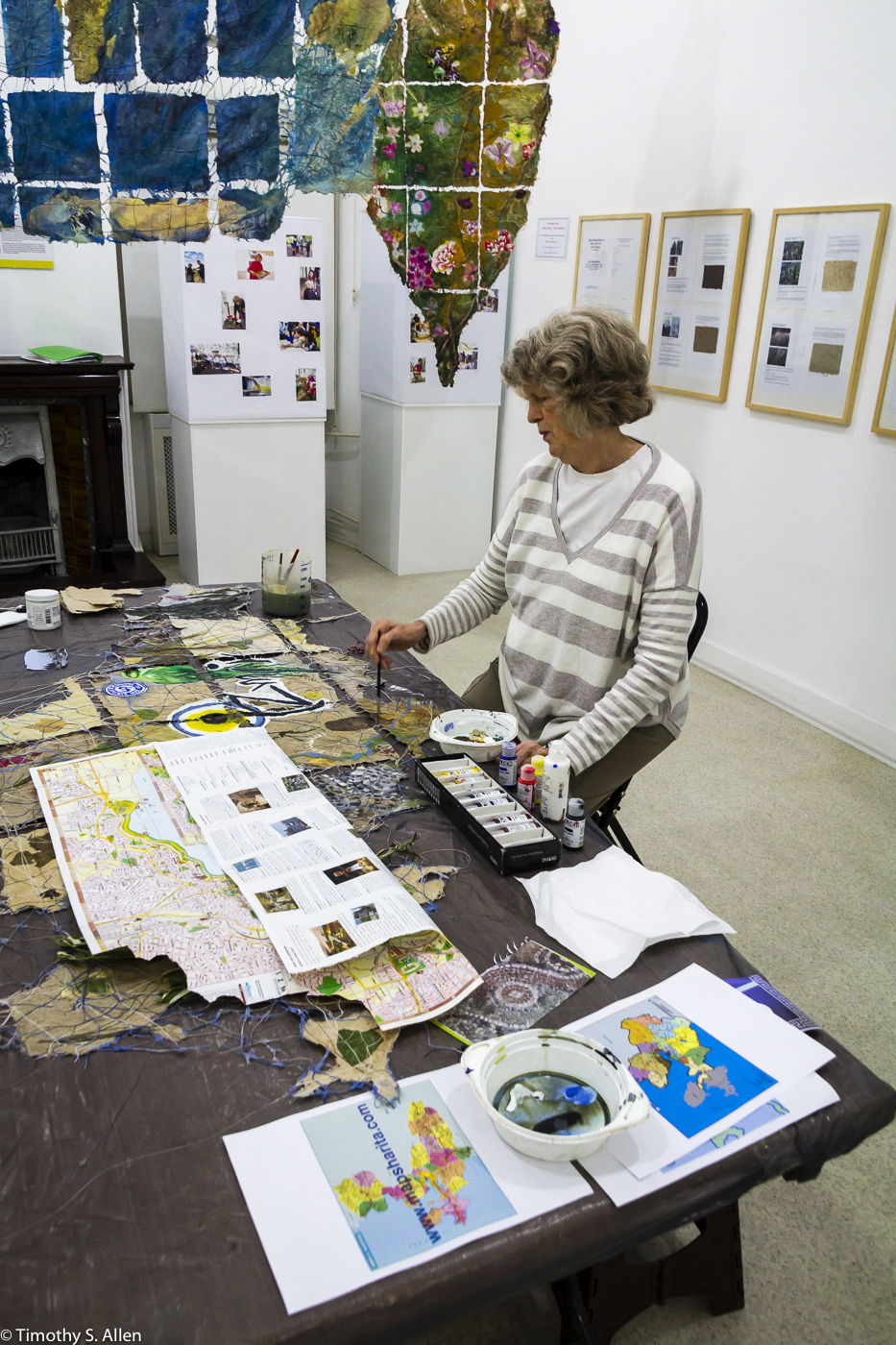
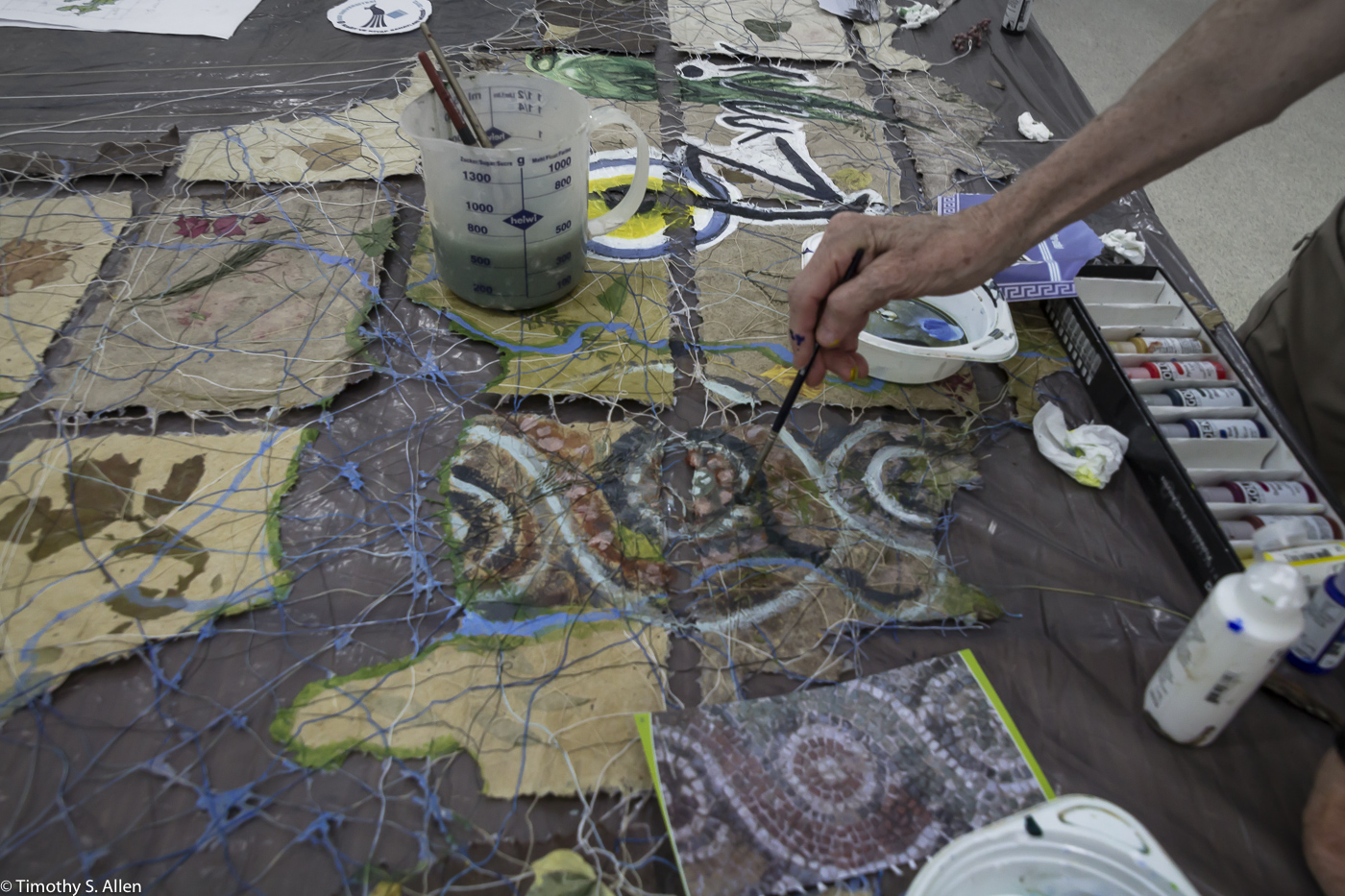
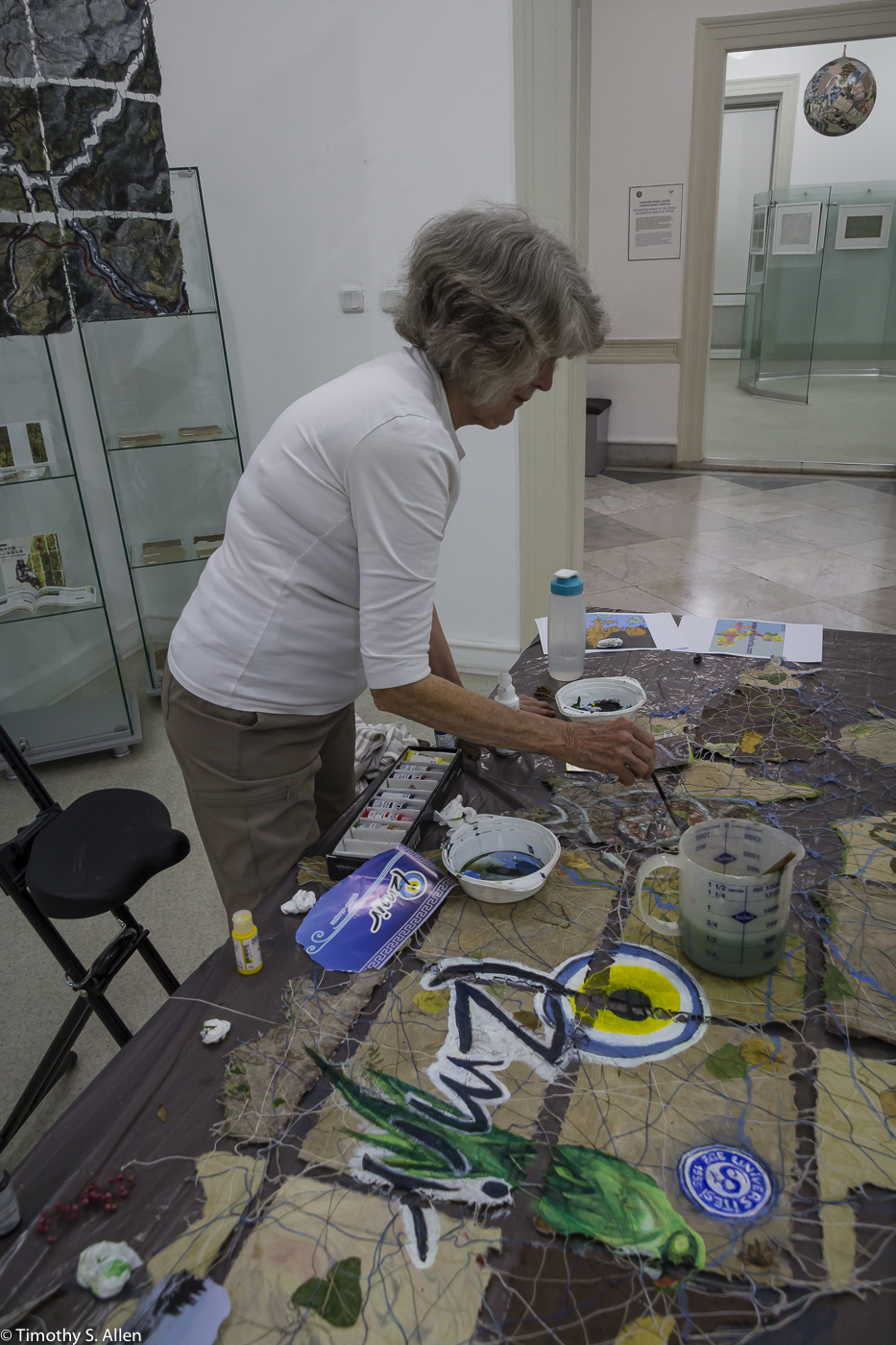
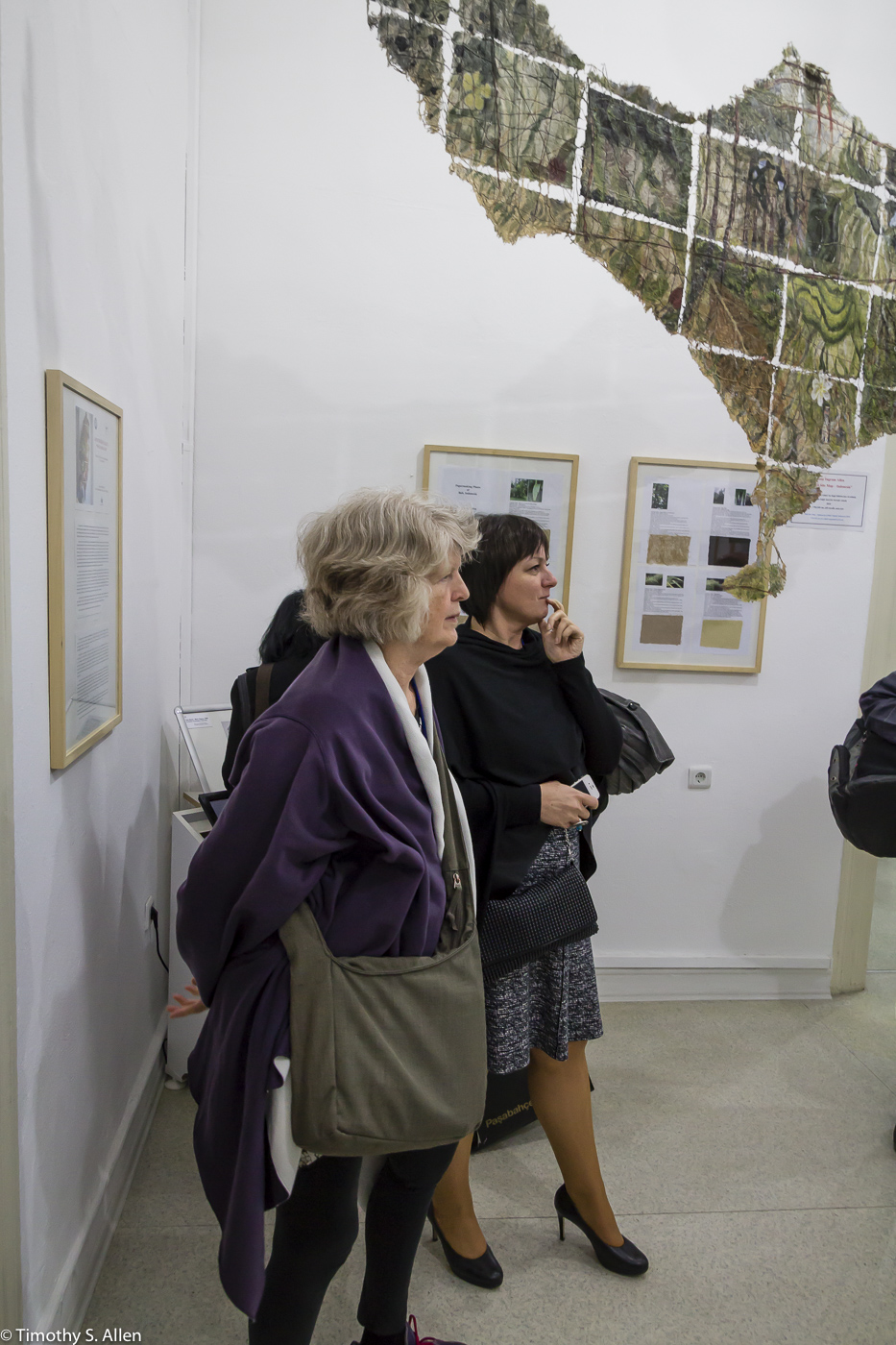
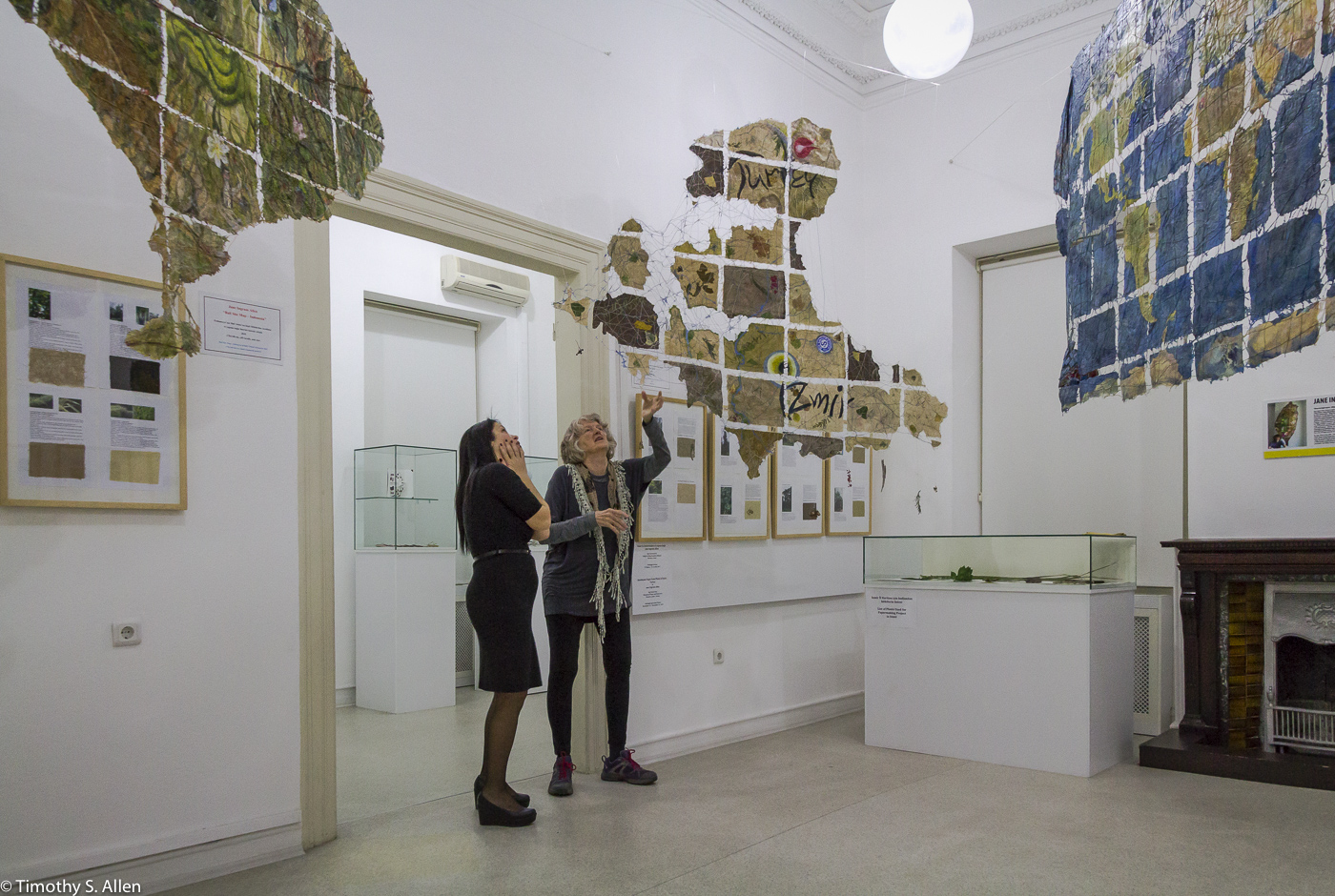
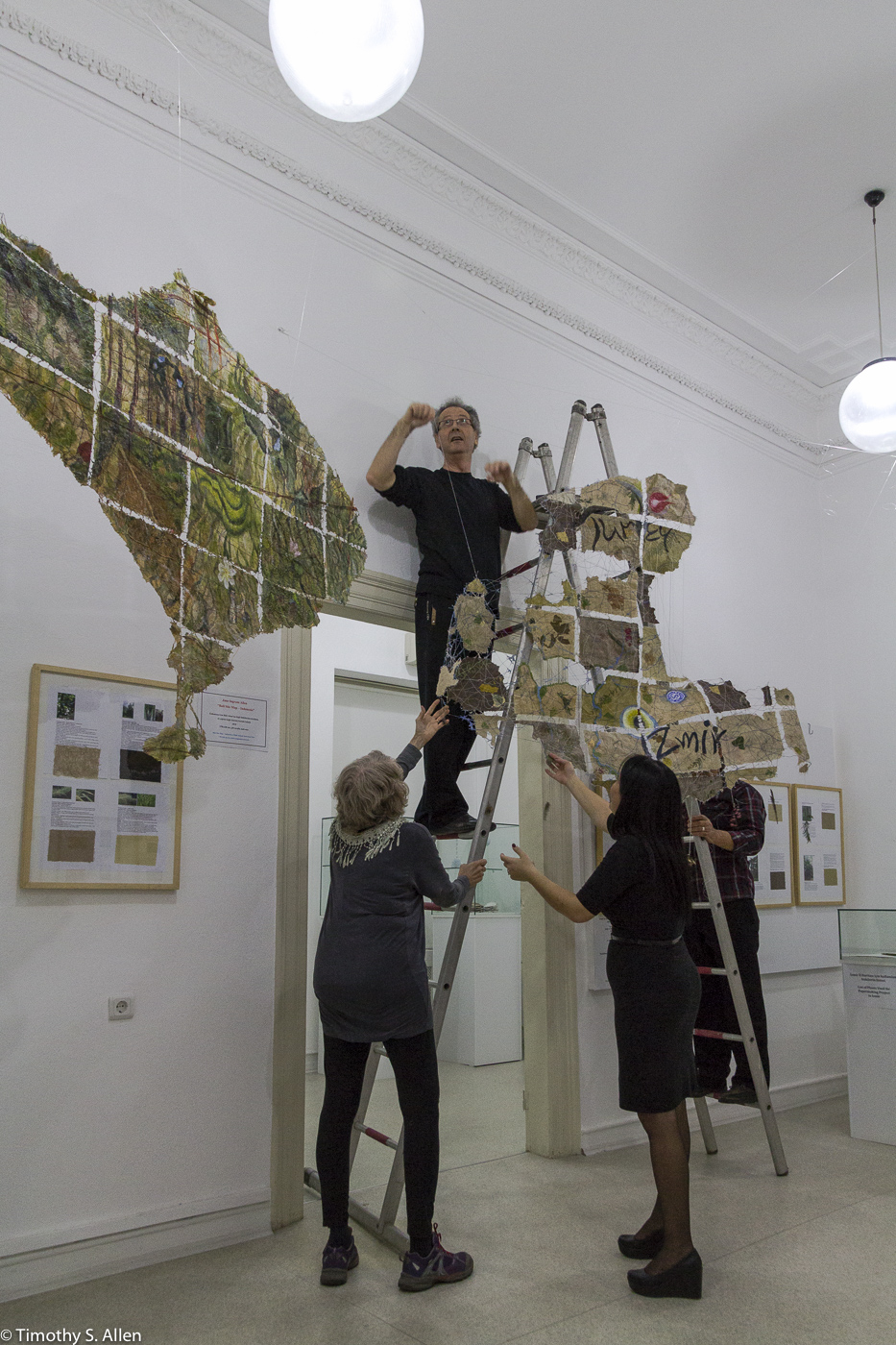
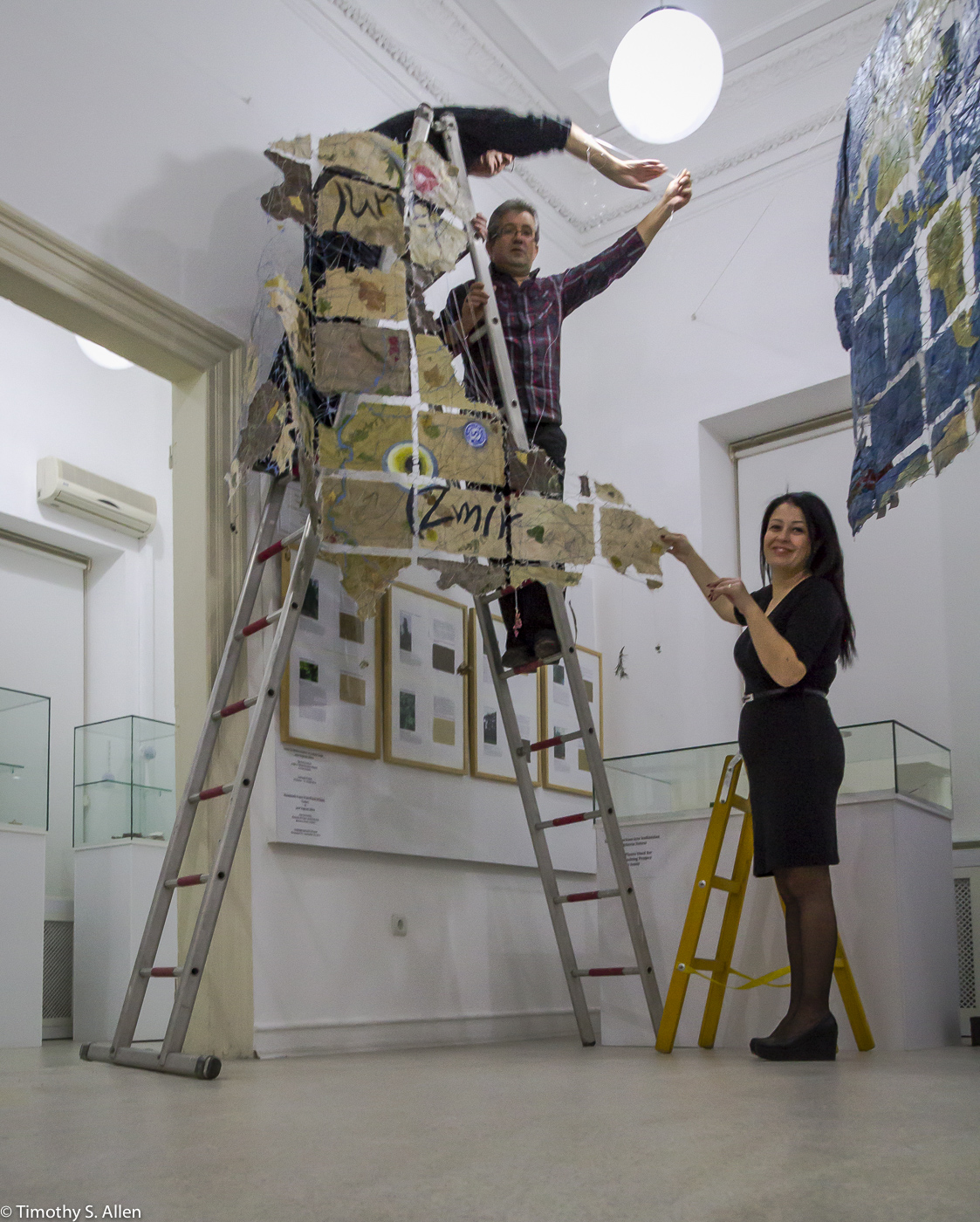
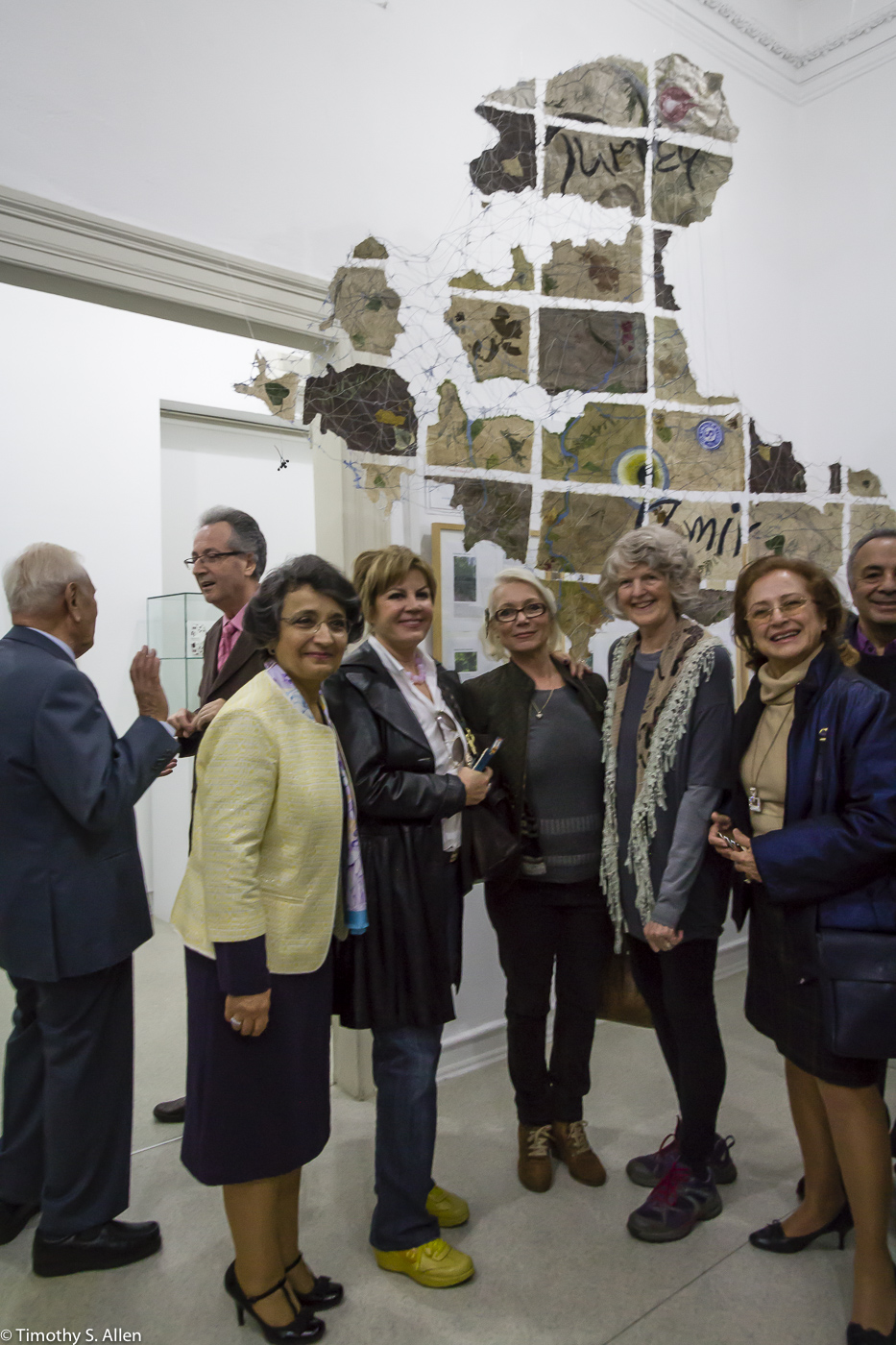
During this project I also created an “Izmir Site Map,” a handmade paper artwork continuing my series of map-based artworks about a particular place using materials from that place. The Izmir Site Map artwork is in the shape of the city, and I used the handmade paper I made from local plants joined with local natural thread. The Izmir Site Map is a mixed media (handmade paper, collage, painting) two-sided suspended installation. This work was donated to the Museum in Izmir and will remain on display in the contemporary gallery of the Ege University Museum of Paper and Book Art. Here are some photos of the Izmir Site Map in progress and after completion in the gallery of the Museum

.JANE LAYING STRING ON IZMIR MAP_MG_9312JANE PAINTING & PEOPLE LOOKING IN_MG_0469  JANE POSING WITH BRUSH & IZMIR MAP_MG_0463 PAINTING IZMIR FRONT CLOSE_MG_0456 PAINTING IZMIR FRONT_MG_0455 PAINT MOSAIC FRONT OF IZMIR MAP_MG_0449 PAINTING FRONT IZMIR MAP_MG_0448 MAKING IZMIR MAP_MG_0380 PAINTING IZMIR MAP_MG_0386 PEOPLE VIEWING BALI MAP_MG_0358 POSING WITH RECTOR AT OPENING_MG_9724

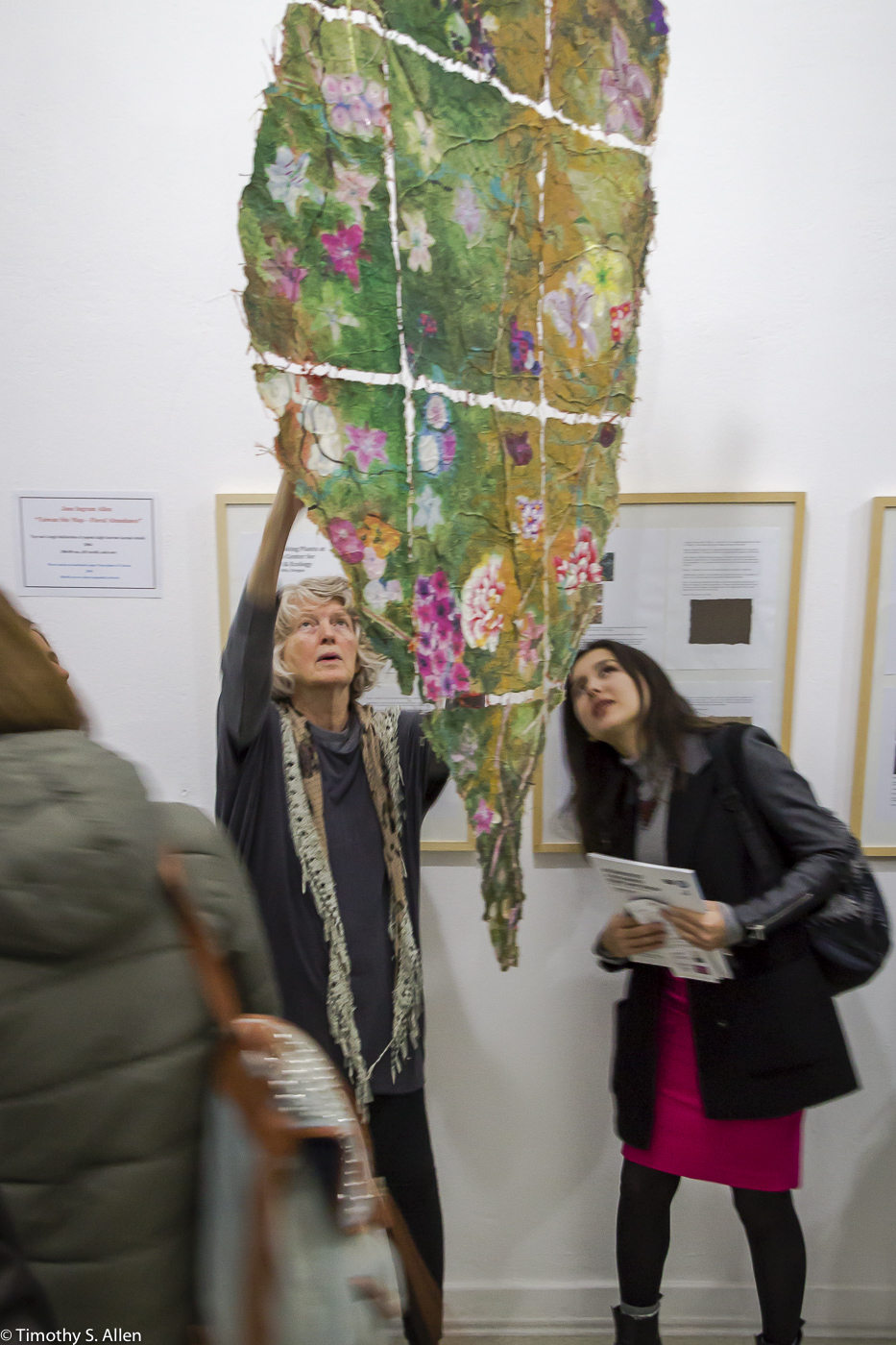
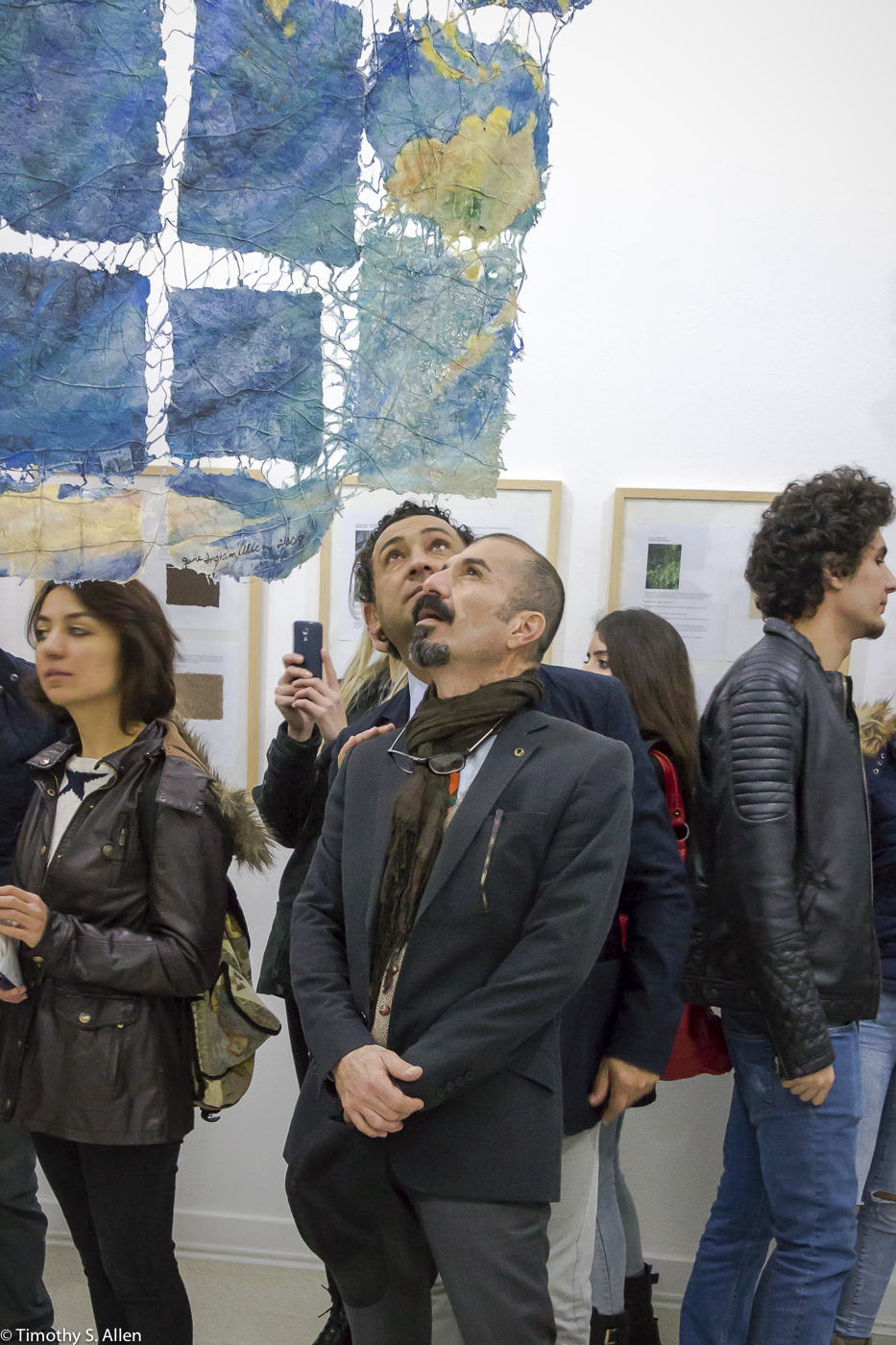
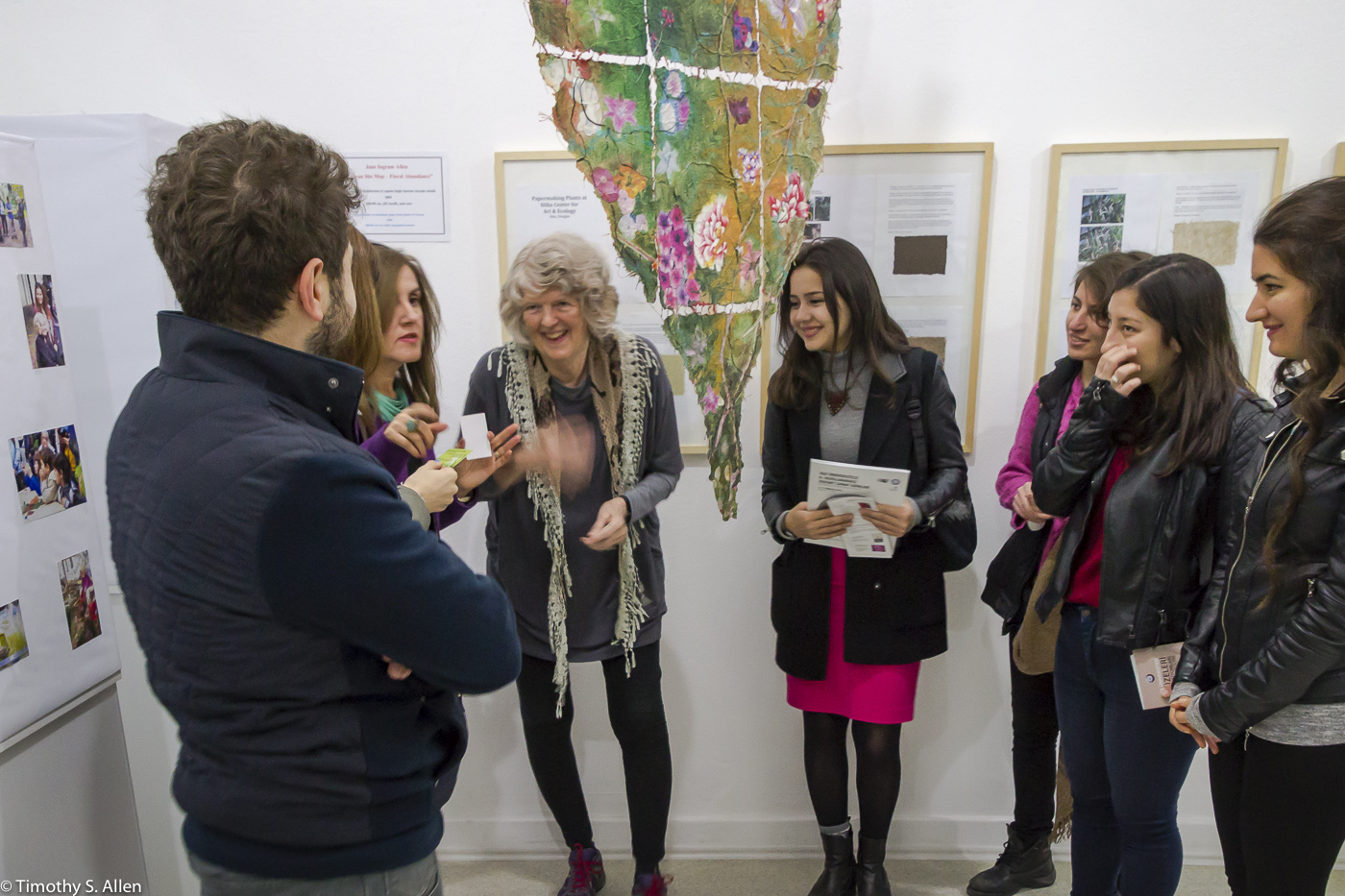
My Izmir Site Map and 3 other site maps of handmade paper created in other residencies were exhibited at the EgeArt Days in Izmir at the Museum of Paper and Book Arts, Ege University, from Dec. 3 -13, 2015. I also exhibited a Taiwan Site Map (Floral Abundance) made with plants of Taiwan during my 2004-05 Fulbright artist in residency in Taiwan, my Bali Site Map created at Bali Purnati Center for the Arts in Bali, Indonesia using local plants and my Salmon River Estuary Site Map created at Sitka Center for Art & Ecology, Otis, Oregon, using local plants for the handmade paper construction.  The opening reception was an exciting time with many local and international visitors.  The Rector of Ege University and many students also came to the opening of my exhibition at the Museum of Paper & Book Arts.

PEOPLE LOOK AT WORLD MAP AT OPENING_MG_9617 JANE & STUDENTS AT OPENING WITH TAIWAN MAP_MG_9581 JANE & STUDENT LOOK AT TAIWAN MAP CLOSE_MG_9574JANE & SEDA LOOK AT IZMIR MAP BEFORE OPENING_MG_9521 NEDIM ON LADDER HANGING IZMIR MAP_MG_9481  NEDIM OMAR & SEDA HANGING IZMIR MAP_MG_9474

During this Fulbright Specialist grant project in Turkey I also acted as a consultant to help the Museum plan a papermaking studio and provided educational materials about the equipment and materials for Asian style papermaking and how to continue using local plant materials for papermaking in Izmir. The local fig tree bark and the bark of the many white mulberry trees around the Ege University campus were excellent for making paper as well as the cedar and cypress tree bark. I really enjoyed the time at the Museum of Paper and Book Arts, Izmir, and the staff and Director Nedim Sanmez were great to work with.  I will stay in touch with the Museum to provide additional help and hope we can plan some future collaborations.

The photos here are by my husband Timothy S. Allen http://allentimphotos2.wordpress.com

Tim accompanied me to Izmir and helped with this art project and also took many photos around Izmir and Istanbul during our time in Turkey.

Like Loading...

More about Jane Ingram Allen’s Artist in Residency at Fire Island National Seashore

21 Monday Sep 2015

Posted by janeingramallen in Uncategorized

≈ 4 Comments

Tags

artist-in-residency, Fire Island National Seashore, handmade paper, papermaking, plants for papermaking

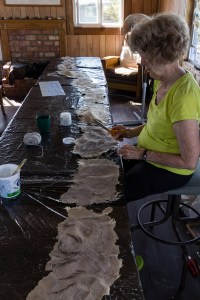
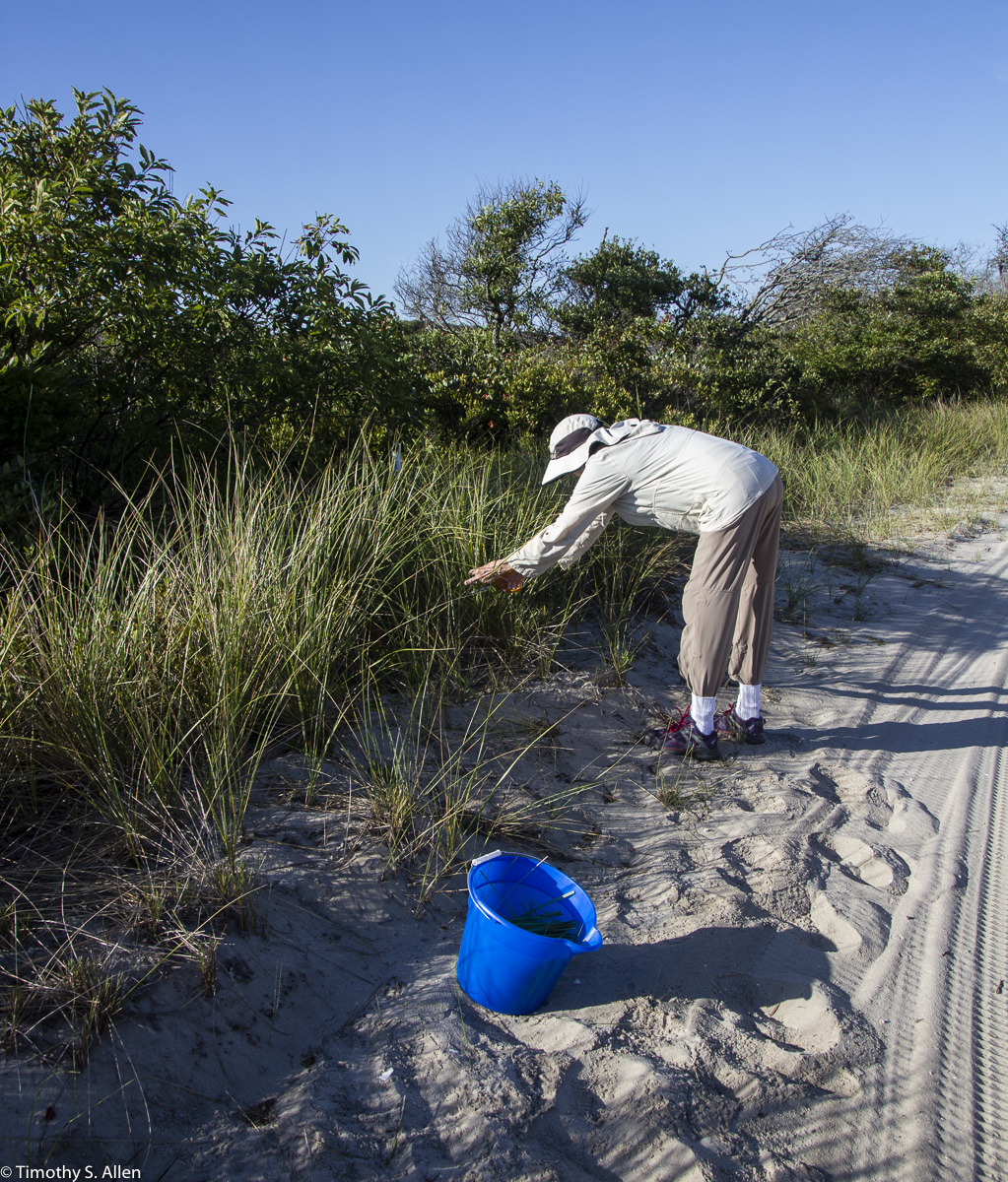
During my two-week artist in residency at Fire Island National Seashore from Sept. 5 to Sept. 19, 2015, I lived and worked at Watch Hill near the Watch Hill Ferry Station in Staff House #8. My husband Timothy S. Allen was able to join me for the residency, and Tim took many photographs of my process and the work I did at Fire Island. This was my first time to visit Fire Island, and I was inspired by the beauty of the place and its unique ecology. What impressed me most is that it is a natural area and a wilderness yet so close to New York City. This is one of most heavily populated regions in the world, yet Fire Island National Seashore offers a great nature experience with no cars, no restaurants, few stores and not so many people. It has an abundance of wildlife including many different plants…also many mosquitoes and deer ticks and lots of poison ivy that make gathering plant materials challenging!
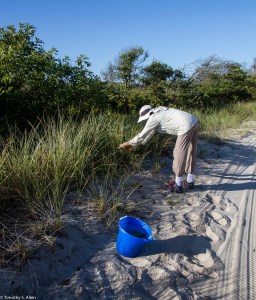
Jane picking sea grass

At Watch Hill there are usually only a few campers and boaters and day trippers who come over on the ferry from Patchogue during the weekends. My residency on Fire Island started on Saturday of Labor Day weekend, and it was very crowded and bustling with many boats, campers, and those who came for the holiday to enjoy the beautiful beach and the great sunny weather. After Labor Day things definitely were different and much quieter. There is ferry service to Fire Island Watch Hill Station on weekends until October, and the snack shop and store is open also on weekends. We brought all of our food and personal needs with us on the ferry when we came over from Patchogue, Long Island. I also had to bring everything I would need to do my artwork in the suitcase with me from California.
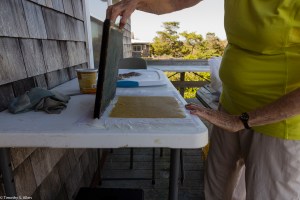
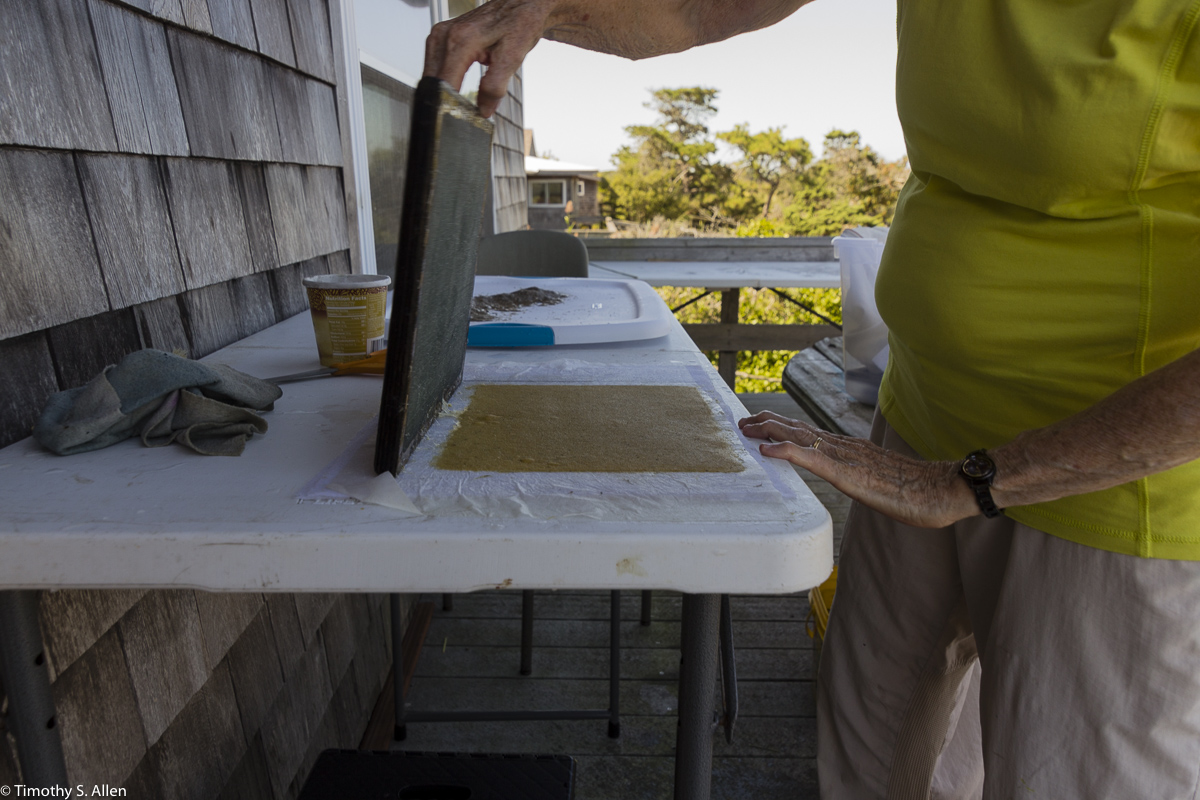
jane making paper at Fire Island


Fortunately I have an artist friend, Marcia Widenor, who lives in Sea Cliff on Long Island, and she helped me get together the things I would need for the residency. She let us borrow some sheets and towels and also buckets, plastic bins and stainless steel cooking pots. I brought all the other necessary items for hand papermaking in my suitcase. I am used to setting up a papermaking studio with minimal equipment and supplies and using what I find on site. I did bring in my suitcase a blender and a wooden hammer and some powdered formation aid, a few moulds and deckles, felts and non-woven interfacing as well as some miscellaneous art materials.
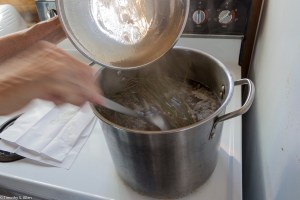
Cooking sea grass


My plan for Fire Island was to make handmade paper for my artwork from the local plant waste materials, harvesting leaves and bark in a sustainable way so as not to harm any living plants. I used four plants that I collected and prepared on Fire Island. The vegetation for papermaking at Watch Hill is very limited, and I could find no trees that I could get the bark from to make paper.  I did find many long leafed beach and marsh plants and was able to use the leaf plant fibers. The most abundant plant is Phragmites australis, or common reed, that is considered invasive.   For my handmade paper, I used Phragmites, beach grass, Iris leaves and eel grass (seaweed). In this book I have outlined the recipes for making paper from each of these plants and included a sample of the handmade paper for that plant.
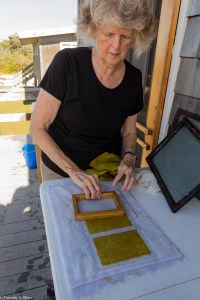
Jane making Phragmites paper samples.


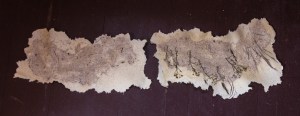
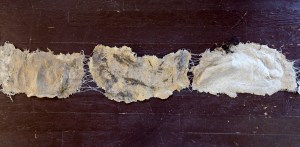
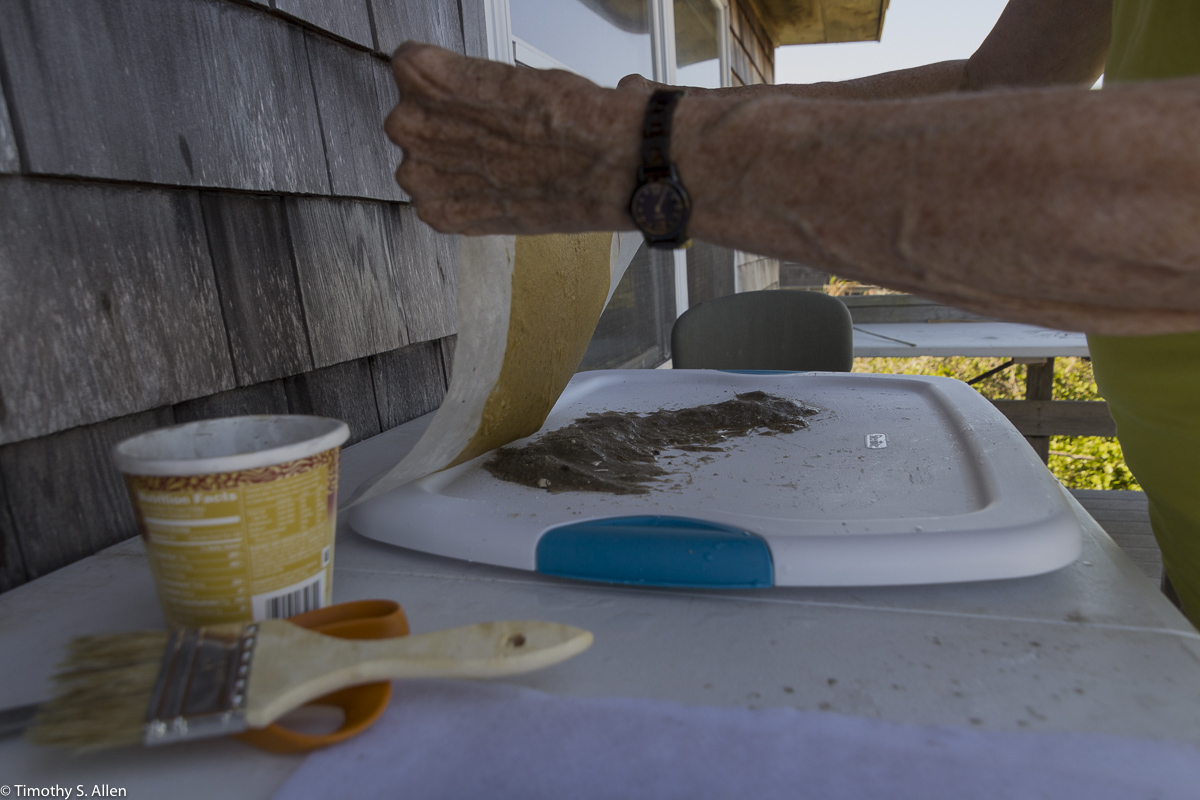
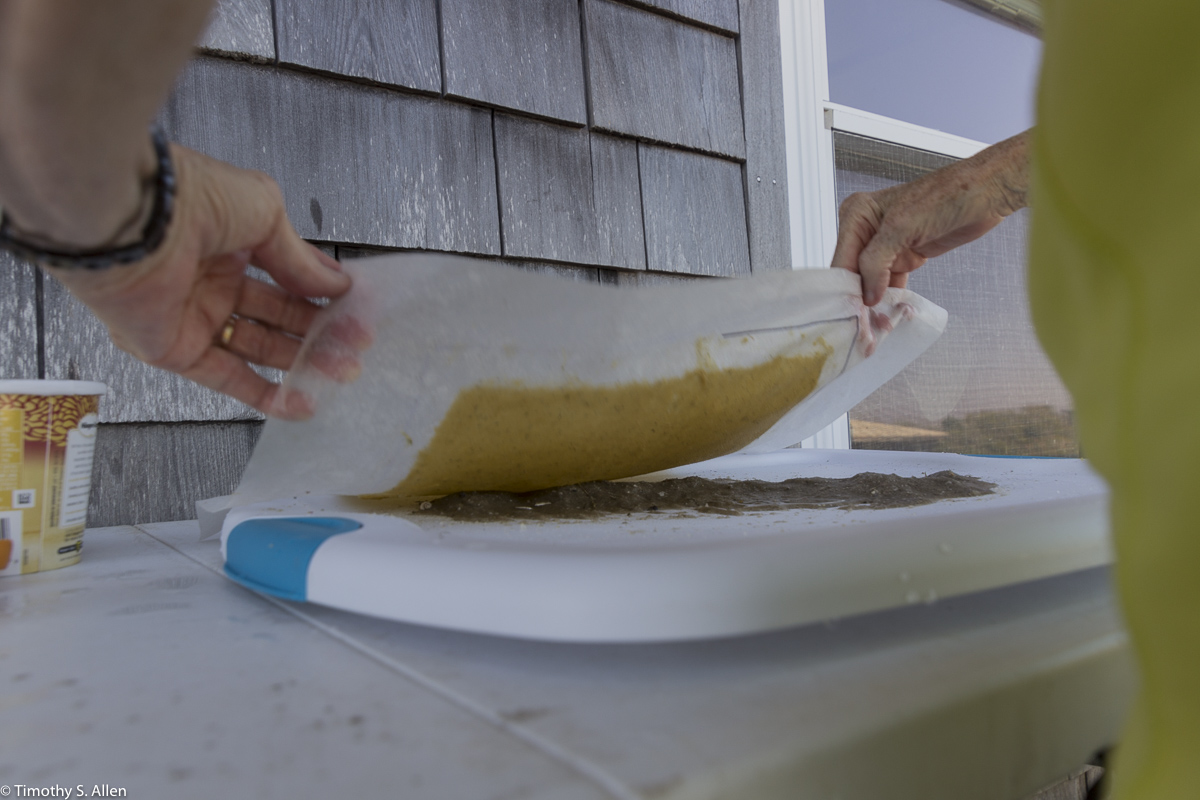
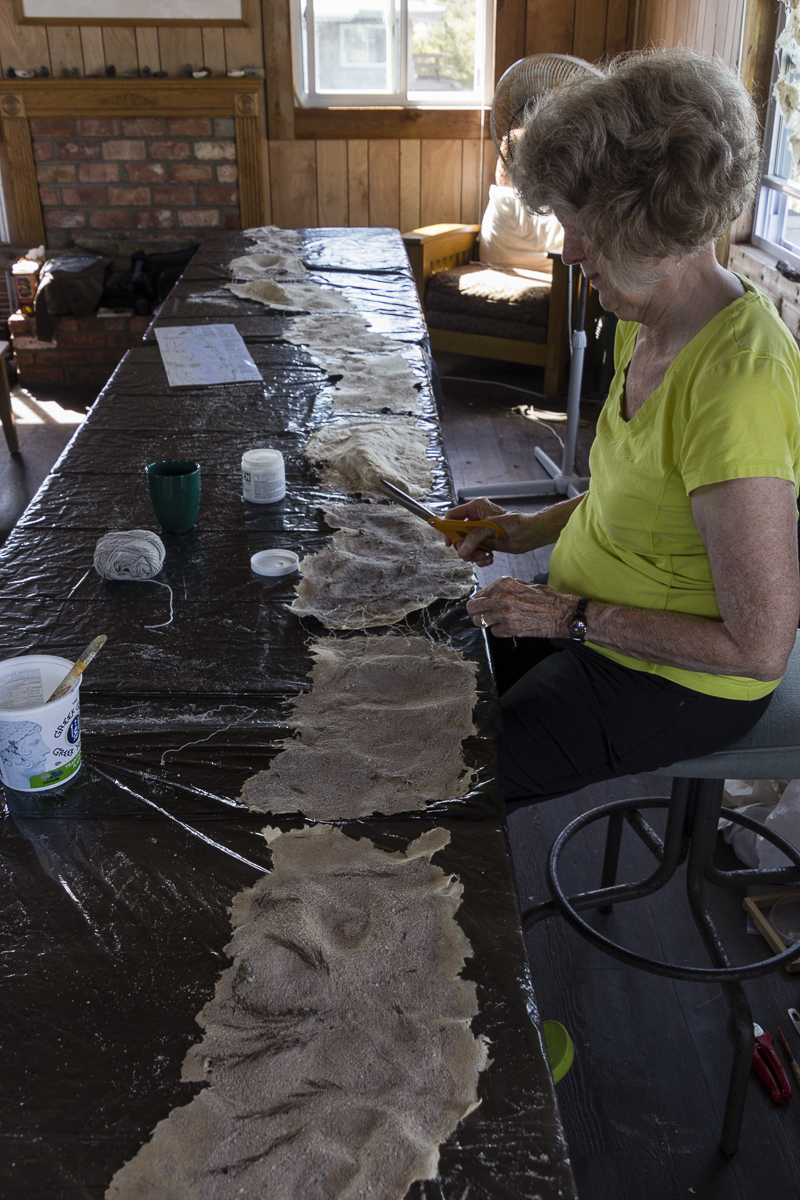
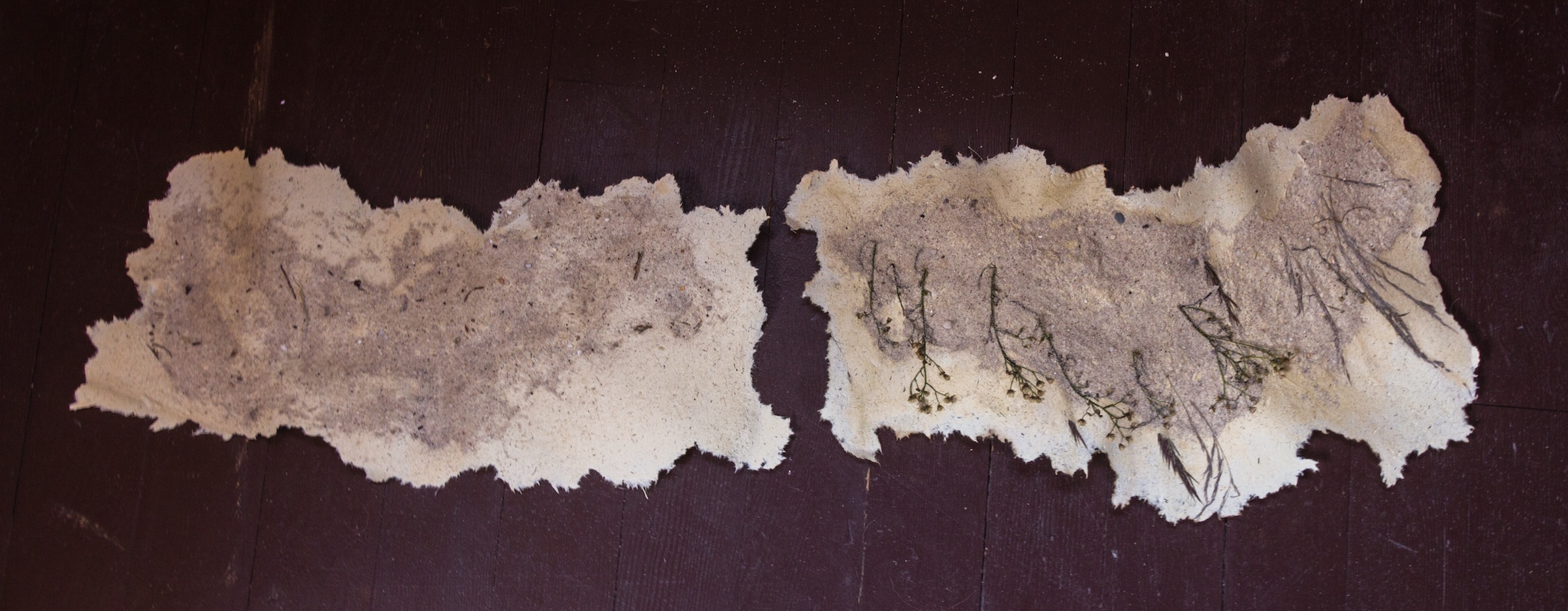
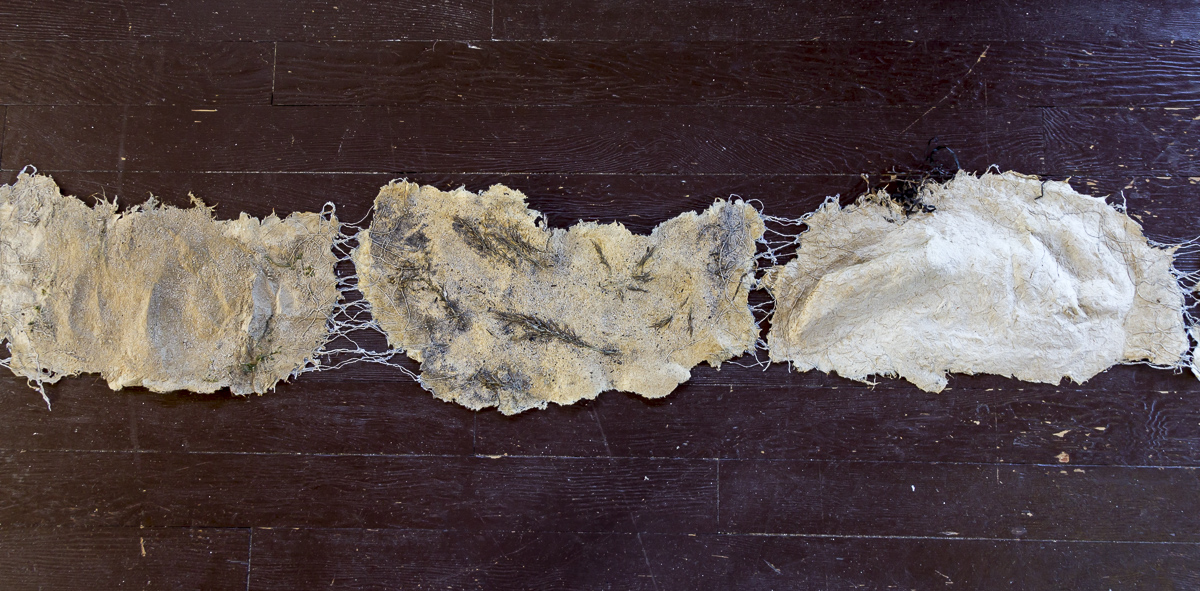
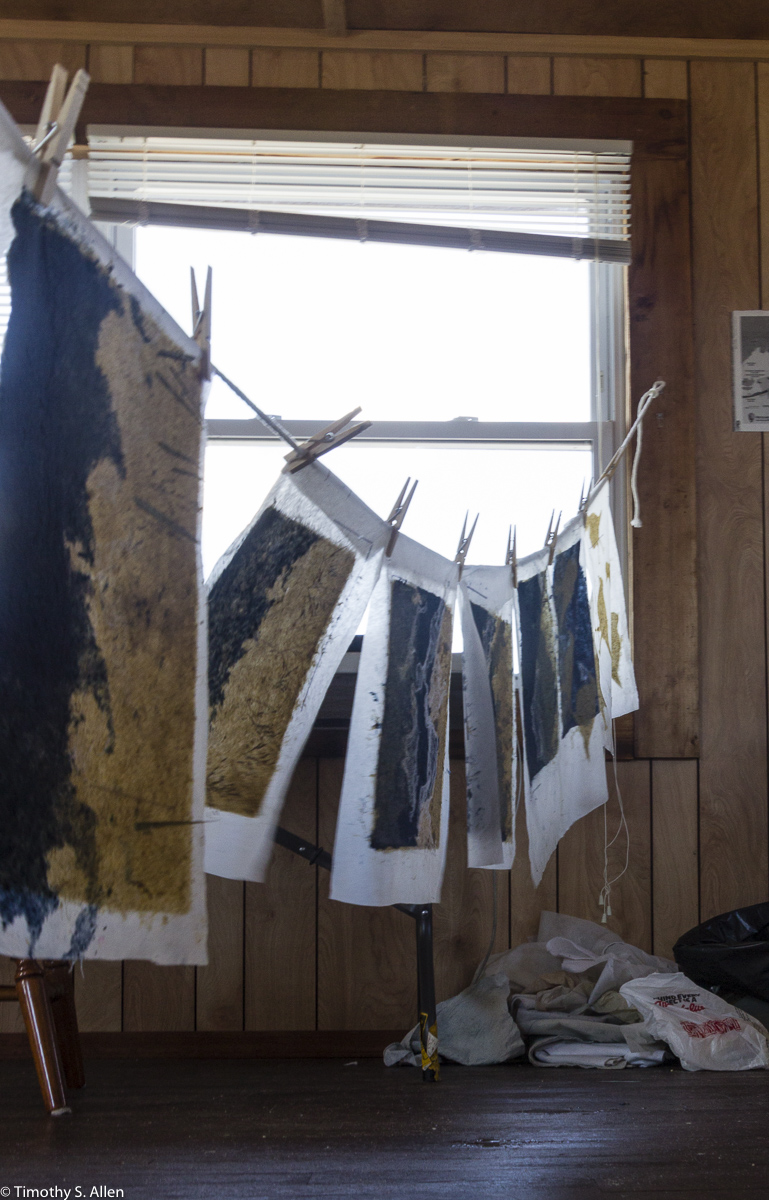
For one artwork I made on Fire Island I decided to try sand casting with handmade paper, placing sheets of the wet handmade paper created with local plants on the sand to dry. The beach at Fire Island National Seashore has beautiful almost white sand. I was also influenced by reading about the effects of Hurricane Sandy on Fire Island and how the shape of the island is constantly changing with shifting sands and changing ocean conditions.   For the sand cast handmade paper, I made the sand wet and sculpted it to form dunes and added bits of the local plants in the sand. Then I placed my handmade paper on the shaped sand to dry. When the paper was dry I removed the handmade paper and dusted off the loose sand. Then I reshaped the sand for the next piece. Each sand casting was about 18 inches long and 12 inches high. For creating a Fire Island Site Map, I joined the pieces in a long curving shape with natural thread and used acrylic matte gel as glue. The total piece is about 18 feet long and 12 inches high and has a variable thickness from 1 inch to 4 inches. I plan to suspend this work from the ceiling near a long wall for an installation. It can also curve around a corner or hang out in space. It folds up at the thread for easy transport and storage, so I am able to bring it with me for later exhibitions.
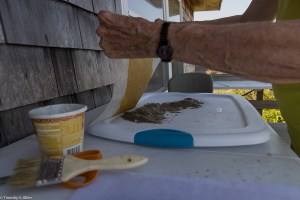
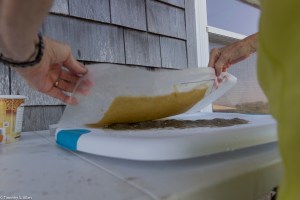
_MG_32382_MG_32393_MG_32404_MG_32425_MG_32447_MG_32461Jane working on site mapsand dunes 2 piecessite map detail


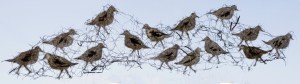
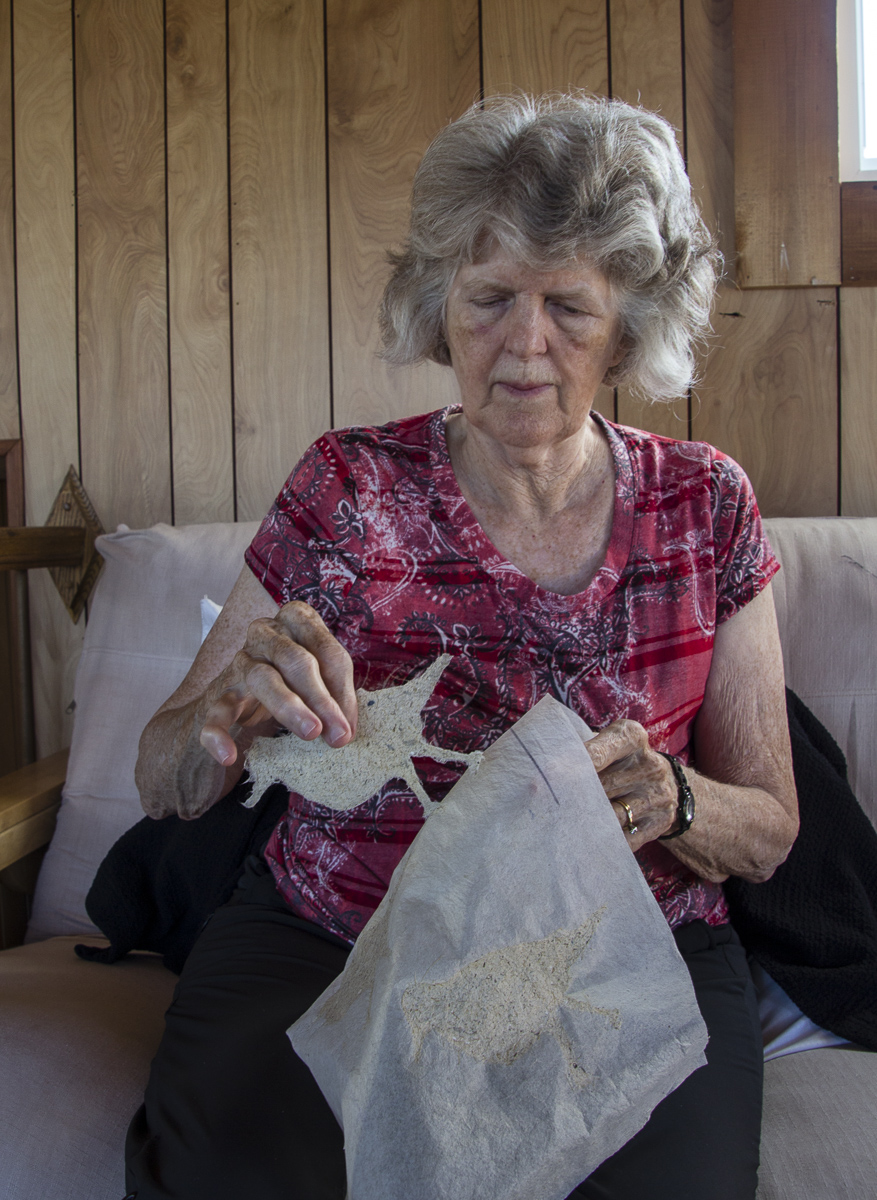
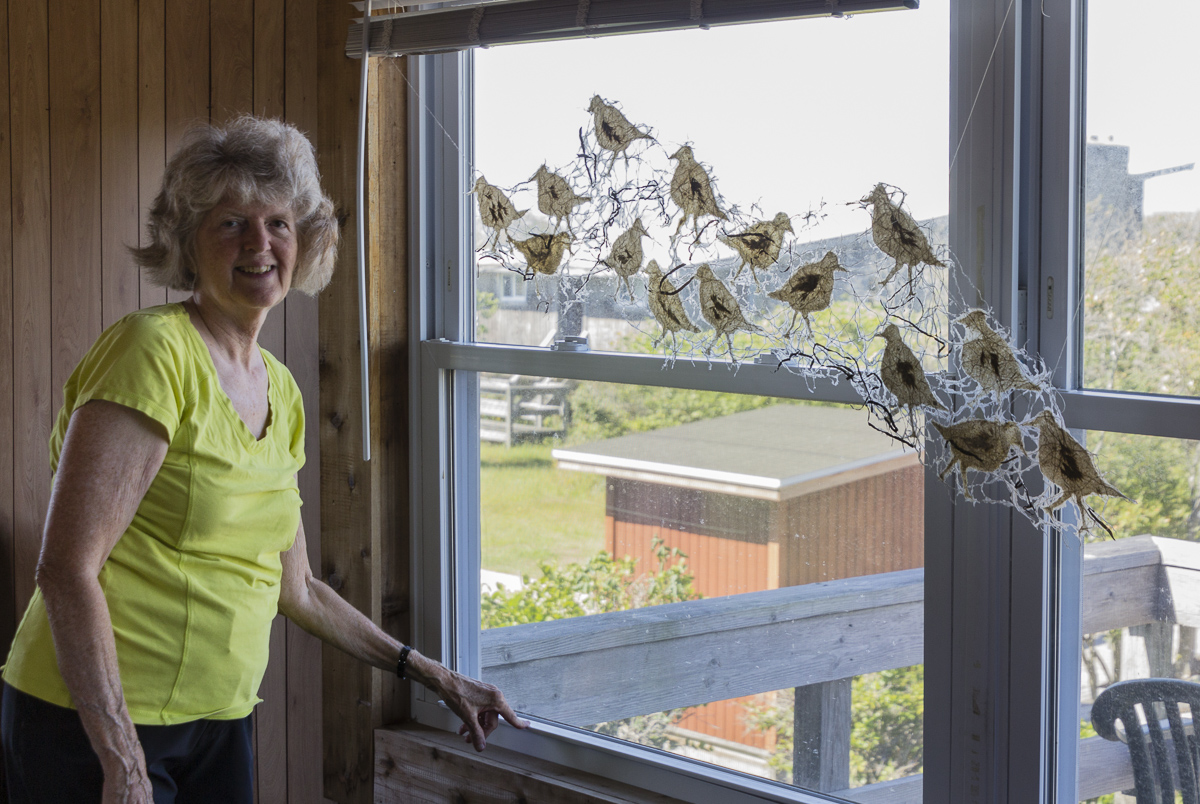
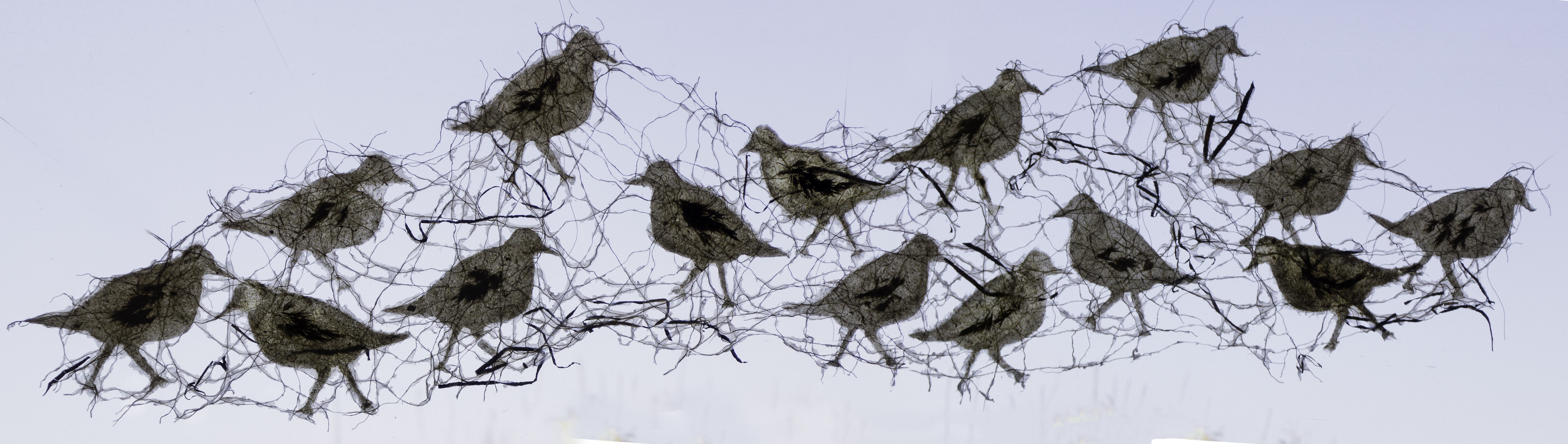
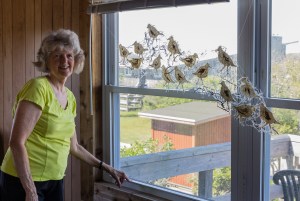
The many birds I encountered on the beach at Fire Island National Seashore inspired another artwork I created during the residency. I learned that the piping plover, an endangered species, nests near Watch Hill. I made a stencil in the shape of the piping plover with buttercut material on one of the small moulds I brought. I saw many plovers on the beach at Watch Hill, and one day a small flock of piping plovers came swooping in to feed near the water line as I was walking along the beach. These small birds really do make “piping” noises. I created two suspended “piping plover” artworks (one piece has 15 plovers in the flock and the other has 9 plovers). The handmade paper plover shapes are joined together with natural threads and I used Phragmites plumes, feathers collected on the beach and some seaweed (eel grass) to add details in the handmade paper birds. These artworks will hang in front of windows or from the ceiling with light coming through the thin Asian-style handmade paper.
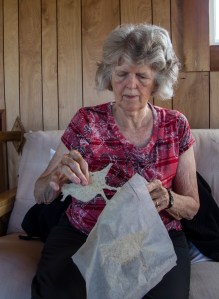
 

Jane peeling birds off

Jane standing in front of hanging birds plovers pano


I also created other pieces of handmade paper from local plants during the time at Fire Island, and I plan to continue working with them when I am back at my home in Santa Rosa, California. This residency was a great experience for me, and I enjoyed very much the time to experiment and work with new and different plant fibers. It was also a great chance to be inspired by a beautiful national park area and a wilderness so close to New York City.  I would like to thank the Fire Island National Seashore staff for all of their help, especially Interpretive Specialist/Park Ranger Kristin Santos and coordinator of the Fire Island National Seashore Artist-in-Residency program, Dawn Lee.
_MG_40571

The photos of the plants and of my process were taken by my husband Timothy S. Allen. You can see more photos of my previous residencies and other artworks at my website:  http://www.janeingramallen.com

Tim’s photo blog at http://allentimphotos2.wordpress.com also has other photos from our time at Fire Island National Seashore.
Like Loading...

Artist in Residency at Fire Island National Seashore, NY

24 Monday Aug 2015

Posted by janeingramallen in Uncategorized

≈ 2 Comments

Tags

artist-in-residency, Fire Island National Seashore, Long Island, papermaking, plants for papermaking

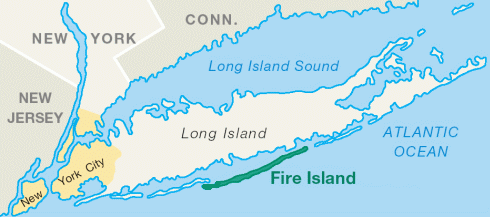
Fire_Island-NY-USA-Location_Map-01

From Sept. 5 – Sept. 19, 2015, I will be an artist in residence at Fire Island National Seashore http://www.nps.gov/fiis/index.htm
Fire Island is a long barrier island off the southern coast of Long Island, and this year celebrating its 50th year as a national park. During my two weeks on Fire Island I will be exploring the plant waste materials and creating new mixed media handmade paper artworks. Keep watching here for photos of my Fire Island residency.

peeling-mulberry-bark-large

Like Loading...

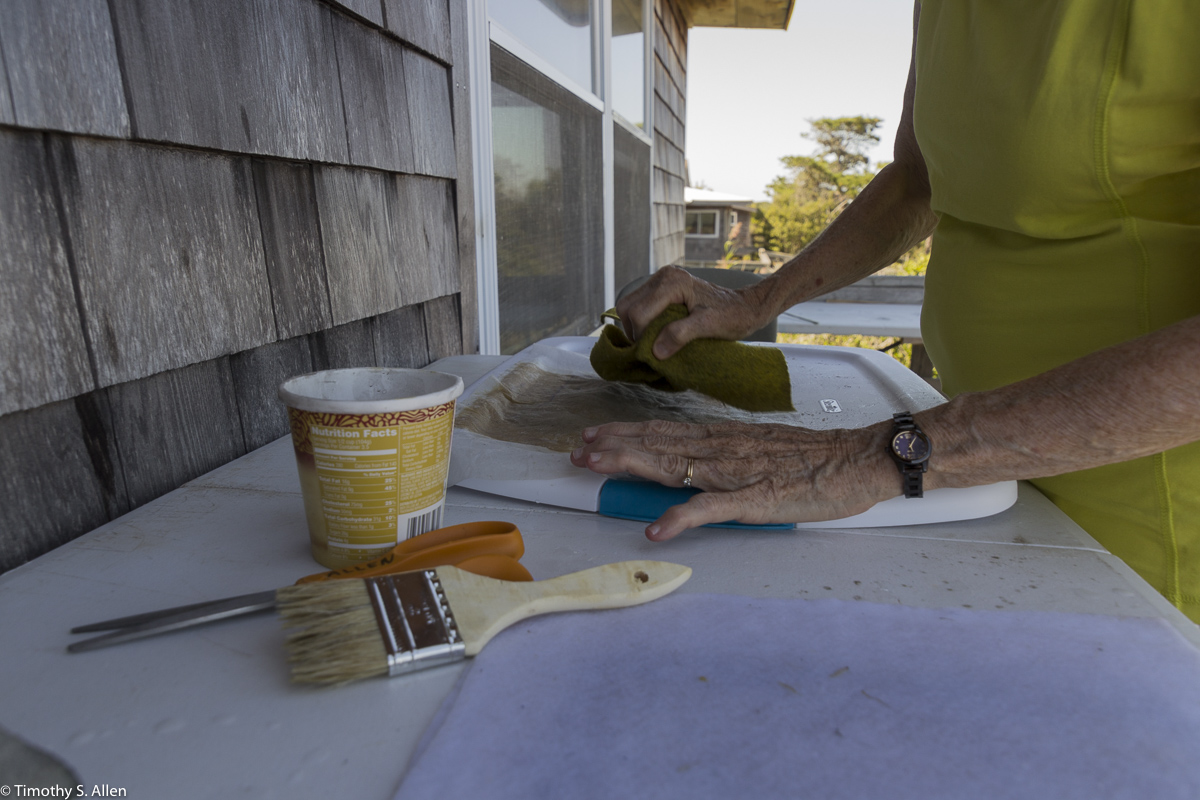
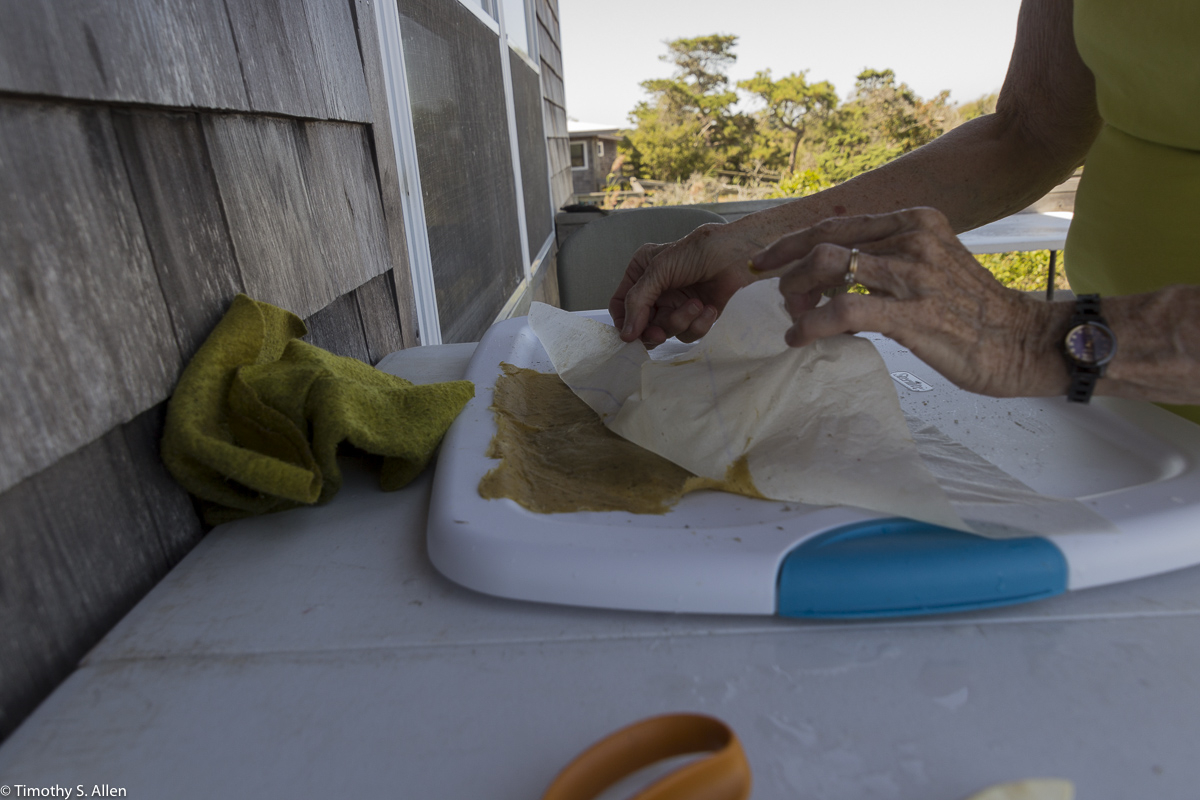
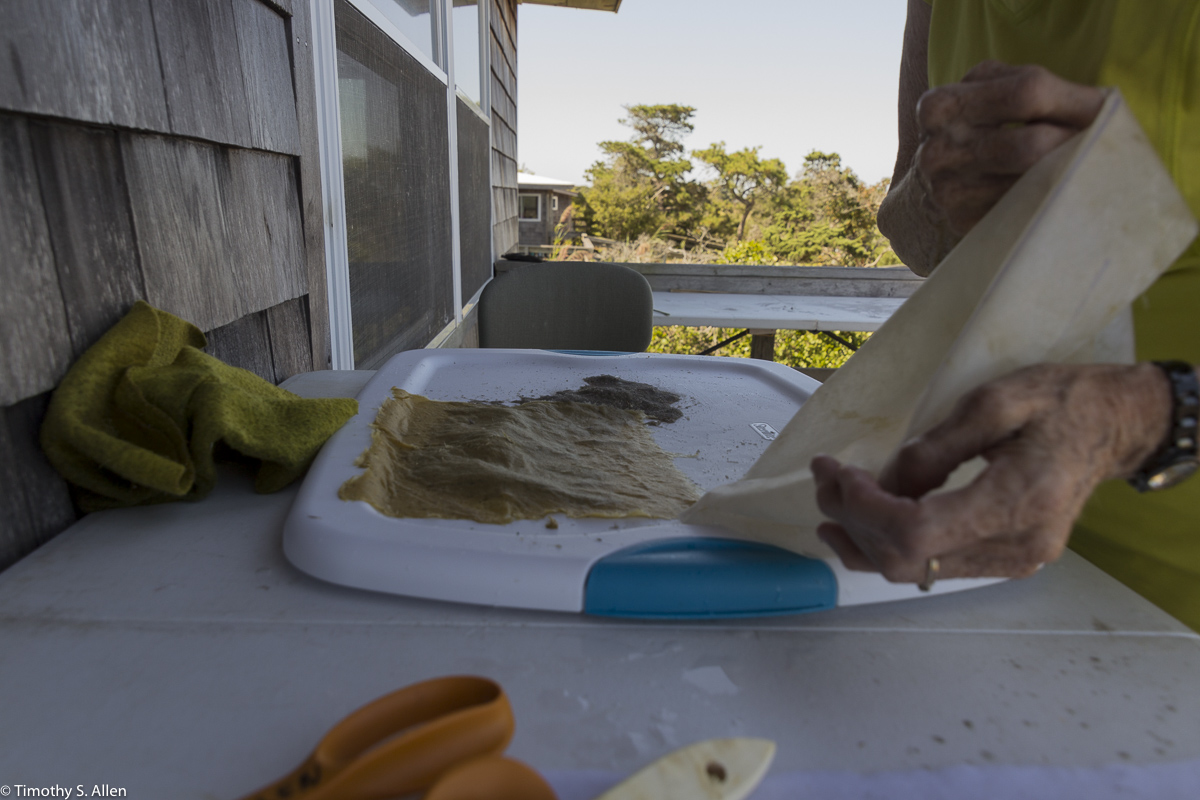
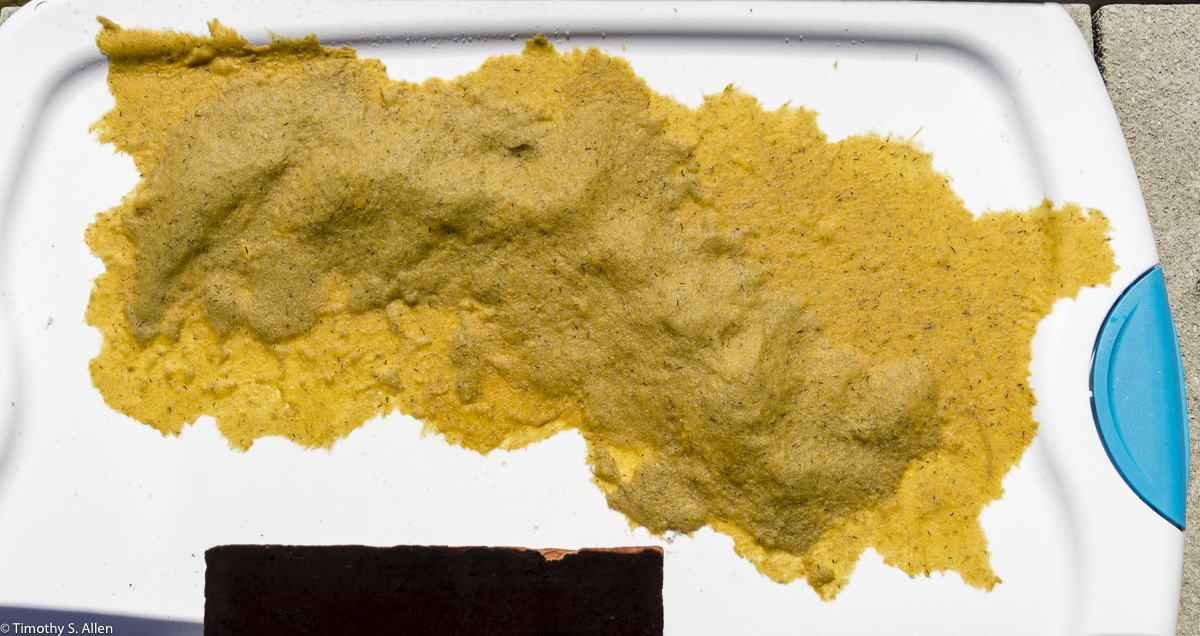
7 Plants for Papermaking used in the Point Reyes Art Project

31 Thursday Oct 2013

Posted by janeingramallen in Uncategorized

≈ Leave a comment

Tags

art project, Gallery Route One, Lucid Art Foundation, papermaking, plants for papermaking, Point Reyes, Point Reyes Station, Public Art Project, West Marin Community Foundation, West Marin School

In my “For the Birds” public art project and residency at Point Reyes, CA, working with children in West Marin School and supported by Gallery Route One (www.galleryrouteone.org) and the Lucid Art Foundation with additional support from the West Marin Community Foundation, I used 7 local plants to make the handmade paper for the hundreds of paper feathers to hang from the big nest in the Commons and the many smaller nests installed int he trees along main street (Hwy. 1) in Point Reyes Station.  

The paper pulp has seeds to feed the birds and I also used some pulp made from old blue jeans and abaca (musa textilus) as well as these 7 local plants:

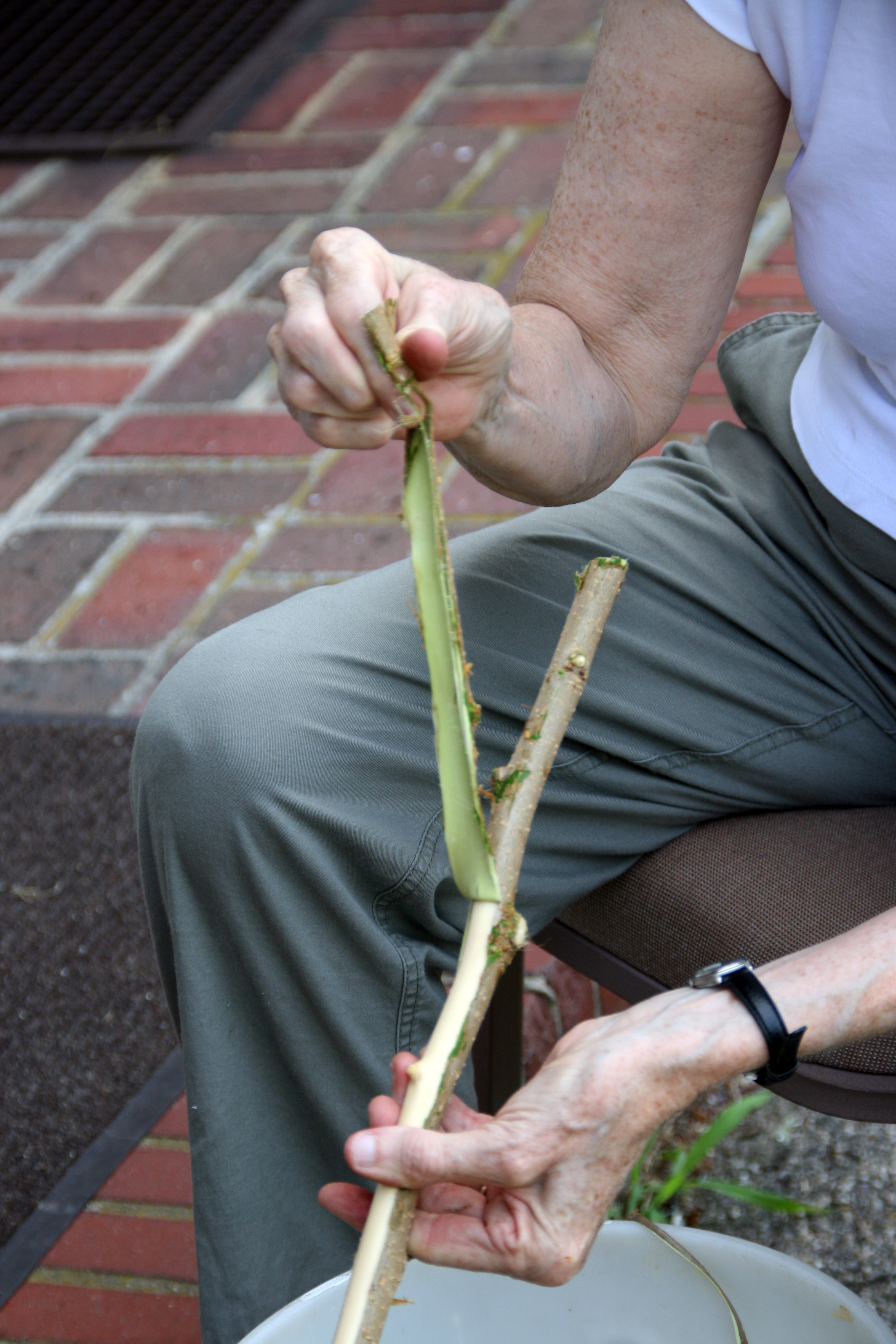
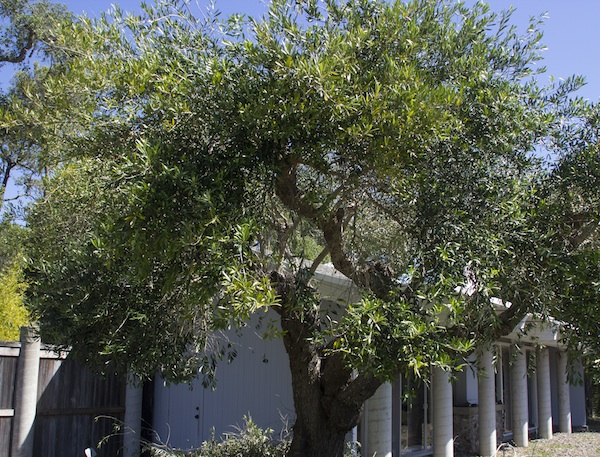
Olive tree bark

Image


The olive bark pulp was a nice tan color and interesting texture, but a little difficult to remove from the papermaking mould.

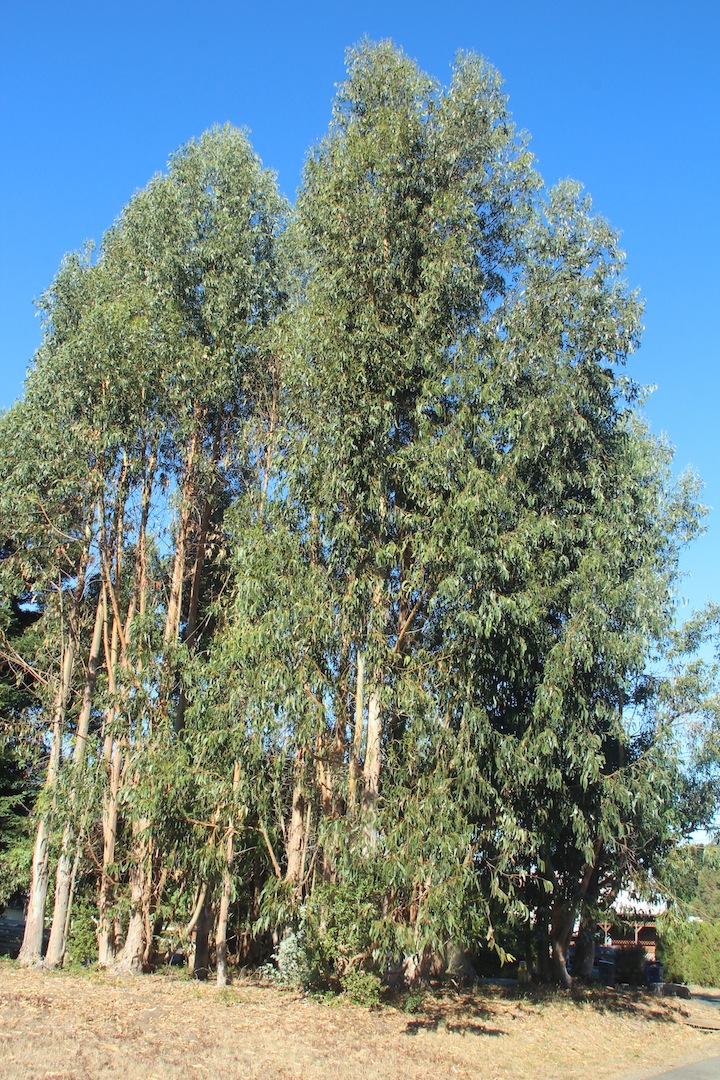
Eucalyptus bark

Image


I think eucalyptus bark pulp is great and a nice rich dark brown color.  I gathered the bark that was peeling off the giant trees along the roadside in this part of California. 

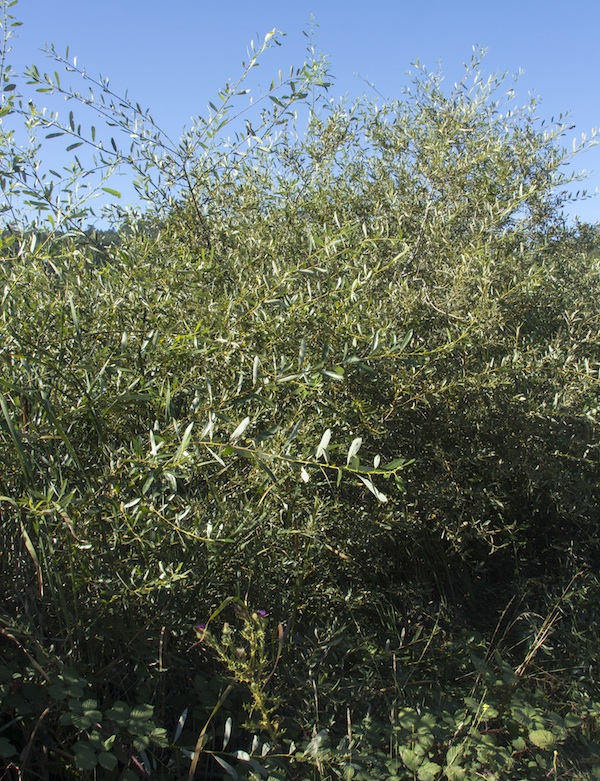
Willow bark (Salix arroya)

Image


These willow trees are everywhere along the roadsides in the Point Reyes area.  The road maintenance crew was trimming back the trees so they don’t cover up the road!  I was able to get many branches that were useful for papermaking as well as for making the nests.  This willow is not so bendable as weeping willow, but still a great material for basketmaking as well as the bark being useful to make paper pulp.  I like the color of the paper, a nice golden tan, but I think I needed to cook it longer as it was still very tough and stringy even after cooking for 4 hours. 

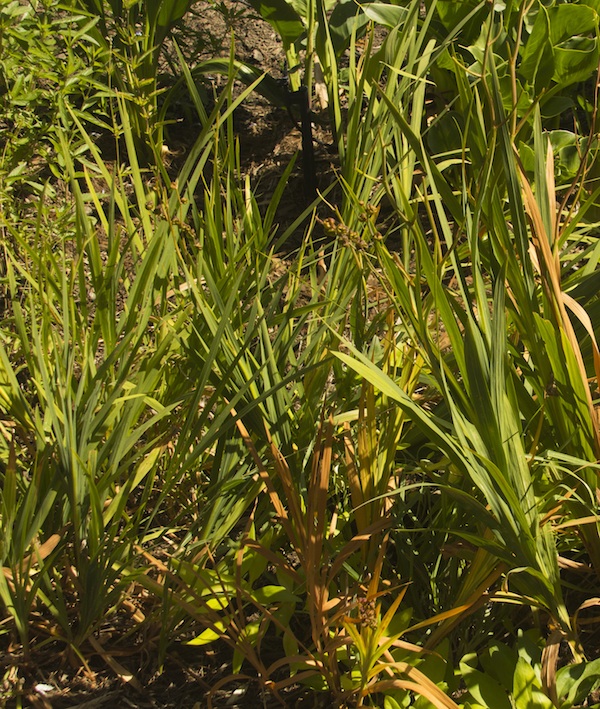
Crocosmia leaves

Image

This flower is a member of the lily family, and the flowers are yellow and looks somewhat like day lily.  It was growing in the West Marin School garden near where we were making the handmade paper feathers for this public art project.  It proved to be an excellent plant for papermaking.

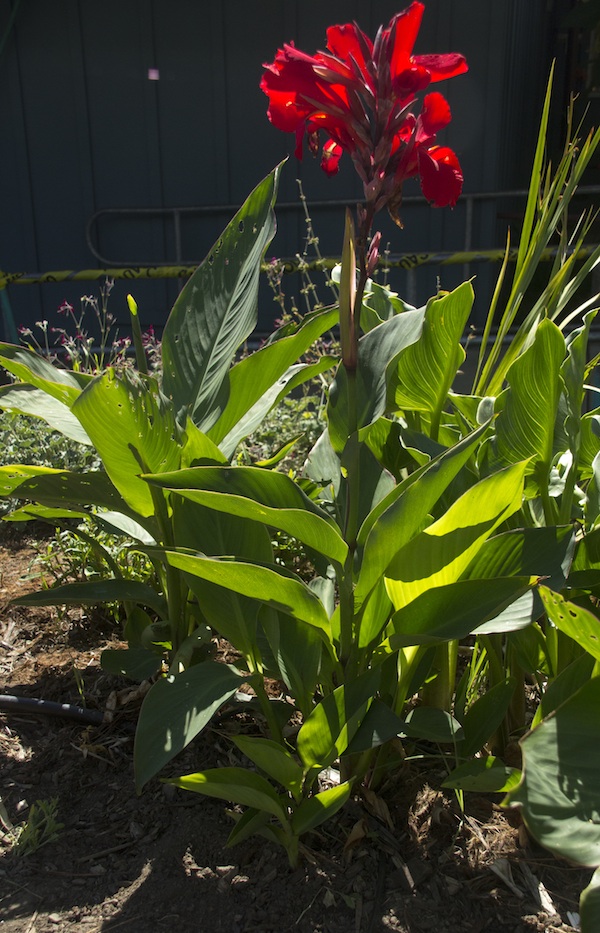
Canna leaves

Image

There were also many canna lily flowers in the school garden.  This one has beautiful red flowers.  The leaves look big and promising for papermaking, but actually it gave little pulp.  The leaves cook down so much that only a handful of pulp remained after the preparation.  The paper is nice and crisp but it is probably not worth the trouble since the yield is so little.

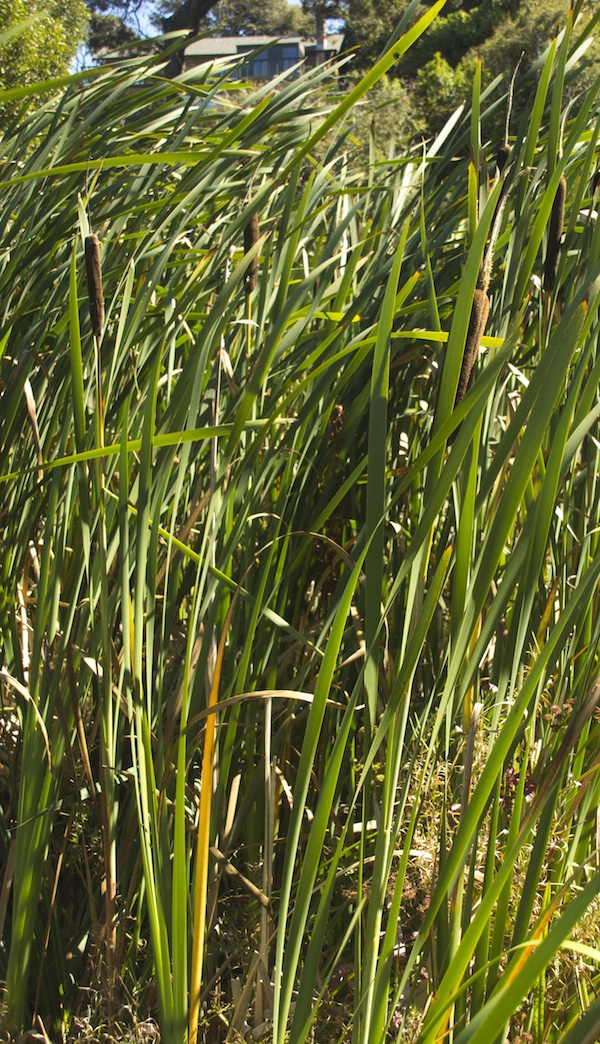
Cattail leaves

Image


Cattail leaves are great for making paper, and I have used this plant before in Taiwan and other places.  There are many cattails growing along the Tomales Bay in the Point Reyes area.  This is one of the most plentiful plants for papermaking in the area and it makes great paper…a nice tan color and good texture. 
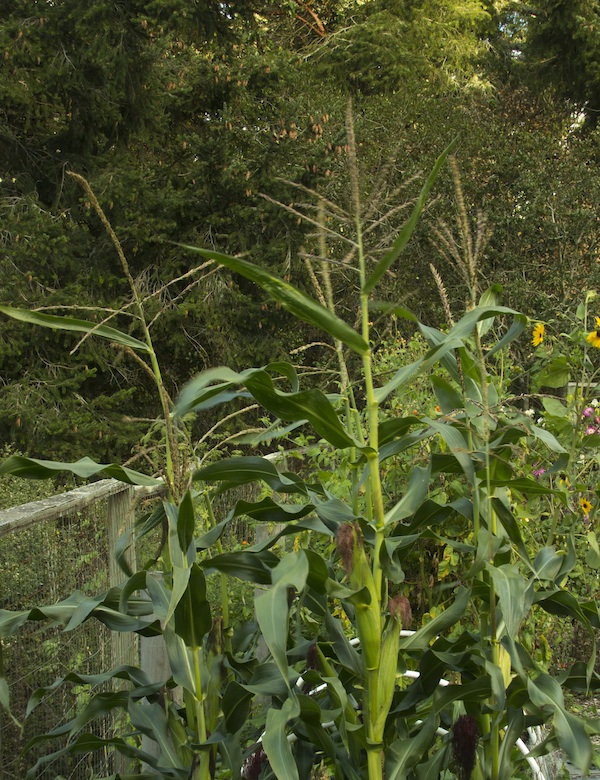
Corn husks

Image


Corn husks are good for papermaking although the texture is a little rough.  I got the corn husks by saving all the husks from the corn we ate during the 3 -week residency….yum.  Corn husks are also easy to get at the local grocery store as usually they take away some outside husks before putting the corn out for sale.
If you have any questions or want more information just email me.  I made a sample book for Gallery Route One and Lucid Art Foundation that has the complete recipe and samples of paper made from all 7 of these plants used in the “For the Birds” project, Sept. 7 – 25, 2013.


Like Loading...

Subscribe

  • Entries (RSS)
  • Comments (RSS)

Archives

  • April 2026
  • January 2026
  • December 2025
  • November 2025
  • September 2025
  • August 2025
  • June 2025
  • April 2025
  • March 2025
  • February 2025
  • January 2025
  • November 2024
  • September 2024
  • July 2024
  • May 2024
  • February 2024
  • December 2023
  • November 2023
  • October 2023
  • August 2023
  • July 2023
  • May 2023
  • April 2023
  • March 2023
  • February 2023
  • January 2023
  • December 2022
  • November 2022
  • October 2022
  • August 2022
  • June 2022
  • May 2022
  • March 2022
  • February 2022
  • January 2022
  • December 2021
  • November 2021
  • October 2021
  • September 2021
  • July 2021
  • June 2021
  • May 2021
  • April 2021
  • March 2021
  • February 2021
  • January 2021
  • December 2020
  • November 2020
  • October 2020
  • September 2020
  • August 2020
  • July 2020
  • June 2020
  • May 2020
  • April 2020
  • March 2020
  • February 2020
  • January 2020
  • November 2019
  • September 2019
  • August 2019
  • June 2019
  • May 2019
  • April 2019
  • March 2019
  • February 2019
  • January 2019
  • December 2018
  • November 2018
  • October 2018
  • August 2018
  • July 2018
  • June 2018
  • May 2018
  • April 2018
  • March 2018
  • February 2018
  • January 2018
  • December 2017
  • November 2017
  • October 2017
  • September 2017
  • August 2017
  • July 2017
  • June 2017
  • May 2017
  • April 2017
  • February 2017
  • January 2017
  • December 2016
  • November 2016
  • October 2016
  • September 2016
  • August 2016
  • July 2016
  • June 2016
  • May 2016
  • March 2016
  • February 2016
  • January 2016
  • December 2015
  • November 2015
  • October 2015
  • September 2015
  • August 2015
  • July 2015
  • June 2015
  • May 2015
  • April 2015
  • March 2015
  • February 2015
  • January 2015
  • December 2014
  • November 2014
  • September 2014
  • July 2014
  • June 2014
  • April 2014
  • March 2014
  • January 2014
  • December 2013
  • November 2013
  • October 2013

Categories

  • Costa Rica Residency 2023
  • For the Birds
  • Uncategorized

Meta

  • Create account
  • Log in

Blog at WordPress.com.

  • Subscribe Subscribed
    • Jane Ingram Allen Art Projects
    • Join 100 other subscribers
    • Already have a WordPress.com account? Log in now.
    • Jane Ingram Allen Art Projects
    • Subscribe Subscribed
    • Sign up
    • Log in
    • Report this content
    • View site in Reader
    • Manage subscriptions
    • Collapse this bar
 

Loading Comments...
 

    %d