Tags
Boruca tribe of Costa Rica, Costa Rica, handmade paper, Le Diamante Vert, Marie M'Ayala Saurat, plants for papermaking, Uvita
I just returned from spending 6 weeks in Uvita, Costa Rica, for an artist in residency project at Le Diamonde Vert, home of French choreographer/dancer Marie M’Alaya Saurat. My husband Tim and I are happy to be home, but it does seem cold here in Northern California compared to the hot humid weather in Uvita. I am compiling my research on the papermaking and the local plants I used in Costa Rica and finishing up a few works I started there duringthe last week or so. We spent a couple of days in San Jose, Costa Rica, before our flight home, and it was great to have luxurious warm showers, a huge bedroom, nice restaurants and a beautiful pool on the premises.
During the residence in Uvita I made paper from 6 plants: Plantain Leaves (Musa x paradisia), Shell Ginger Leaves ( Alpine zerumbet), Corn Husks (Mais), Leaves of a Roadside Grass (Papsalum saccharoides), Red Hibiscus Bark (Hibiscus rosa-sinensis) and Black Mulberry Bark (Morus nigra). I think those are the correct scientific names, but it was really difficult during this residency to find anyone who knew about the local plants. Marie had one book on Plants of Costa Rica that was very helpful.
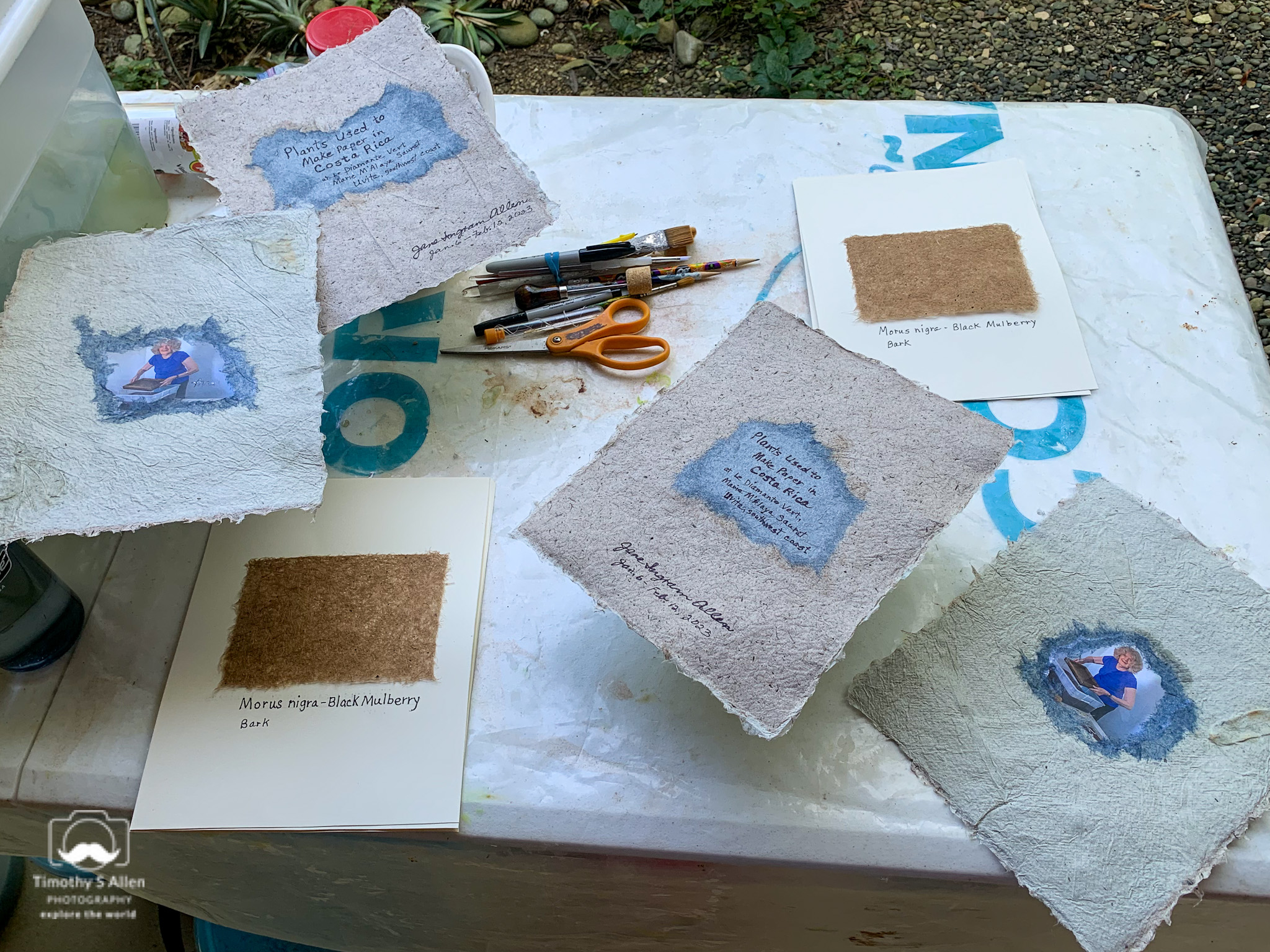
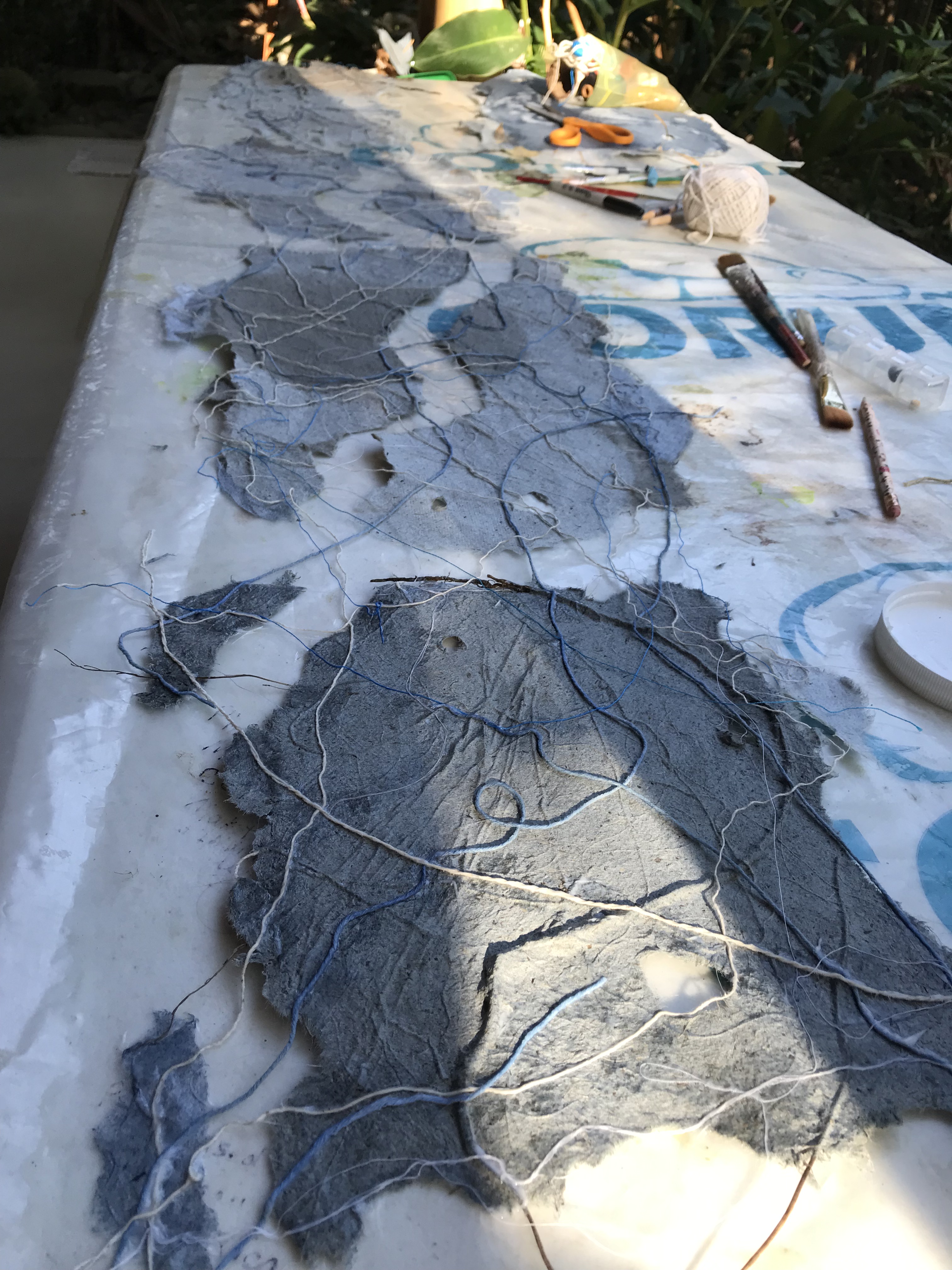
During this residency I also used some kozo, abaca and blue jean pulp that I had brought with me in the suitcase, and I enjoyed combining the local fibers and this added pulp that I could process by hand and with the kitchen blender I also brought with me. I used a modified Japanese papermaking technique with formation aid and multiple dips into the vat, forming thin but still strong handmade paper. I enjoyed using the blue color from the blue jean pulp as well as the natural colors of the various plant fibers. The light in Costa Rica is terrific, and I experimented with making holes in the paper and joining the pieces of handmade paper with natural threads so that they move easily for dance and also are easier to fold and transport after the residency.
I also put together some artworks with the handmade paper of Costa Rica that I could bring back with me to show in California and other places. Here are some photos showing how I shaped and joined single sheets to make long suspended panels to take advantage of light coming through the handmade paper. I will continue working on this “made in Costa Rica” series of works and also doing some writing and interviews about my residency in Costa Rica.
During the last few weeks in Costa Rica, my husband Tim and I also took a few excursions. One trip was to a nature preserve near Uvita that is up in the mountains where we could see different birds and different plants early one morning, and we also took an early morning trip to the national park beach area to see shore birds and animals…they said there were crocodiles and howling monkeys but we did not see any! We also took a one day trip about 2 hours away to Boruca village to see natural dyeing and weaving of the indigenous Boruca tribe of Costa Rica. That was an exciting journey over winding dirt roads, and we had lunch with Marina, a Boruca woman who is the expert and teacher of weaving, spinning and natural dyeing. We saw demonstrations of the natural dyeing to get an incredible variety of really bright colors on the cotton yarn that Marina also showed how to hand spin. The plants used in natural dyeing were all growing around her house so I was able to collect some samples and maybe can find out more about these plants. The weaving that Marina demonstrated is using a back strap loom with thread heddles and produces thick cloth for bags and straps that is sold in the village and at local markets. We encountered the Boruca tribal crafts first at the Uvita Farmer’s Market where they were selling their carved and brightly painted wooden masks, gourd art and the natural dyed hand woven bags and straps.
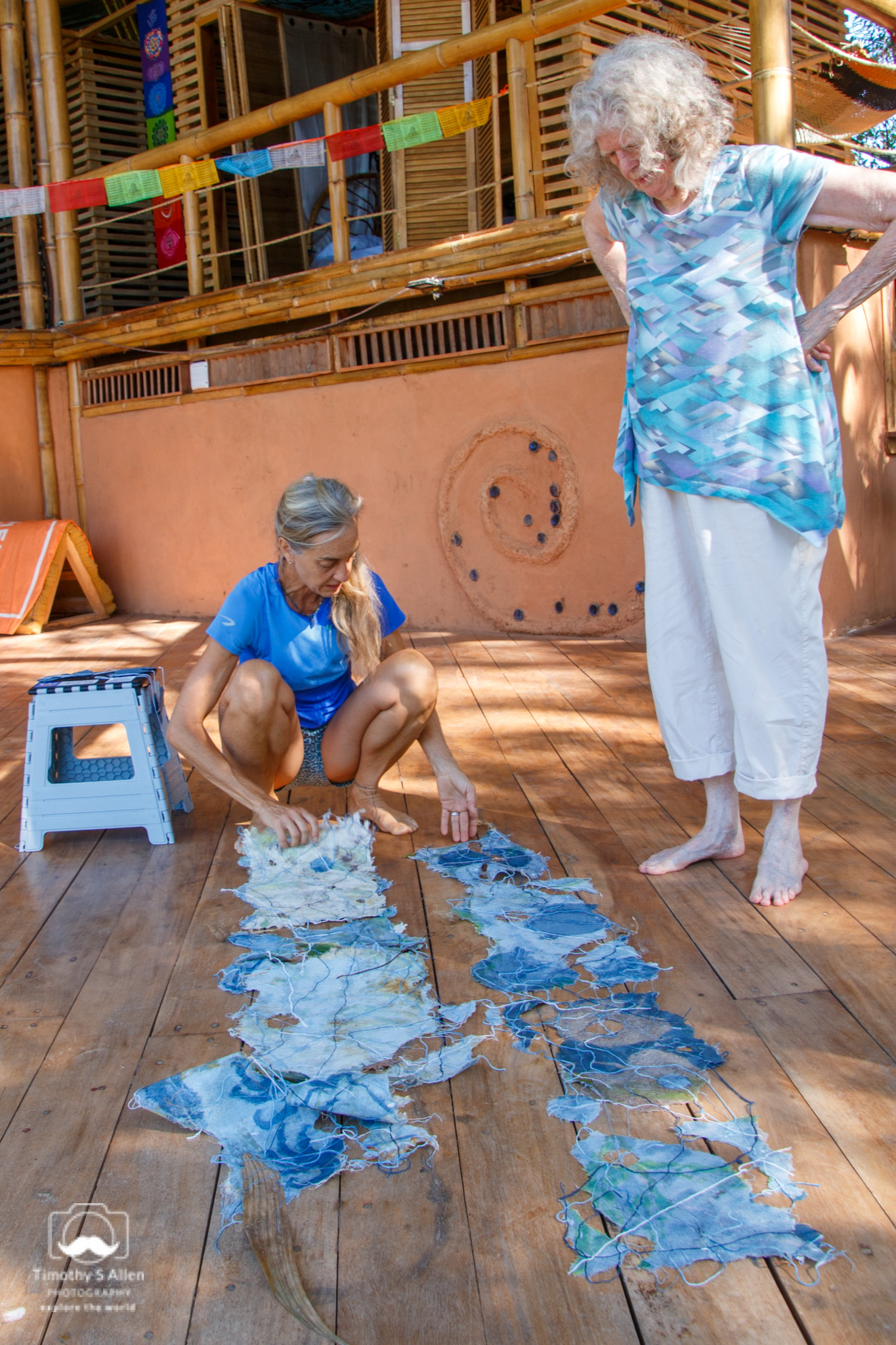
During the last week Marie and I worked together more to create a collaborative dance performance piece that will make use of some of my handmade paper and thread constructions at a performance art festival in May in Havana, Cuba. Marie will take the handmade paper and thread constructions I made folded up in her suitcase for the festival in Cuba. Here are a few photos showing the collaboration and creative process of working with a dancer to create a collaborative work about water and rivers. It was the first time I actually made my art for dance, as other earlier collaborations with choreographers were from them seeing an installation I had already done and then creating dance to go with it. I will post more here about the “way of water” festival in Cuba and hopefully get some good video from Marie of the performance in Havana.
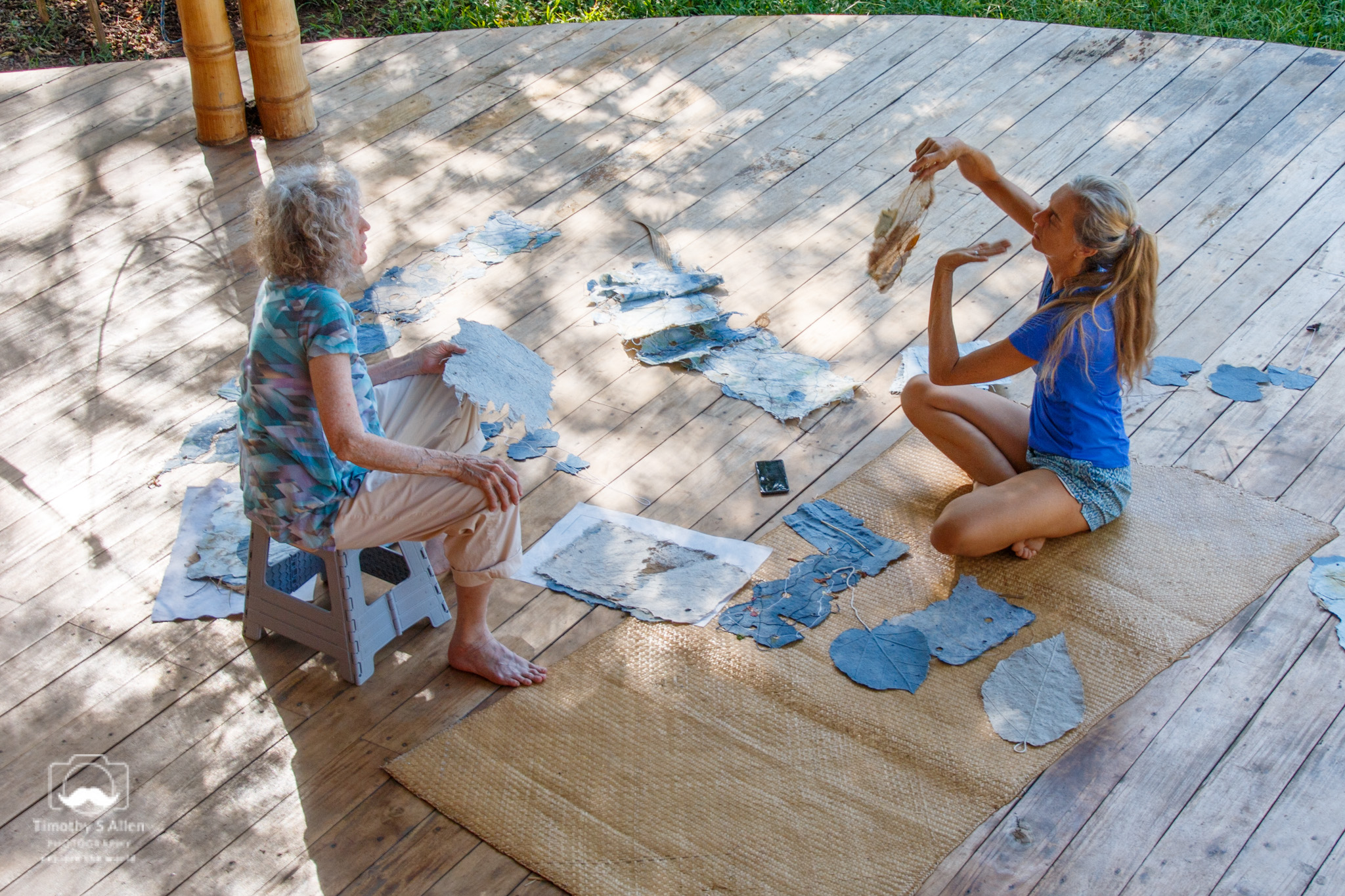
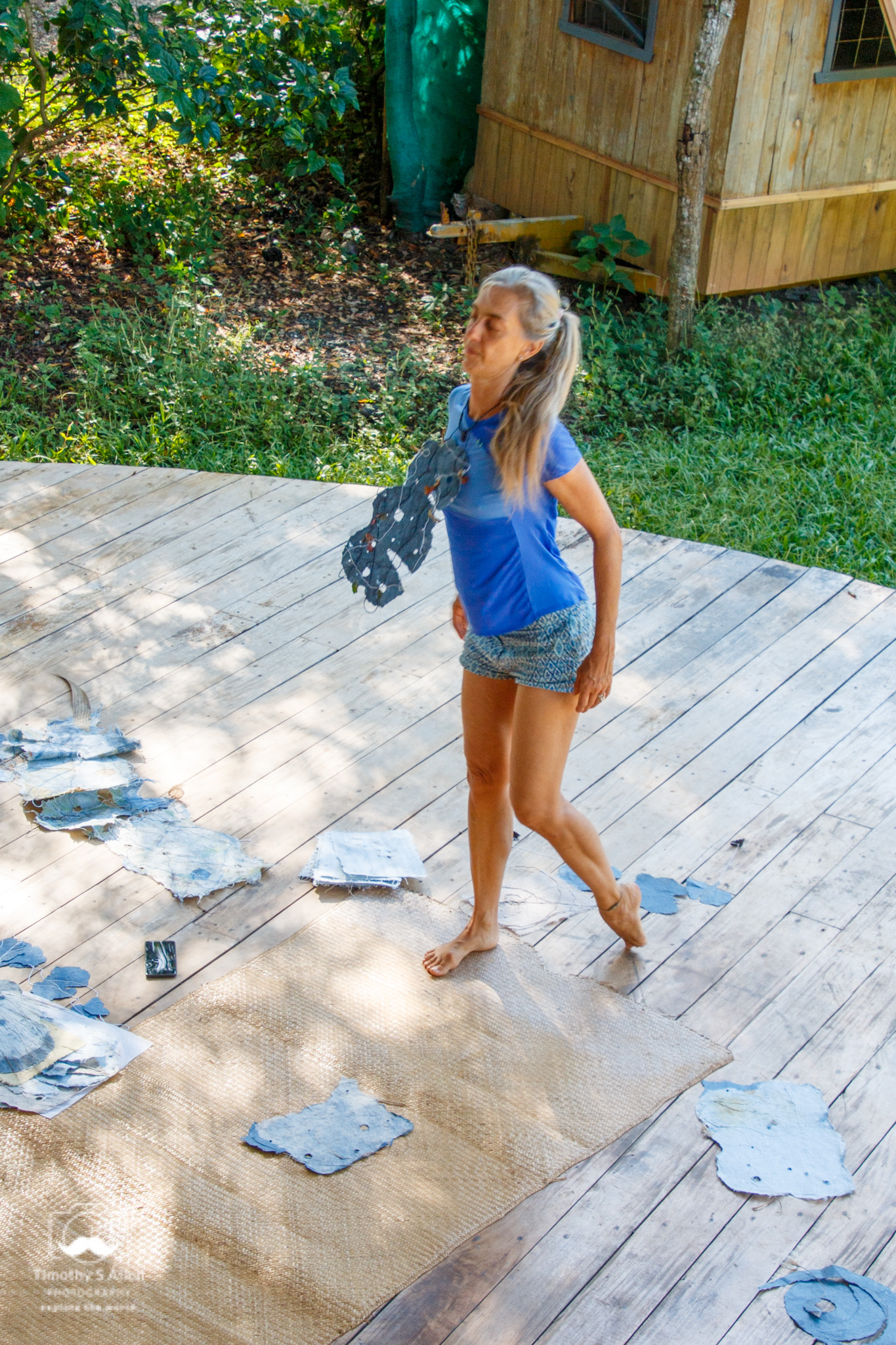
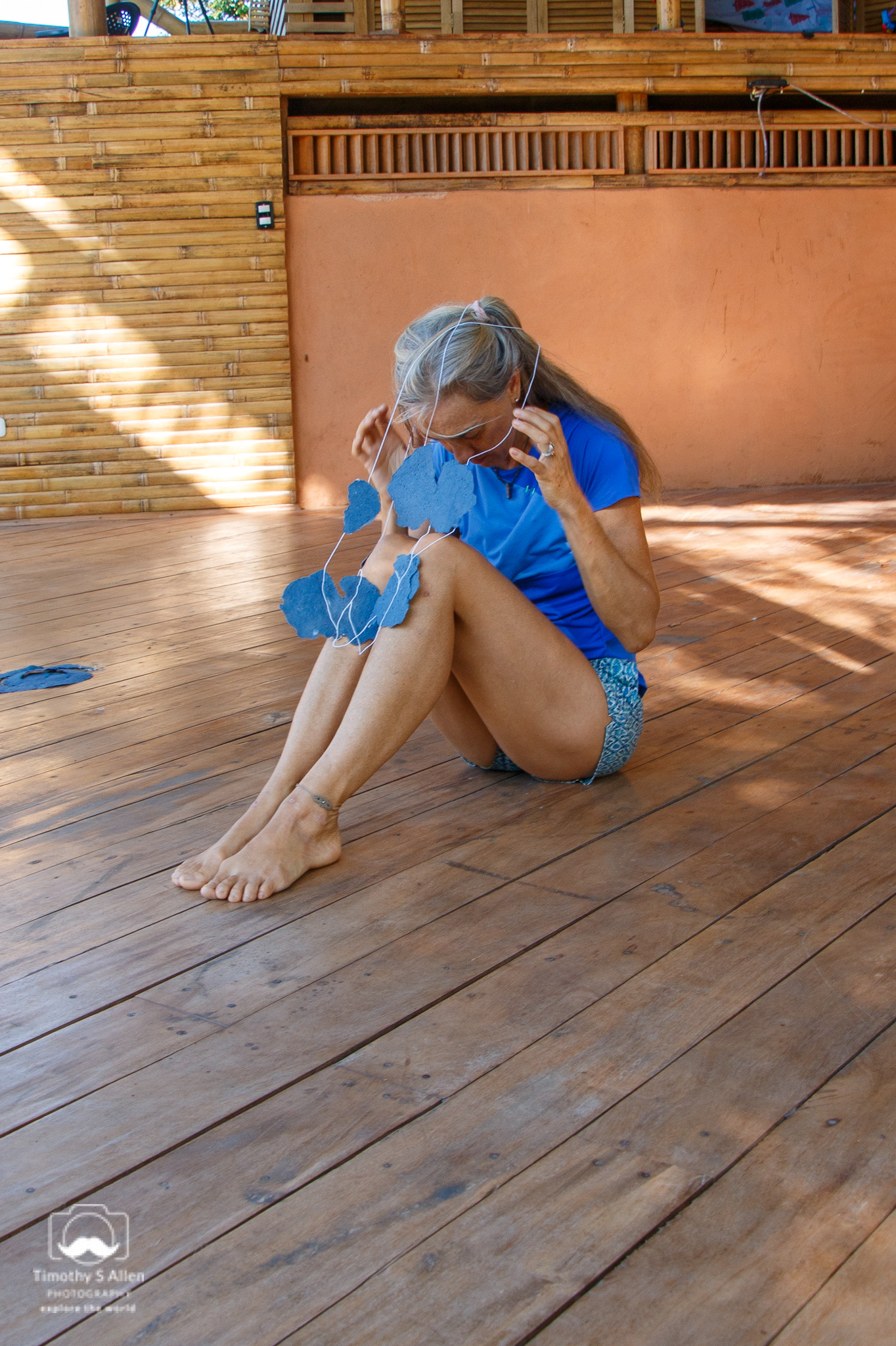
Overall, this residency was a great chance to see Costa Rica, use new plants for papermaking and experience a different culture as well as collaborate with a dancer/choreographer to make new work. It was a difficult residency in that Marie’s place is not set up for anything but dance. There is a large wooden dance porch area, but there is no space for a visual artist. Our bedroom was very small and upstairs with no access to water. I did all my work on one table on the narrow tile porch along the side of the house and the pulp cooking out in the yard. Marie’s house is far from parks or beaches or stores, and we used lots of taxis. I had to buy vats/large plastic tubs, buckets, and any thread I could find in local stores. I also had to find and buy a hot plate to cook fibers as Marie had no way to cook anything outdoors, and I could not use the small kitchen we used for making our food. Marie did have a large stainless steel cooking pot that I was able to use, and I brought everything else needed for papermaking in my suitcase. Marie’s yard had all of the plants I used, but more would have been nice to try if I had access to other areas. I have learned from experience being an artist in residence in many different countries to bring the essentials and find something that can work locally. The most difficult thing was finding an alkaline that would work for cooking the paper pulp. I finally found some lye in a big local supermarket and was able to use that to cut down on the cooking time and make the plant fibers soft and easy to beat by hand and with my kitchen blender. I was happy with the work I was able to do there, and Costa Rica is a beautiful country.
 Jane Ingram Allen Art Projects