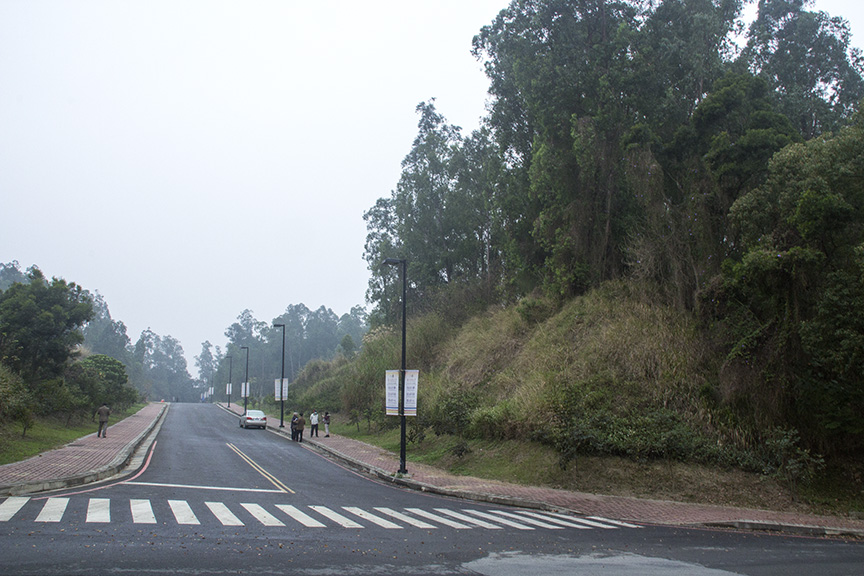
Residency at Kun Shan University, Tainan, Taiwan in May 2014

Jane Ingram Allen, Visiting Artist/ Professor at Kun Shan University, Tainan, Taiwan

Dates: May 11 – 24, 2014

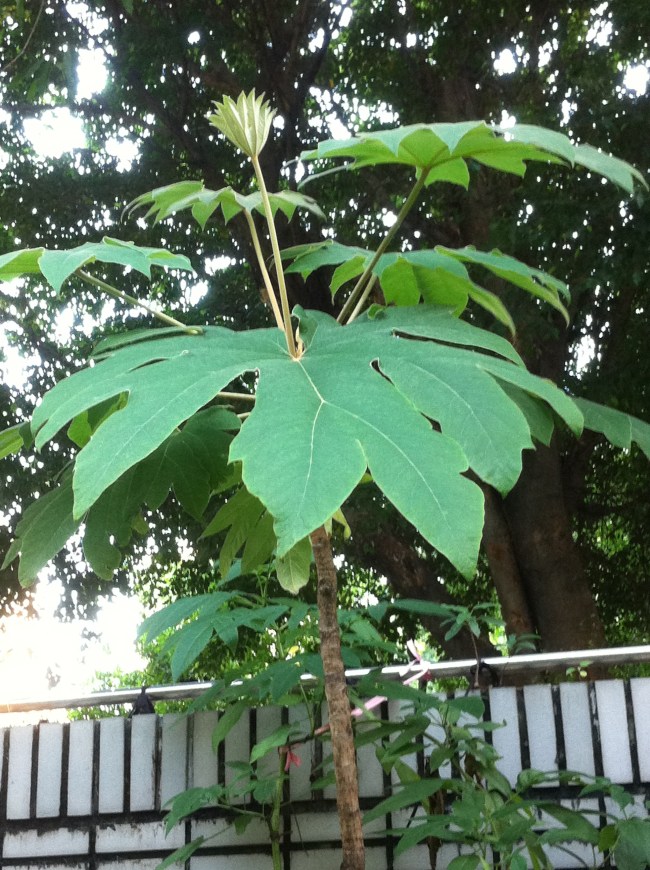
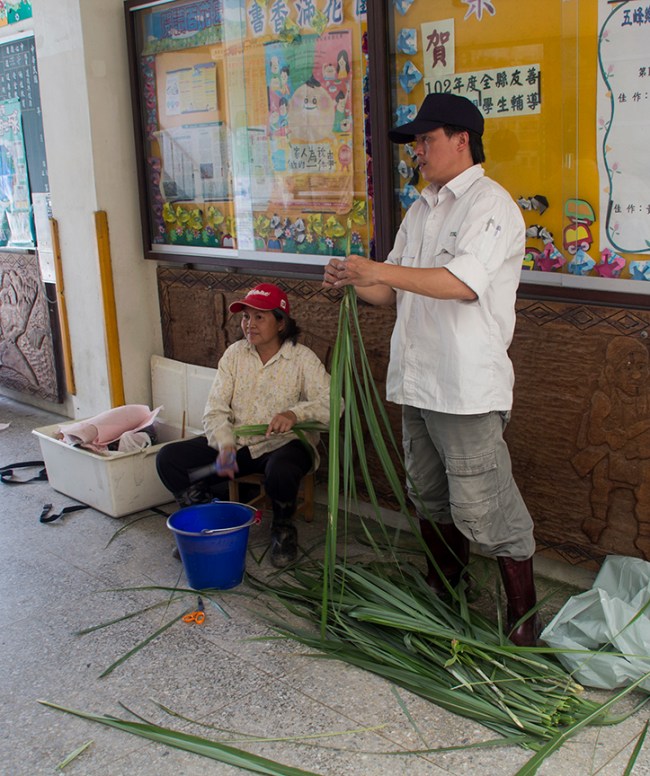
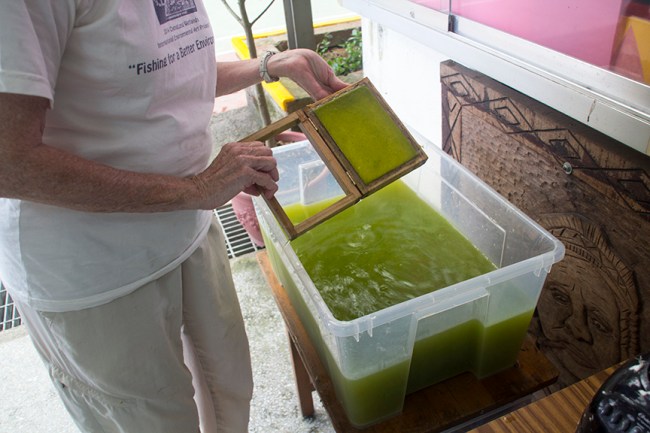
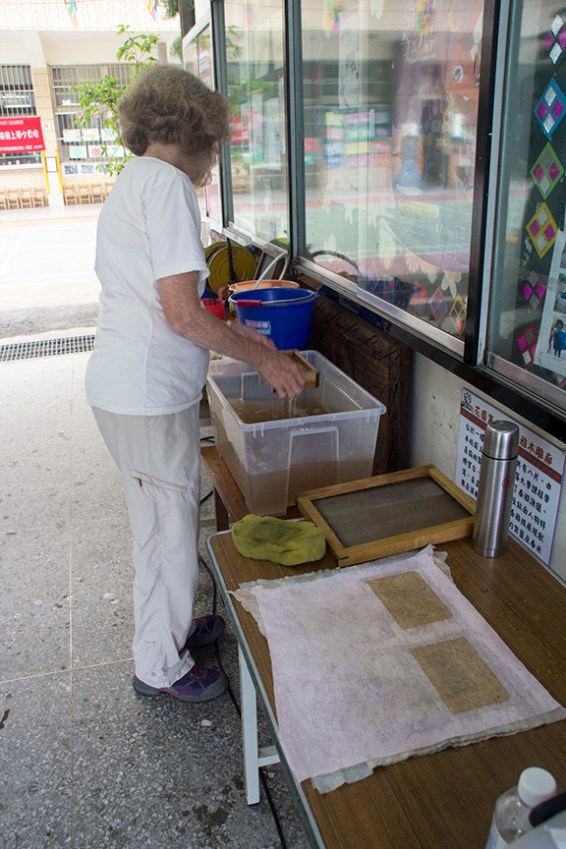
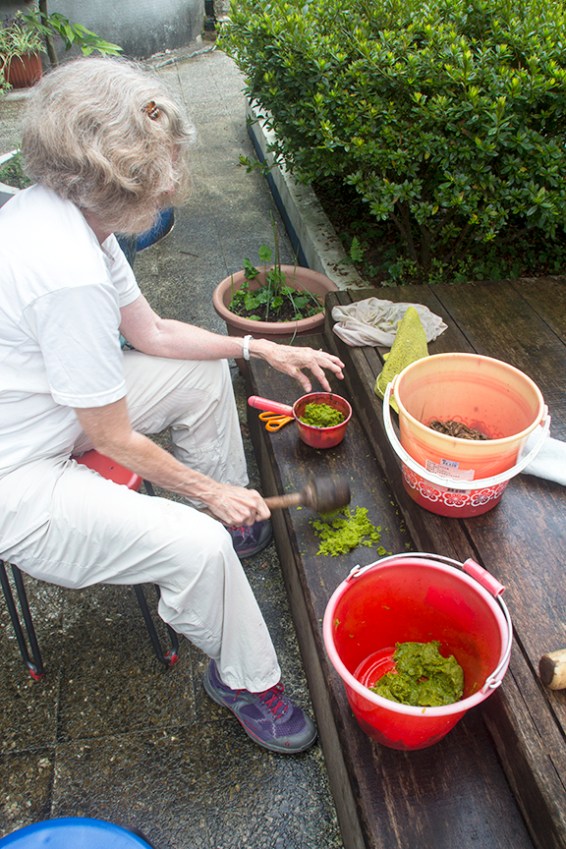
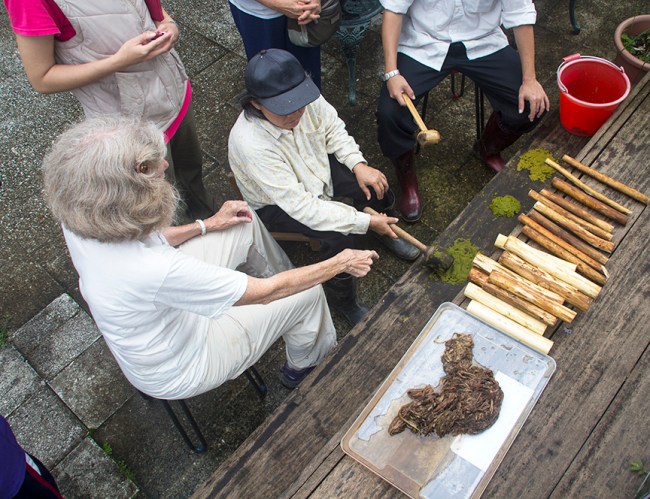
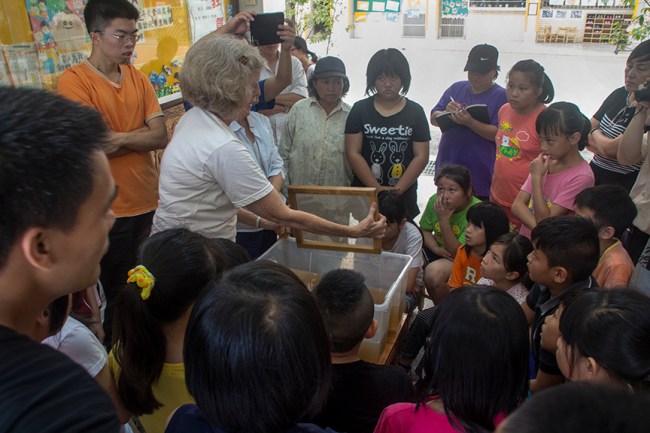
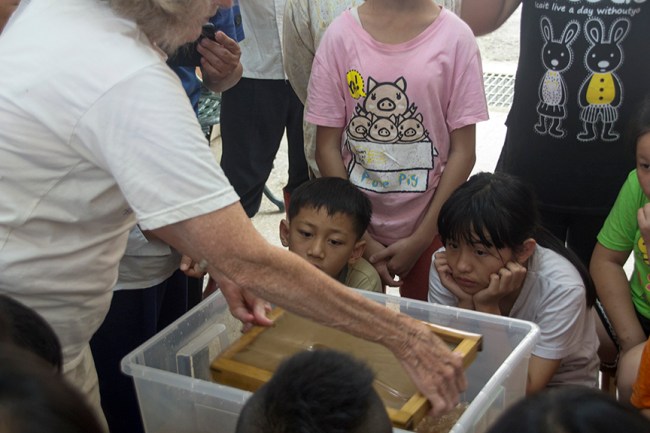
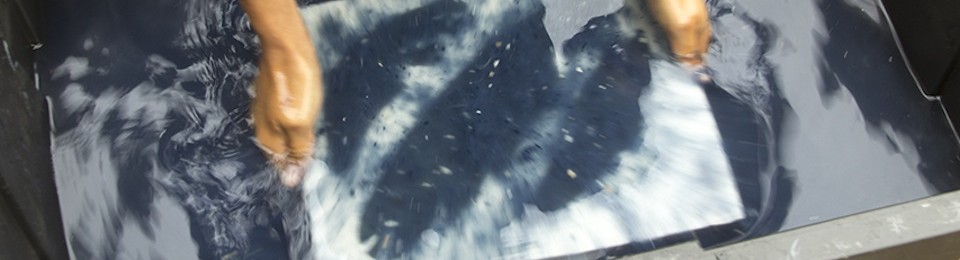
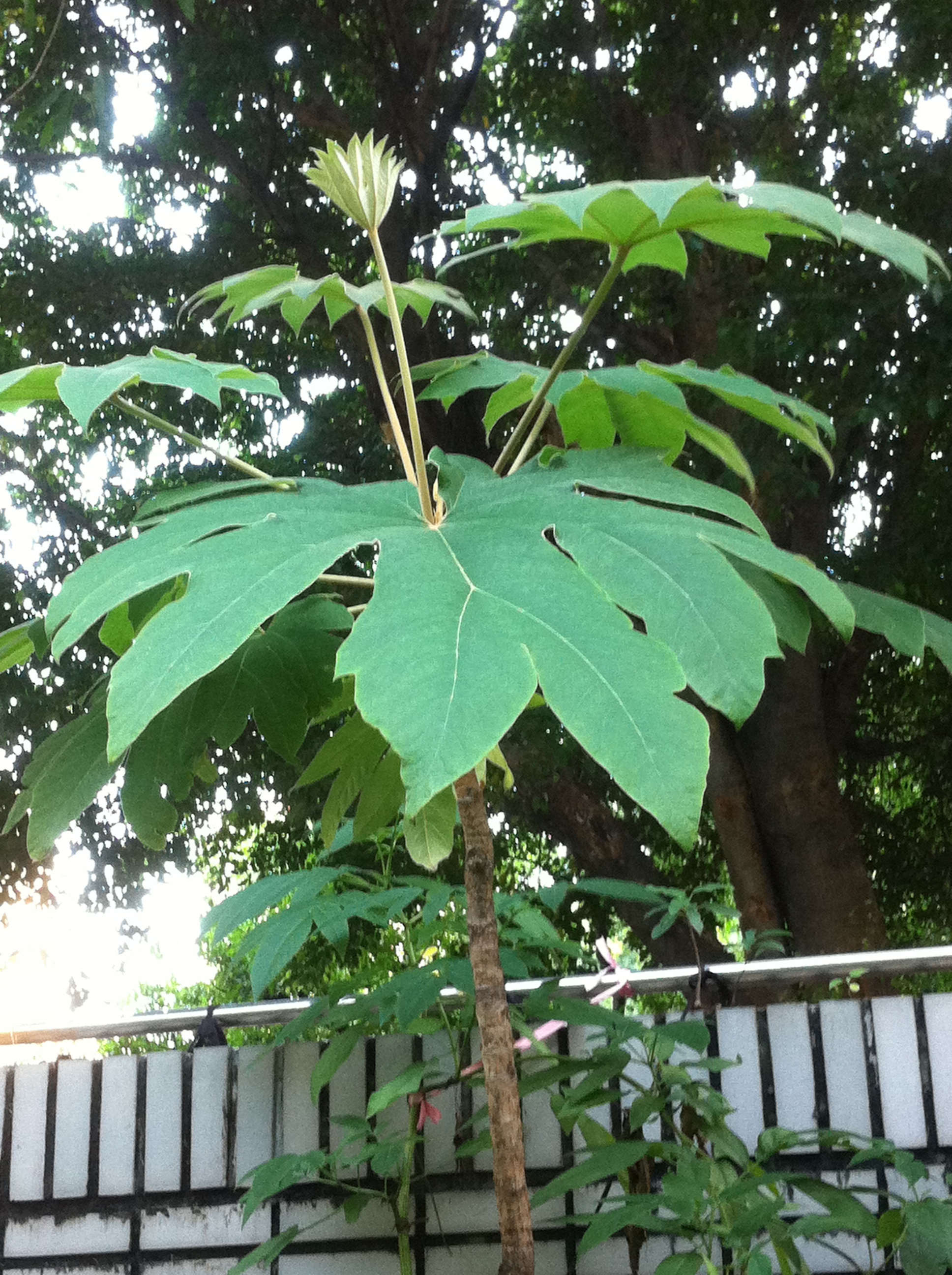
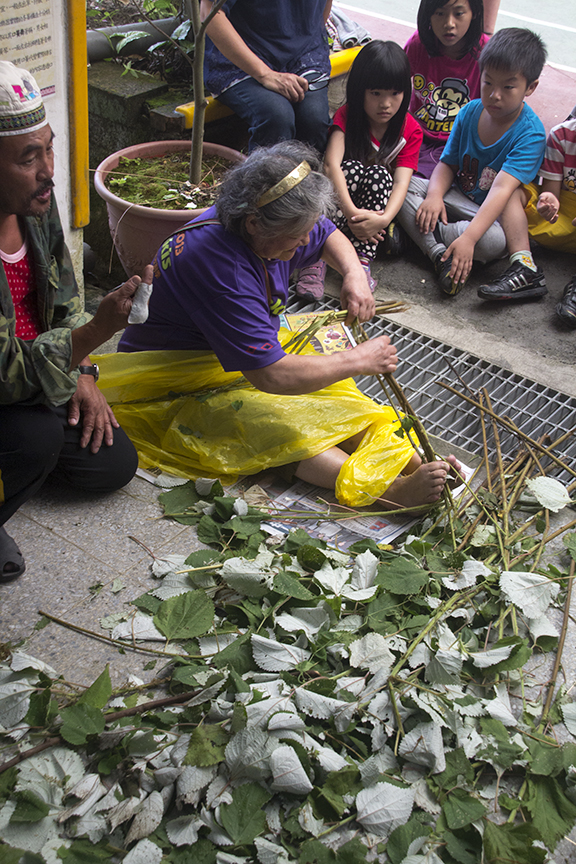
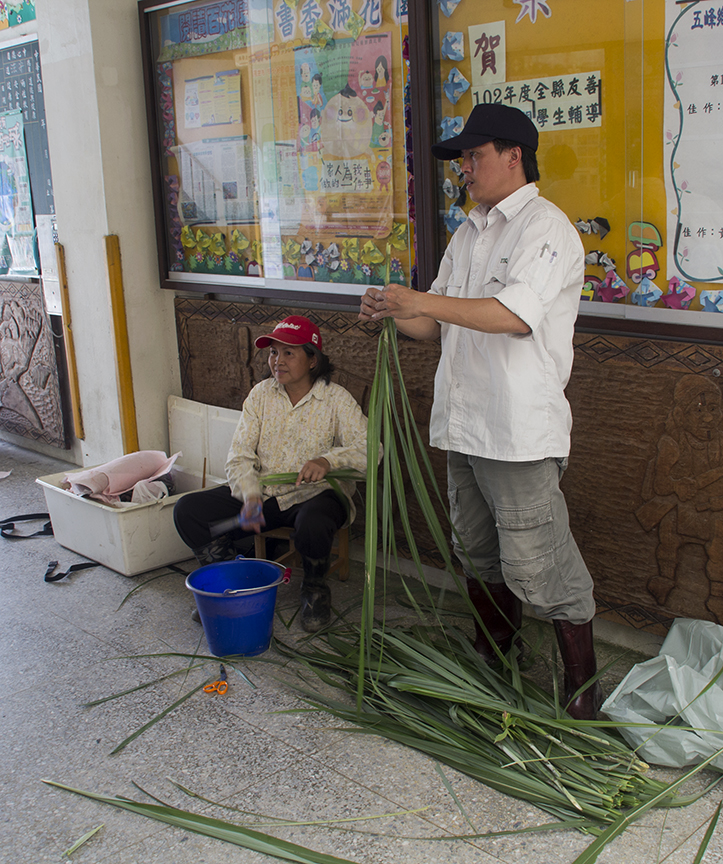
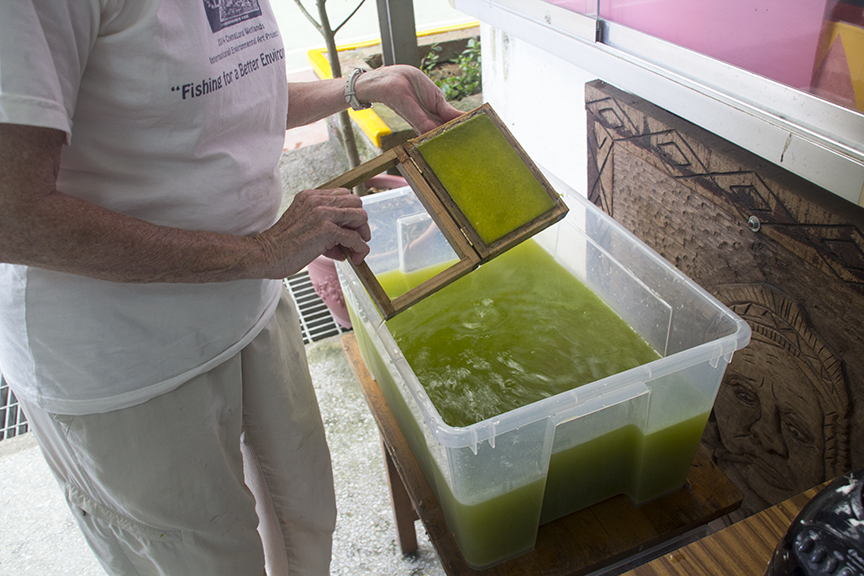
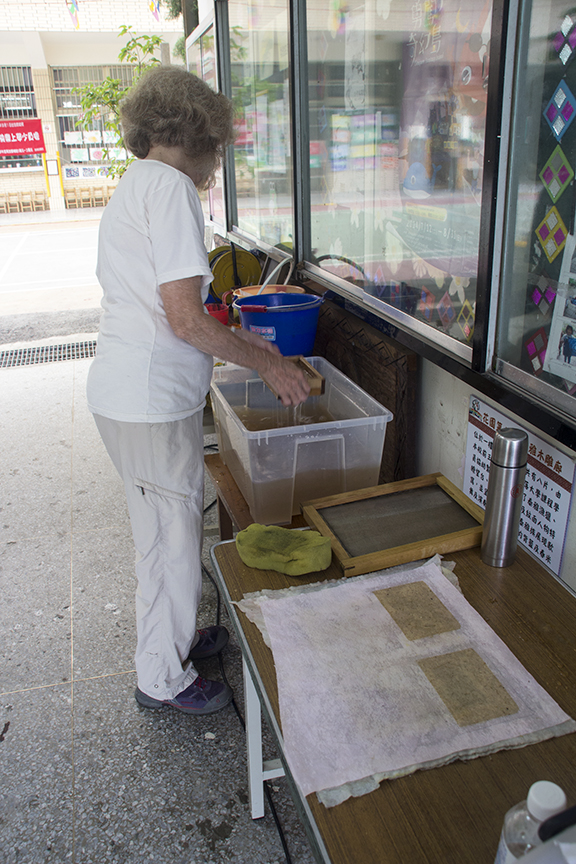
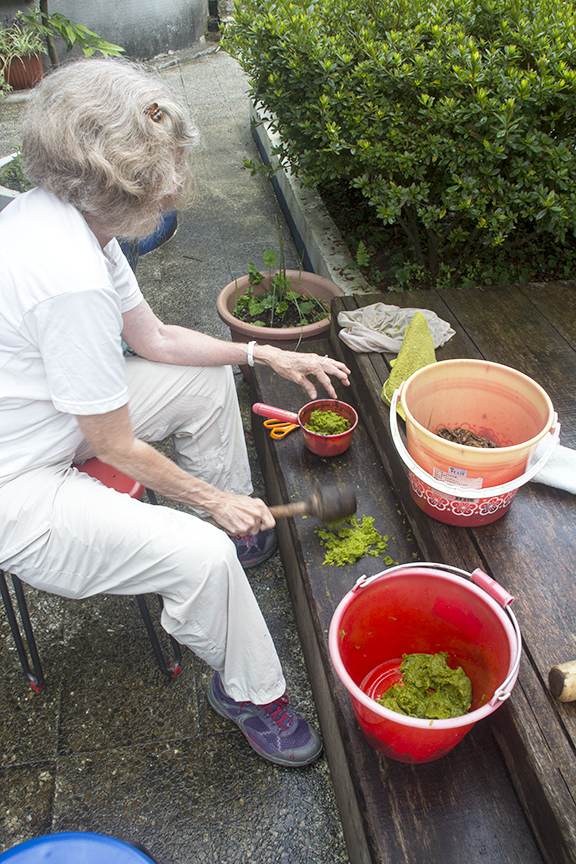
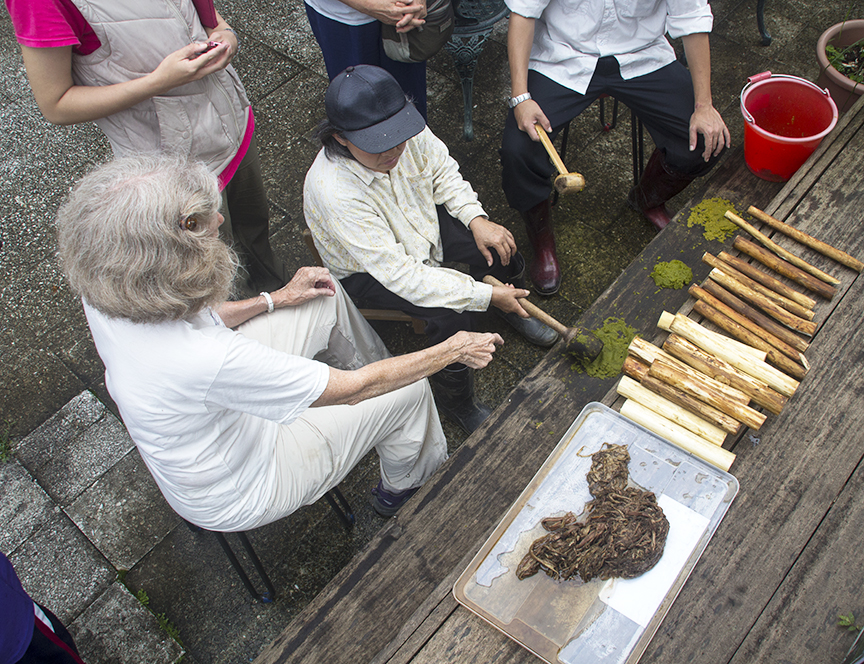
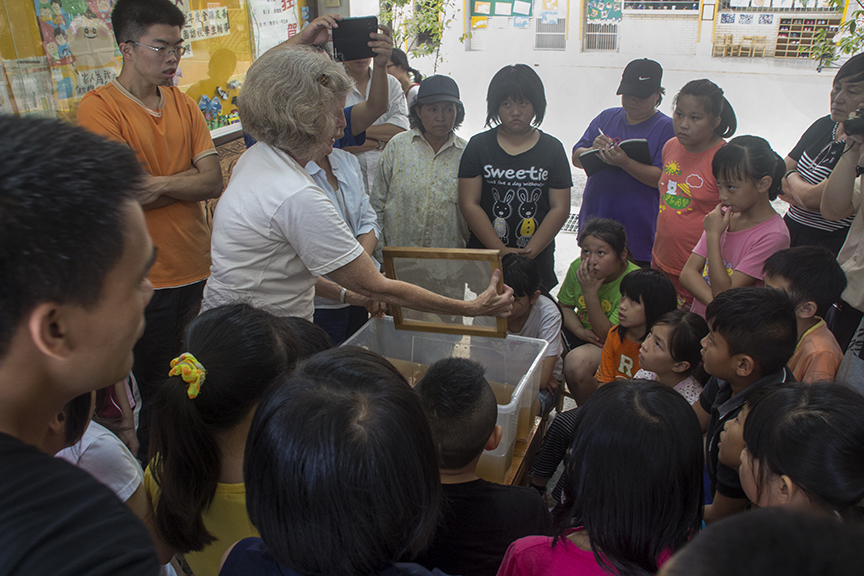
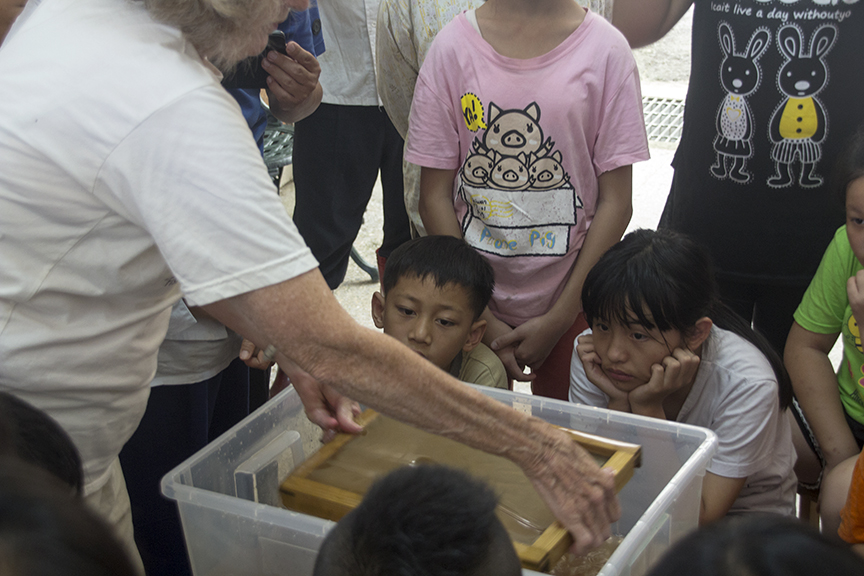
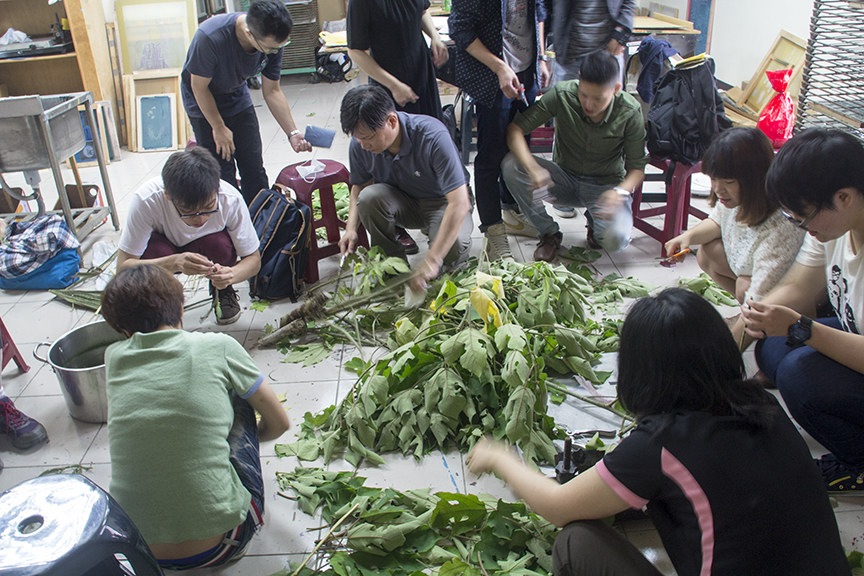
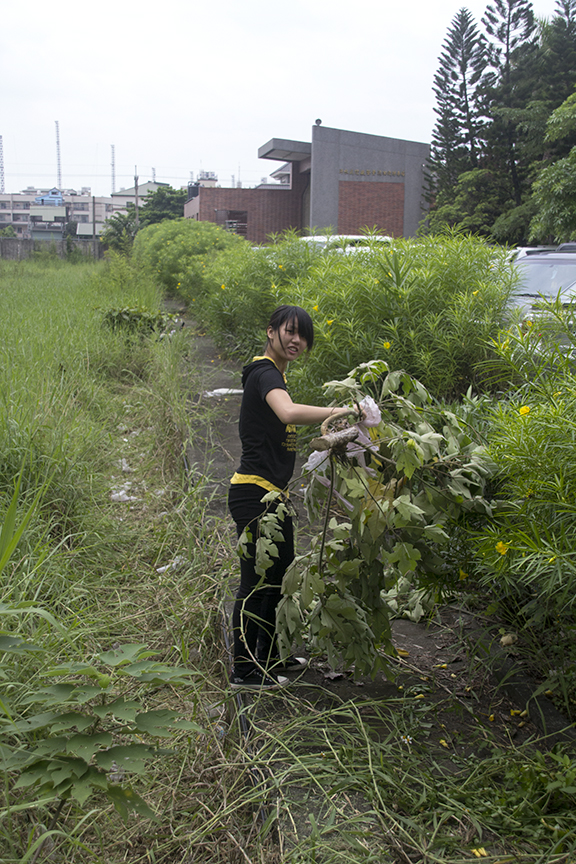
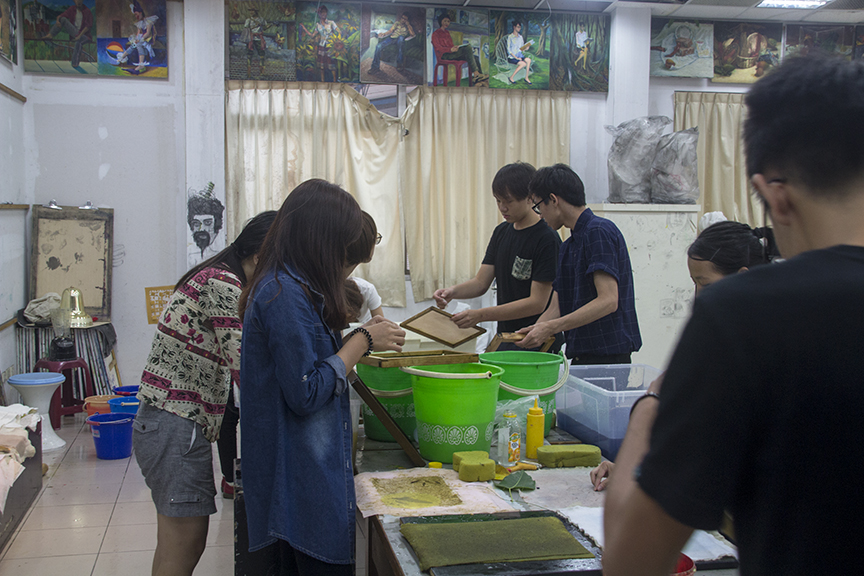
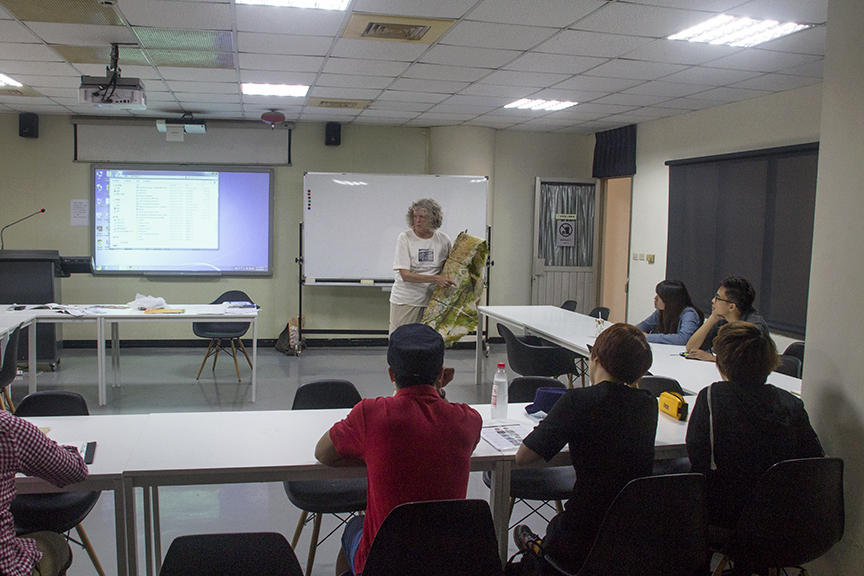
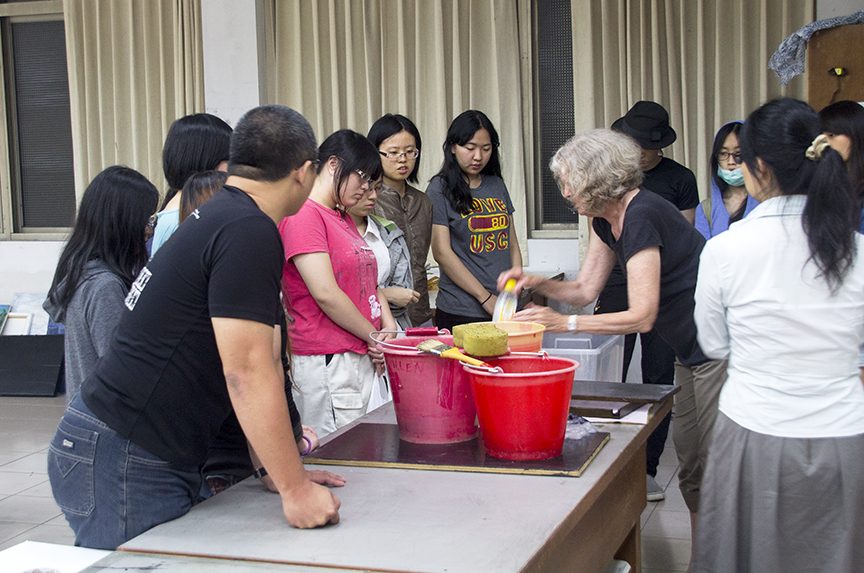
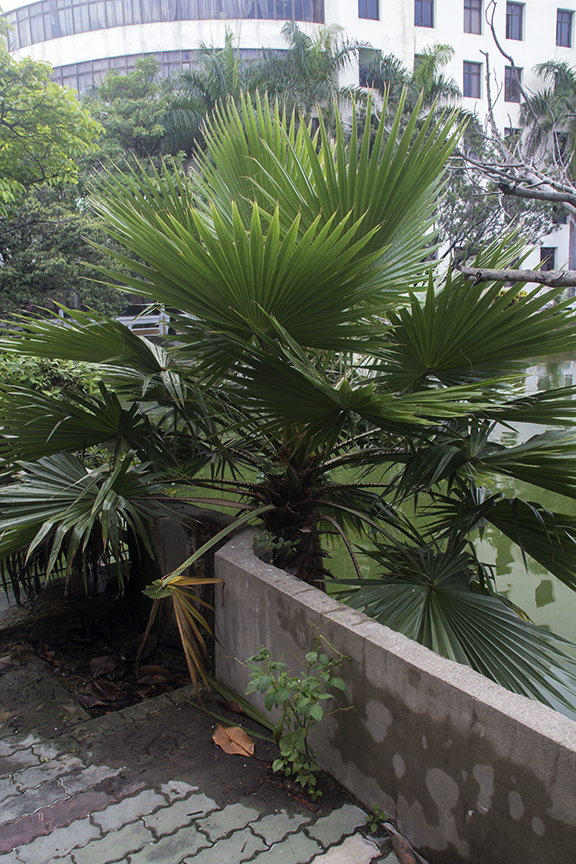
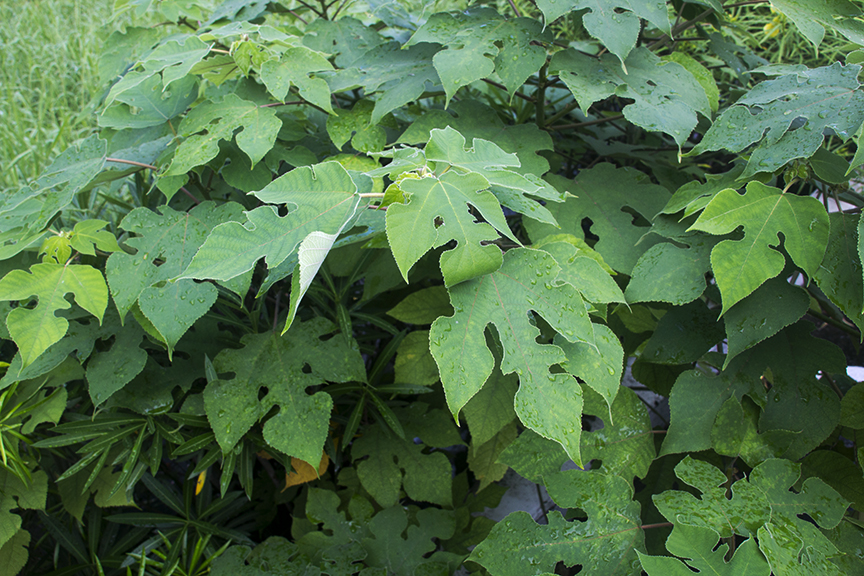
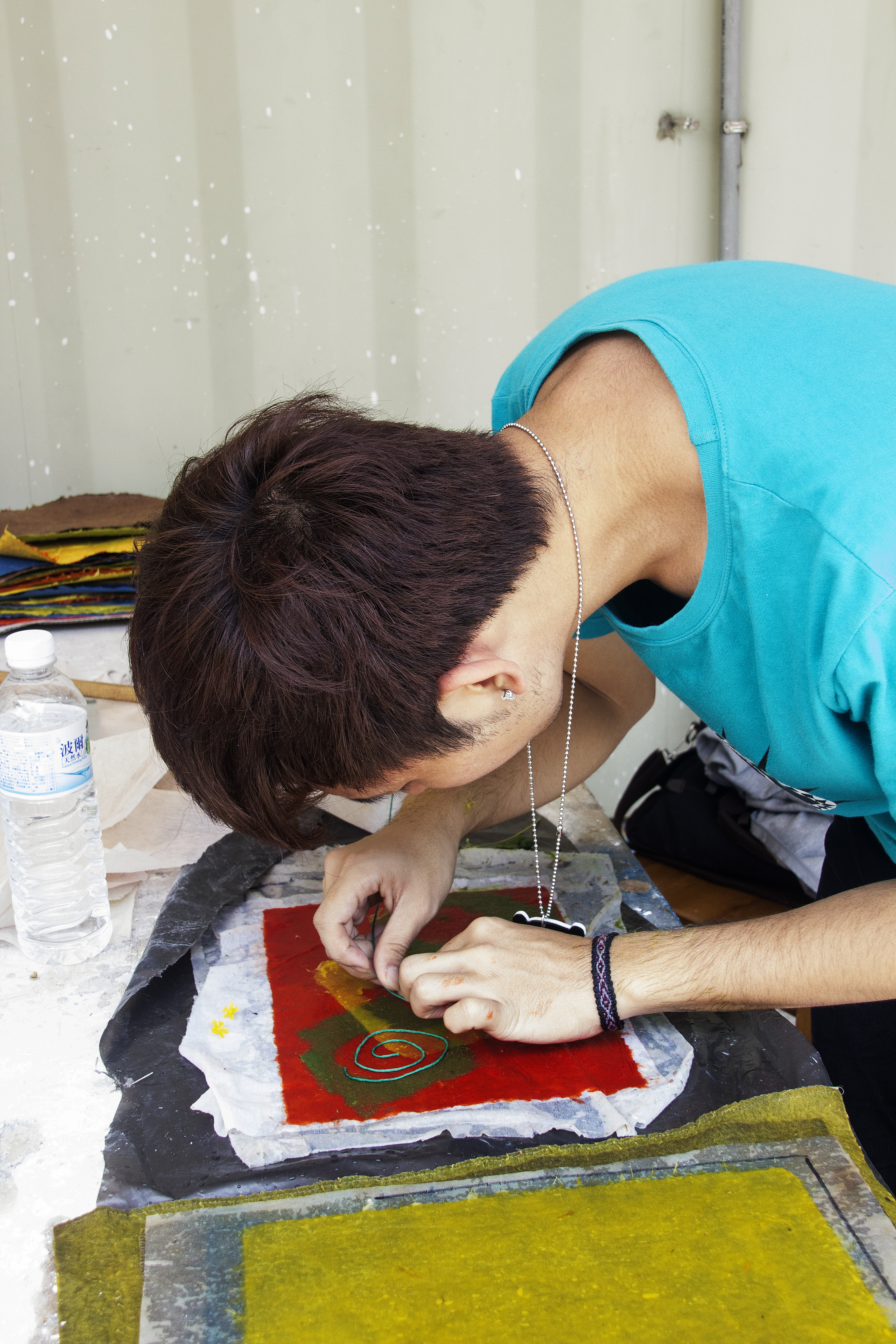
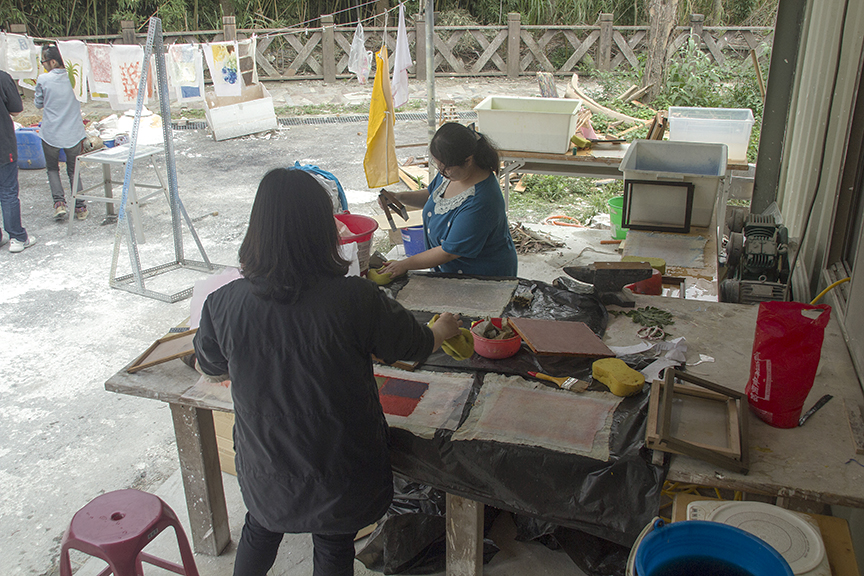
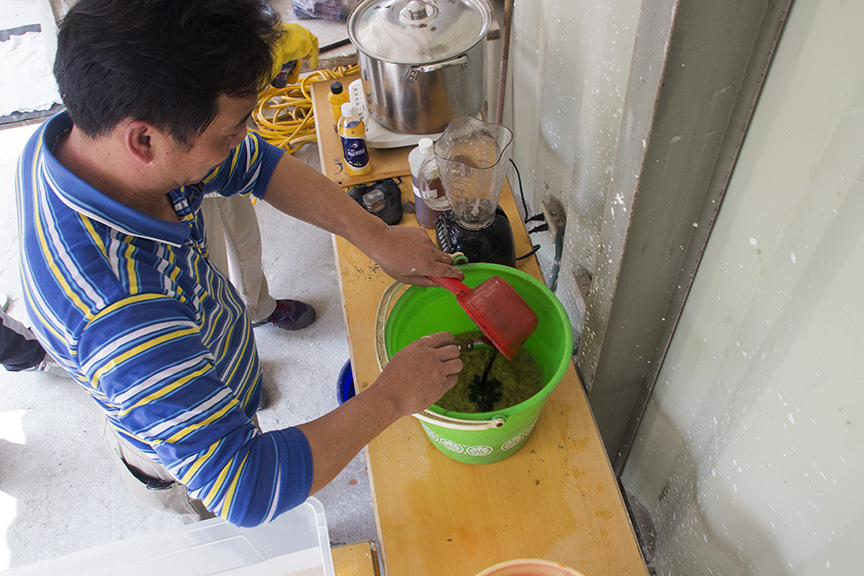
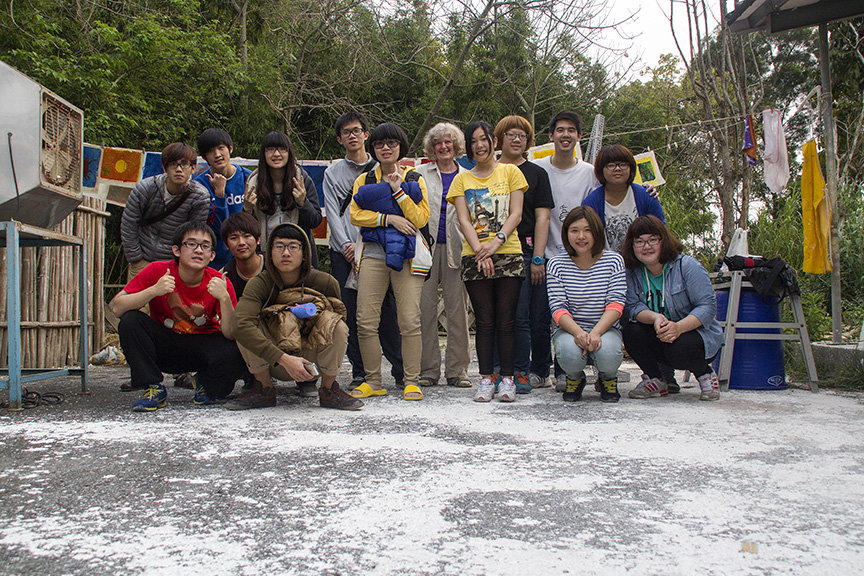
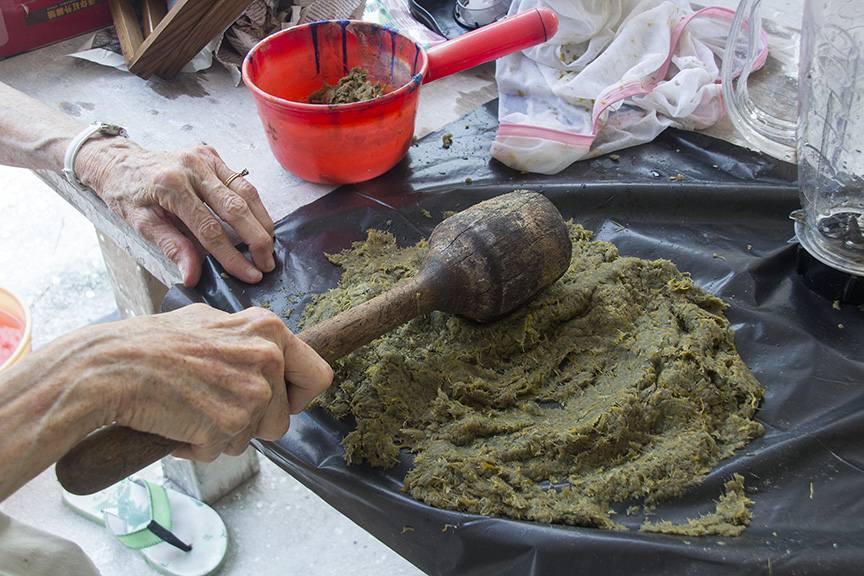
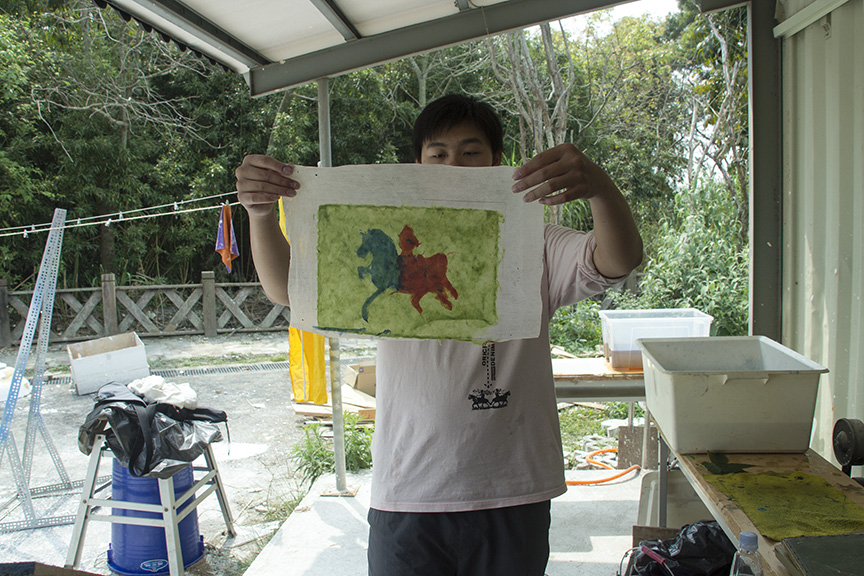
During this two week residency as a visiting art professor at Kun Shan University in Taianan, Taiwan, I taught hand papermaking to the graduate students in Communication Design and also introduced hand papermaking to undergraduate art students at the university. I gave lectures about my handmade paper art and environmental art and conducted hands-on workshops for the students in making handmade paper from local plants that we collected on campus.   We used paper mulberry bark (Broussonetia papyrifera) and fan palm leaves (Livistona chinensis) to make the paper pulp. The process included stripping the bark and cutting up the leaves, cooking it in caustic soda, beating by hand and using the blender, and then making the paper in a modified Asian technique using Western style moulds and deckles.

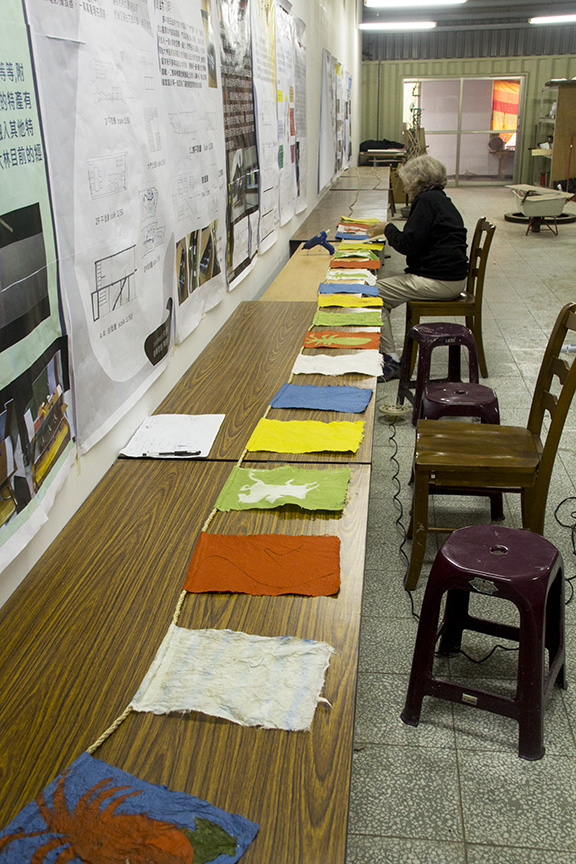
students stripping mullberry bark student picking mullberry Students making paper Jane presenting to grad students Sophomore Watching Jane make paper Fan Palm Mullberry plant

These photos show the students making handmade paper and the process of gathering plants and preparing the pulp from plants on campus, paper mulberry bark and fan palm leaves.

The students created their own unique handmade paper artworks to express the time and place using local natural materials combined with mixed media techniques such as collage, painting, drawing and digital photography. It was an interesting two weeks that introduced the students to the use of local natural materials and the art of hand papermaking. I encouraged them to think of using papermaking with technology and digital photography in their future design work.

Thank you to Professor Kuo-Chun Chiu for organizing this artist in residency project in Tainan. He is an artist I selected for the 2013 Cheng Long Wetlands International Environmental Art Project (http://artproject4wetland.wordpress.com)
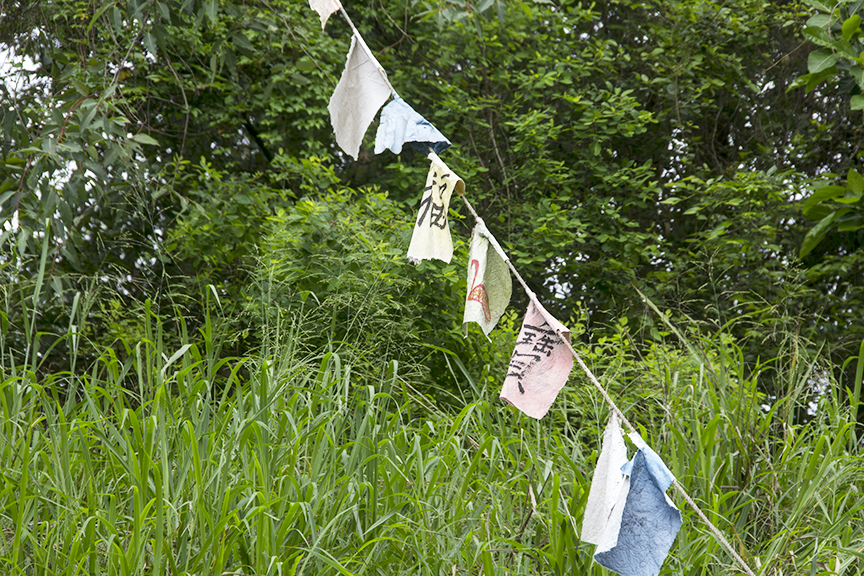
that I have curated in Taiwan since 2010.

The photos in this Blog are by Timothy S. Allen, and you can see more of his photos at his Blog:  http://allentimphotos2.wordpress.com


“Healing the Earth” installation 2 months later

Tags

, , ,

Prayer Flags at Nan Hua University “Healing the Earth” Installation Surviving Well After Three Months

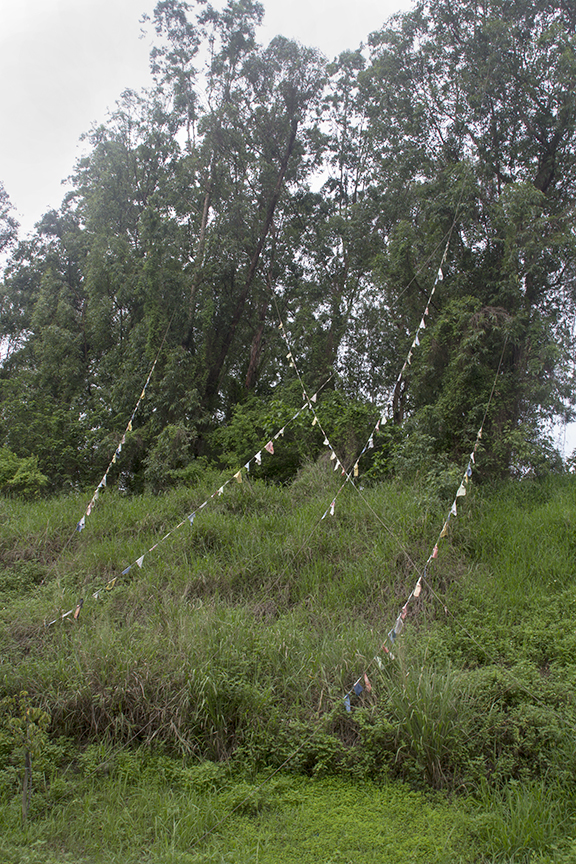
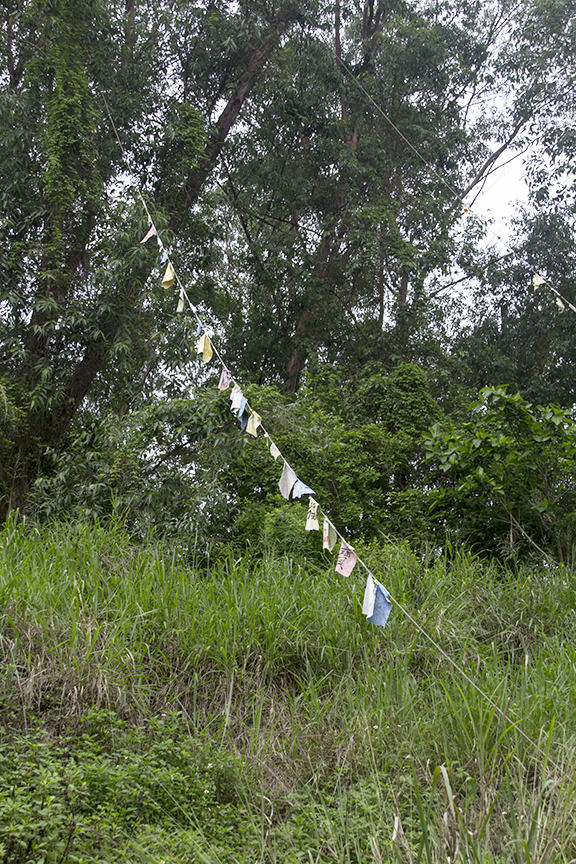
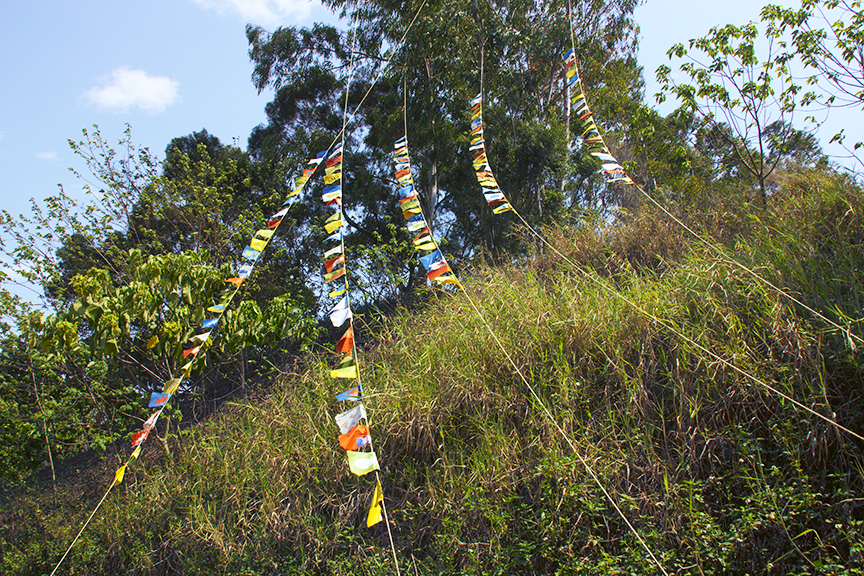
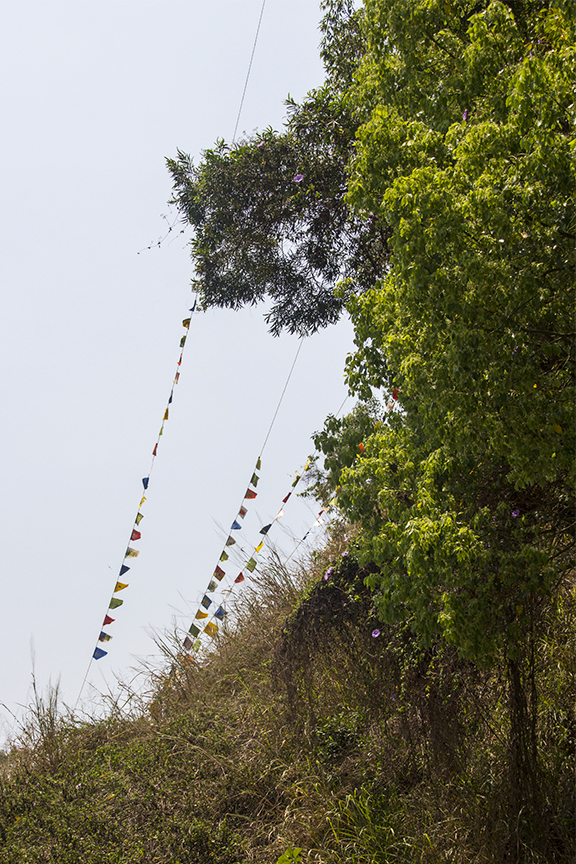
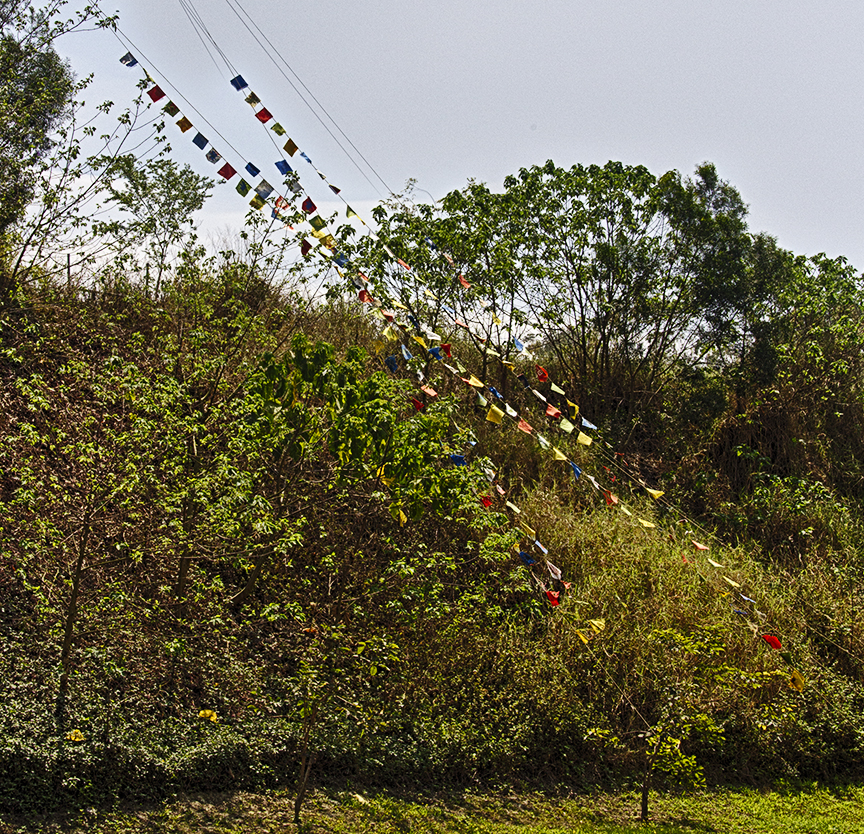
prayer flags may1prayer flags ma-clossyprayer flags may-1These photographs show how the 250 handmade paper prayer flags created for my “Healing the Earth” installation are surviving after 2 months. When I returned to Nan Hua University to make a presentation for the school’s International Biodiversity Day celebration on May 23, I had a chance to visit the installation again and see how the artwork was changing over time. The students told me that the weather has been very rainy and windy during the months since the artwork was installed on March 22.   It is amazing to see how well the handmade paper has survived. The colors have faded somewhat and some flags have fallen to the ground and been dissolved into compost, but most are still “hanging in there”. The students and I made the paper pulp for the flags from paper mulberry bark and dyed the pulp with liquid fiber reactive dye. The handmade paper sheets were formed on A-4 size Western-style moulds and done in the Asian or Japanese way with multiple dips and using formation aid in the vat. This seems to produce very strong paper that lasts well through wind and heavy rainstorms.

You can see earlier entries on this Blog when the prayer flags installation was first put up and also see photos of the process of creating “Healing the Earth”. day 12_flags right side-small_1723 copy copy

I hope the students at Nan Hua University will send some more photos in a few months to show how the installation continues to change over time.

Photos of my finished installation “Healing the Earth” at Nan Hua University, Taiwan

Tags

These photos show the finished installation “Healing the Earth – Nan Hua Prayer Flags” created during my two-week artist in residency at Nan Hua University, Chiayi County, Taiwan, March 15 – 28, 2014.  The installation contains 250 handmade paper prayer flags, each a unique creation by the students and me during the residency project.  The materials are all natural and biodegradable, and the installation will return to nature with no harm to the earth….in several weeks or months depending on the weather.  I was pleased to learn that the flags are still looking good after a heavy rain and thunder storm over this past weekend.  Handmade paper is amazingly strong and resilient, and these are still flying high with the good wishes of the participants at Nan Hua University.  I will go back to Nan Hua University to give a lecture for their BioDiversity Day Celebration on May 24, so I will post again some updated photos of the installation in late May.

Image

Flags-day 12_flags right  side-small_1752_HDR

day 12_flags right side-small_1723 copy copy

The photos in these posts are made by my husband Timothy S. Allen.  For more photos by Tim check out his Blog at allentimphotos2.wordpress.com


Artist in Residency Project at Nan Hua University, Chiayi County, Taiwan: March 16-29, 2014

Tags

, , , , , , ,


Image

This photo shows me looking over the outdoor studio space on the first day of my residency at Nan Hua University.  This is where I will set up a hand papermaking studio and work with the students in Architecture and Landscape Design to make a collaborative multi-part installation of handmade paper using all natural and bio-degradable materials.

The idea for this art installation came after visiting the campus and talking about the environmental problems in the area, and we decided to try to make an art installation that would symbolically help to heal the land that had been damaged when the university was first built and a road was cut into the hillside destroying the beautiful curve of a ridge.

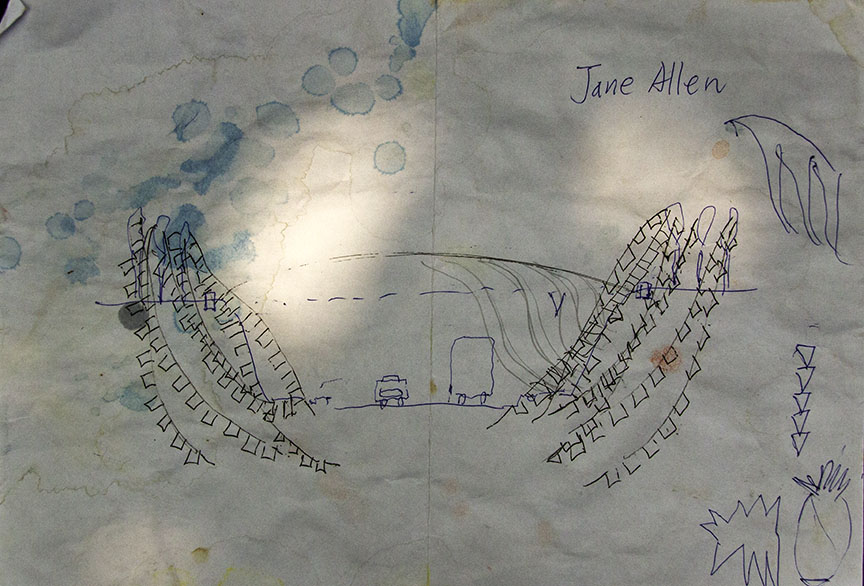
Image After studying the site, I thought of using colorful handmade paper prayer flags suspended from the trees on either side of this cut.  This is my first sketch of the art installation, showing that the artwork could be made in many unique parts and involve the students to teach them about papermaking and introduce the idea of creating art with natural, biodegradable materials that could be good for the environment and go back to nature after lasting for a while.Image

This photo shows a handmade paper prayer flag in red being made by a student at Nan Hua University.

ImageHere you can see several students making handmade paper prayer flags for the installation.  Image

In this photo you can see a student helping to color the paper pulp with yellow non-toxic fiber reactive dye.  ImageThis photos shows a group of students posing with me in fron of the lines of handmade paper prayers flags they created drying in the sun.  We used 4 local plant waste materials to make some of the paper for the prayer flags, and also bought some prepared pulp from the paper factory in Puli (Nantou County) Taiwan to use for the prayer flags. We dyed the paper pulp with liquid fiber reactive dye that is non-toxic and does not harm the earth.Image
This photo shows me beating some local sugar cane plant fibers to make pulp for some of the prayer flags at Nan Hua University.


During the two-week residency, we made almost 300 handmade paper prayer flags in the traditional 5 colors. Blue means the sky, white means the clouds, red means fire, green means water and yellow means earth. With these five colors in their proper order, the prayer flags will help bring the world into balance. We put images of the “wind horse” on some of the prayer flags.  ImageHere a student is holding up the handmade paper with the wind horse image that he just made.  This image is often found on Tibetan prayer flags to carry the prayers with speed and strength to all the earth.  We also used images of the pineapple on some of the prayer flags because in Chinese culture the pineapple is a symbol for success and prosperity. We put many other good symbols and words in English and Chinese on the prayer flags and did some drawing and painting on the handmade paper prayer flags.  The tradition of hanging prayer flags is common in Tibet, and they are usually hung from high mountain passes to bring blessings and good luck to the people and all creatures.  I have also seen colorful prayer flags hanging at temples in Nepal, shrines in Japan and in other countries.  It is a great tradition and way of sending prayers or wishes in any language or culture.


The first part of the project “healing of the earth” was done on Tuesday of the first week I was there, and we consulted with a famous Feng Shui Master in Dalin who told us to connect the two sides of the ridge with threads in the 5 colors and to leave the threads across the road on the ground covered by some earth so that cars could still go across.  We also planted a young tree (a special Chinese banyan tree) on each side and tied the five colors of thread to the roots of the tree that was planted on each side of the road.  This symbolic joining back together of the broken land with the threads will start to heal this earth. 5 color thread joining finished


The second part of the healing will be my art installation made with the students consisting of 250 colorful prayer flags suspended on natural ropes from tall trees growing on each side of the road. There are 10 ropes each about 30 meters (100+ feet) , 5 on each side, with 25 prayer flags on each rope.Jane with long line of prayer flags We hope this art installation will help to complete the healing and bring good fortune and good luck to all the people and creatures of Nan Hua University.  The art installation will stay in place until it biodegrades and can go back to nature without harming the earth because all the materials are natural and biodegradable. Maybe it will last for several weeks or months; nature controls its destiny. I enjoyed very much the opportunity to work at Nan Hua University and create this art installation with the students and hope that it will help to “heal” a small part of earth on this campus and that it will inspire the students to take better care of our environment and to use natural materials and good environmental practices to make their art.   Really today the earth in all parts of the world needs healing, and all people should think more about what we do to harm the environment with our art and with our actions.

View of break in earth This photo shows the site for the art installation.  My next post will feature photos showing the finished installation of 250 handmade paper prayer flags.


Going to Taiwan for 3 months, March 5 – June 2, 2014

Tags

, , , , , , , , ,

Image

My husband Tim and I will be going to Taiwan again this Spring for 3 months.  We fly from SF to Taipei on March 5 and will return to Santa Rosa on June 2.

During the three months I will be doing two art projects creating my own artworks at two universities in Taiwan and also again curating the Cheng Long Wetlands International Environmental Art Project in Cheng Long village.  Tim and I both will be doing lectures at Hsuiping University of Science and Technology in Taichung and visiting with friends in Taichung and other parts of Taiwan.  Here is our schedule for the time in Taiwan:

Tim and Jane’s  Schedule for Taiwan Trip 2014

March 5 – Fly from SFO

March 6 – Arrive Taiwan

March 6 – March 16: Stay in Taichung, lectures at Hsuiping University

March 16 – 29:  Nan Hwa University, Dalin, Chiayi Country, Jane will do an artist-in- residency project with the university students in the Department of Environmental Design, creating an outdoor public art installation on campus with hand papermaking and natural materials.

March 29 – April 10 – stay in Taichung

April 10 – May 5:  Jane be curating the 2014 Cheng Long Wetlands International Environmental Art Project in Cheng Long village, Yunlin County.  The art project has a Blog at http://artproject4wetland.wordpress.com

May 5 – 11 – stay in Taichung, lectures at Hsuiping University

May 11-24-  stay at Kun Shan University in Tainan.  Jane will be a visiting artist at this university to teach papermaking art for the graduate students and give lectures for the students about environmental art and hand papermaking.  Tim will have a photography exhibition at the campus gallery and assist with the teaching to include using photography with handmade paper art.

May 24- 25  Stay in Taichung – return to Taichung and stay with Eliza

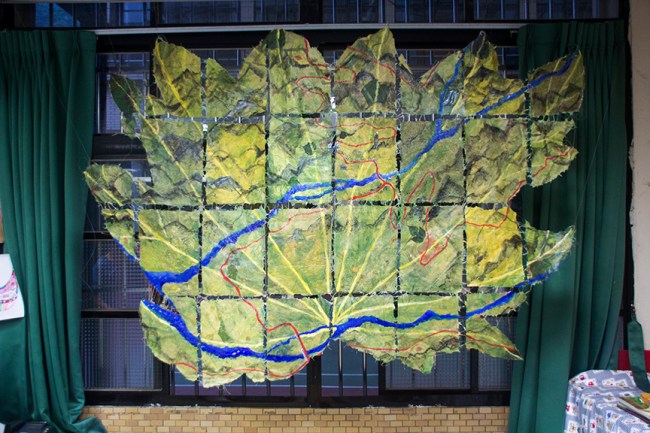
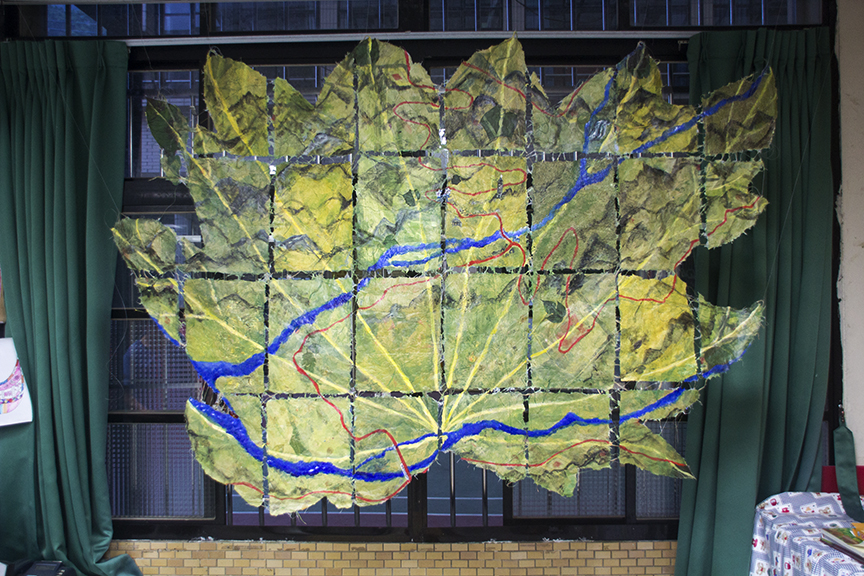
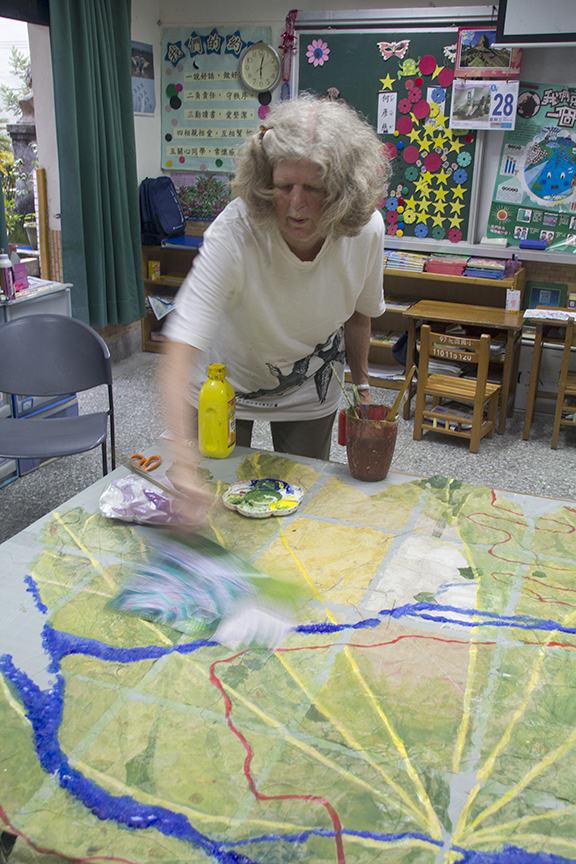
May 25-29 – go to Hwa Yuan village, Hsinchu County.  Jane will be an artist in residency at the village and work with the elementary school to create a site-specific handmade paper site map about the Pith Paper plant that is grown in this village.

May 29 – June 2 – stay in Taichung

June 2 – fly back to SFO, USA

Be sure to check back often so see posts about the residencies and projects in Taiwan during these three months.

Salmon River Estuary Site Map – made at Sitka Center for Art & Ecology Residency

Tags

, , , , , , ,

Image


During my recent residency at the Sitka Center for Art & Ecology, one of the artworks I created was a “site map” of the Salmon River Estuary.  The Salmon River in this part of Oregon goes into the ocean near Sitka Center. Hiking in and gathering materials from this area for my handmade paper artworks was one of the highlights of my residency from October 16, 2013 to January 10, 2014.  The Salmon River Estuary Site Map is about 4 feet across and about 3 feet high, and it is two sided suspended in space.  Image

One side of this piece is more like a map of the area and shows a view of the land and rivers, streams, roads and mountains.  Image

The other side shows details about this part of the world with the birds, trees, lighthouses and other tourist sites.

Image Image

This work uses collage techniques and acrylic painting with natural and found materials.  All of the paper for this work is made from plants I collected in the Salmon River Estuary.  The handmade paper is joined with string, and the piece can fold up like a map for easy storage and transport.  I enjoy making “site maps” wherever my art travels take me, and find that this is a great way to get to know a place.  ImageImageImage

Making Trees

Tags

, , , , , , ,

Image

During my artist in residency at Sitka Center for Art & Ecology from Oct. 16, 2013 – January 10, 2014, one of the things I have been working on is a multi-part installation of suspended handmade paper sculptures inspired by the tall Sitka Spruce trees in the area.  We took a trip up into the national forest land nearby and saw a whole forest of the tall evergreen trees, and the atmosphere was very special.  We were told that these trees came back after a big fire in the 1960s that destroyed most of the trees.  It is a wonderful place, and I wanted to create an installation of many trees that would be made from the materials of the place.  The handmade paper is made from Sitka Spruce bark collected there and prepared at the Sitka Center studio where I am working now.  The bark from these trees is easy to collect from the ground around the trees because chunks of bark fall off from the birds or other animals or the tree just shedding.  I also found one tree nearby that had been trimmed and was able to collect some bark there.  The other pulp used for these trees is from the marsh or wetlands in the Salmon River Estuary that is nearby the Sitka Center.  The plant I used is the Sitka Sedge, and I collected some leaves from this sedge and prepared it into pulp.  When I cooked and beat this one to a pulp, I was so excited that it was a beautiful green color that looked just like the moss growing on the Sitka Spruce trees.  Even thought the pulp dries to a lighter tan color it is still a good contrast to the very dark rich brown of the Sitka Spruce pulp.  These photos were taken by Timothy S. Allen and one shows me making a tree in the Boyden Studio space at the Sitka Center, and the other photo shows a couple of them hanging in the space.  I plan to keep making more trees and make as many as I can during the residency and then find a place to install them for an exhibition.

Image

Continuing my artist in residency at Sitka Center – Inspired by “hex signs” on local barns

Tags

, , , , , , ,

Image

There are many barns and other businesses in the nearby town of Tillamook, Oregon (famous for cheese, and yes we toured the Tillamook Cheese Factory too) that have these colorful quilt pattern squares on them.  Each barn has a different pattern and makes a trail for tourists to follow in the area.  Sitka Center is located at the very southern edge of Taillamook County and actually closer to Lincoln City, Oregon, in Lincoln County, but Tillamook is an interesting place to visit about 29 miles north on the coast.  Since I am from Alabama and all my female ancestors were quilters, I am familiar with quilting patterns and wanted to try and this with handmade paper.  I started making a new series of handmade paper quilts.  Here are some photos of the first quilt and how it was created. ImageImageImageImageImageImageImageImageImageImageImage

I used “buttercut” stencils on three different moulds to make the quilt squares and played around with the order and color sequences.  I joined the handmade paper quilt squares with thread glueing it with acrylic soft gel matte in my usual way so that the quilt can fold up for easy storage and transport.  It is interesting to hang this quilt in space with the light coming through and see the threads that sew this quilt together and how they contribute to the layered look.  The Boyden Studio at Sitka Center for Art & Ecology (www.sitkacenter.org) where I am lucky to be working during this residency is a wonderful big and light-filled space.  Check back later for more updates on my 3-month artist-in-residency at Sitka Center from Oct. 16 – Jan. 10.

My Article about International Nature Art Curator’s Conference in Korea Published!

Tags

, , , , , , ,

Image

Here is the email from the Art Radar Editor about the publishing today of my article about the International Nature Art Curator’s conference in Korea where I spoke in early October about the Cheng Long Wetlands International Environmental Art Project in Taiwan.
Please also send this link to others who may be interested. 
Thank you, 
Jane
 

Sitka Center for Art & Ecology Artist-in-Residency, Oct. 2013 – Jan. 2014

Tags

, , , ,

Image

I was awarded an artist-in-residence at Sitka Center for Art & Ecology in Otis, Oregon, from October 16, 2013 to January 10, 2014.  The Sitka Center is located in the northwestern part of Oregon on the coast just above Lincoln City.  It is a beautiful area, and Sitka Center is part of the Cascade Head National Scenic Research Area.  They have wonderful studios and small cabins for the residents here.  We are living amidst tall Sitka Spruce trees and also able to see the ocean where the Salmon River runs into the sea.  There are many elk here we are told – haven’t seen one up close yet but I have seen a big herd of elk far up on the mountainside. 

I am having a great time making my handmade paper art in the big and light-filled Boyden Studio at Sitka Center.  This studio has great facilities for a papermaking with a huge bathtub sink, stove and lots of tables and also a high ceiling for my suspended installations.  One of the things I started when I first arrived here was making paper with some pulp I brought with me, kozo and blue jean pulp.  I noticed the Sitka logo form that is on all the signs around here.  So, I decided to make some handmade paper that was inspired by the Sitka logo, a spiral form, that reminds me of the ocean, the wind and waves.  A poet Tom Crawford, also a resident artist here now, and I may collaborate with a calligrapher to put one of his Sitka inspired poems on some of my handmade paper.

Here are some photos of me working in the Sitka Center studio and making the Sitka Center symbol-inspired handmade paper.  I am drying the paper on sheets of non-woven interfacing, and I used buttercut to make the spiral stencil on a round embroidery hoop frame with ordinary fiberglass window screening on it.

ImageImageImageImageImageImageImage

I am also making paper from plant materials collected here for a Sitka site map and other works I am planning.  I have made paper from 3 plants so far and have 3 others gathered and ready to cook up and make pulp.  I will keep posting here with news about the results from the Sitka plants and the new artworks I am making.

My husband Tim is here with me at the Sitka residency and he is enjoying taking photos of everything.  For some really great photographs of the Sitka area and the Oregon coast (also some of my art projects!), take a look at my husband Timothy S. Allen’s photo blog at http://allentimphotos2.wordpress.com